
Picture this: you’re waking up to the sound of birds chirping, surrounded by towering pine trees, with the gentle rush of a mountain stream in the background. No honking horns, no traffic jams just pure, unadulterated nature. Welcome to Jibhi, Himachal Pradesh’s best-kept secret that’s slowly but surely making its way onto every adventure seeker’s bucket list.
Tucked away in the serene Banjar Valley at an altitude of 2,580 meters, Jibhi is that rare gem where commercialization hasn’t completely taken over. Yes, it’s getting popular, but it still retains that raw, untouched charm that makes you feel like you’ve stepped into a different world altogether.
Why Jibhi Should Be Your Next Adventure
Let me be honest with you Jibhi isn’t your typical Himachal destination with bustling markets and happening cafes. And that’s exactly what makes it special! This tiny hamlet offers something money can’t buy: peace, tranquility, and a genuine connection with nature.
Whether you’re a solo backpacker seeking solitude, a couple looking for a romantic escape, or a family wanting to disconnect from screens and reconnect with each other, Jibhi delivers. The traditional wooden cottages with their distinctive Kath-kuni architecture, the pristine waterfalls hidden in dense forests, and the warm hospitality of locals make this place unforgettable.
Must-Visit Places in Jibhi
1. Jibhi Waterfall
Let’s start with the crown jewel the Jibhi Waterfall. Hidden deep inside the forest, this beauty isn’t visible from the road, which adds to its mystique. The sound of gushing water serves as nature’s music, creating an enchanting atmosphere that’ll make you want to sit there for hours.
The best part? Wooden bridges are built near the waterfall, offering picture-perfect views. If you’re lucky enough to visit early morning, you might catch a rainbow dancing in the mist. Trust me, it’s magical!
Getting there: Easy trek from the main market area locals will happily point you in the right direction.
2. Jalori Pass
At 3,120 meters above sea level, Jalori Pass is the crown of the region. Remember that iconic scene from Yeh Jawaani Hai Deewani? Well, locals claim it was shot right here (though we can’t confirm that officially!).
The 12 km drive from Jibhi to Jalori Pass is breathtakingly beautiful literally! You’ll pass through dense pine forests and rocky hills, with each turn revealing more stunning vistas. Once at the top, you’re treated to 360-degree views of snow-capped mountains that’ll leave you speechless.
The pass is also your gateway to the famous Serolsar Lake trek and adventure activities like paragliding. Just remember to carry warm clothes it gets chilly up there!
3. Serolsar Lake
A 6 km trek from Jalori Pass leads you to this pristine high-altitude lake nestled at 3,100 meters. Surrounded by thick woods of oak and pine trees, Serolsar Lake is like something straight out of a fairy tale.
The lake is considered sacred by locals, and there’s a temple dedicated to Budhi Nagin near its shores. According to local belief, the lake’s waters have medicinal properties. Whether that’s true or not, one thing’s certain the peace you’ll find here is definitely therapeutic!
Trek duration: 1.5 to 2 hours one way
Difficulty level: Easy to moderate
Best for: Nature lovers, photographers, and peace seekers
4. Chehni Kothi
This 400-year-old fortified tower is nothing short of an architectural wonder. Standing tall at 40 meters, it’s the tallest monument in the entire Himalayan range built on a volatile tectonic zone and it has survived devastating earthquakes for centuries!
The fort showcases traditional Himachali pagoda-style architecture with intricate wood carvings. It’s now converted into a temple dedicated to Goddess Shringa. While outsiders aren’t allowed to climb the inner stairs, the exterior itself and the panoramic valley views are worth the trek.
Distance from Jibhi: 10 km
How to reach: By car or trek from Gada Gushaini village
5. Mini Thailand (Kulhi Katandi)
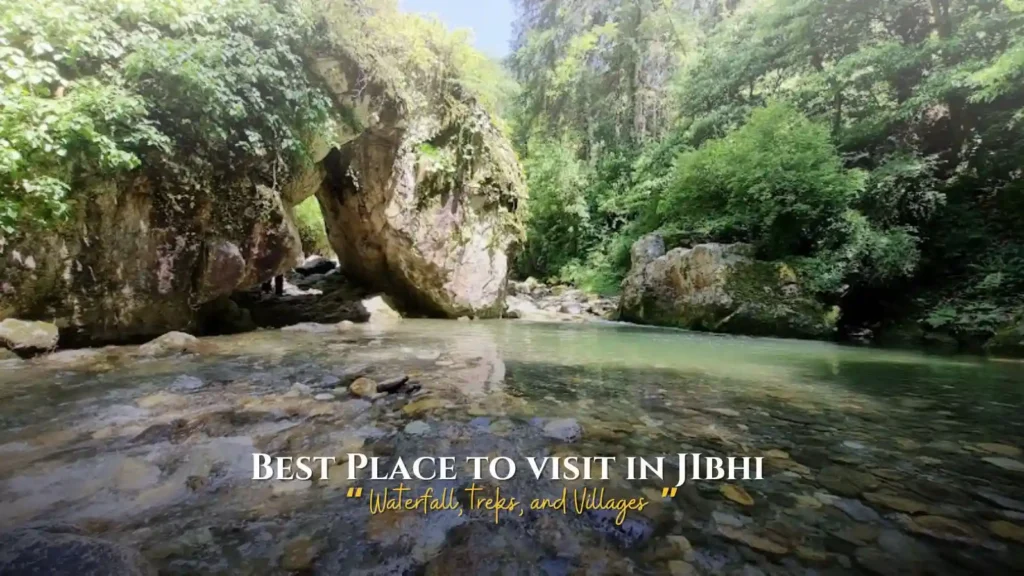
No, you don’t need a visa for this Thailand! About 300 meters before reaching Jibhi, you’ll find a signboard for Kulhi Katandi. A short 15-minute descent through the forest leads you to a stunning turquoise pool formed between two massive rocks.
The crystal-clear, cold water and the unique rock formations do give off those Thailand vibes (hence the name). It’s a perfect spot for dipping your feet, chilling with friends, or even taking a refreshing swim if you’re brave enough!
Entry fee: Free
Best time: Late spring to early autumn when water levels are ideal
6. Shringa Rishi Temple
Located about 7 km from Jibhi in Baggi village, this temple is dedicated to Shringa Rishi, the chief deity of Kullu Valley. According to Hindu mythology, Shringa Rishi was the sage who performed the yagna for King Dashrath, after which Lord Rama and his brothers were born.
The temple’s architecture is beautiful, and the spiritual energy of the place is palpable. It’s one of those spots where you naturally feel inclined to sit in quiet contemplation.
7. Great Himalayan National Park
A UNESCO World Heritage Site, this national park is home to over 375 species of fauna, including Himalayan brown bears, snow leopards, and rare bird species. If you’re a wildlife enthusiast or photographer, this is your playground!
The park offers numerous trekking trails through lush forests and along rivers. Keep your camera ready you never know when you might spot a Himalayan monal or tragopan!
Note: Special permission required for entry
8. Raghupur Fort
Want a relatively easy trek with rewarding views? The 3 km trail to Raghupur Fort from Jalori Pass is perfect. The fort itself is ancient and offers spectacular 360-degree views of the valley below.
Pro tip: Start early and catch the sunrise from the fort it’s absolutely mesmerizing!
9. Tandi Village
About 8 km uphill from Jibhi lies Tandi, a remote village that only got proper road connectivity 4-5 years ago. This means it’s far less touristy and retains that authentic mountain village vibe.
Tandi is famous for its treehouses (more on that later!), apple orchards, and absolute tranquility. The village offers stunning views of the Pir Panjal and Dhauladhar ranges. It’s perfect for those who want to experience village life and enjoy some serious peace and quiet.
10. Bahu Village & Balu Nag Temple
A 10 km drive from Jibhi brings you to this offbeat village. The highlight is the Balu Nag Temple, which locals describe as one of the most beautiful and peaceful temple setups around. Set against stunning natural backdrops, it’s a perfect spot for some soul-searching.
The short trek to the temple (about 30 minutes from Bahu) takes you through rolling meadows and evergreen pines—quintessential Himalayan scenery!
Best Time to Visit Jibhi
Here’s the thing about Jibhi each season has its own charm, but timing matters if you want specific experiences.
Spring & Summer (March to June)
Weather: Pleasant with temperatures between 10°C to 25°C
Why visit: This is arguably the best time to visit Jibhi. The weather is perfect warm sunny days and cool breezy nights. The valley comes alive with blooming flowers and lush greenery. All trekking trails are accessible, making it ideal for adventure activities.
Best for: Trekking, bird watching, nature walks, outdoor photography, fishing
Monsoon (July to September)
Weather: Moderate temperatures (14°C to 20°C) with frequent rainfall
Why visit: If you’re a pluviophile (rain lover), this is your season! Jibhi transforms into a magical land with the greenest meadows and mountains shrouded in fog. Hotel rates drop, and you’ll find fewer tourists.
Word of caution: Roads can become slippery, and there’s a risk of landslides. Keep your travel plans flexible and check weather forecasts regularly.
Best for: Photography, experiencing village life, enjoying traditional cuisine in cozy cafes
Autumn (September to November)
Weather: Crisp and cool with temperatures between 3°C to 18°C
Why visit: Many travelers consider this the absolute best time for Jibhi. Post-monsoon, the skies are crystal clear, offering the best mountain views. The autumn colors paint the landscape in golden and amber hues a photographer’s dream!
Best for: Photography, trekking, experiencing local festivals, sightseeing
Winter (December to February)
Weather: Cold with temperatures dropping to -5°C, snowfall common
Why visit: If you dream of a white Christmas or want to experience snow, winter in Jibhi is magical. The landscape gets covered in a pristine white blanket, creating postcard-perfect views.
Important: Some roads may close due to heavy snowfall. Pack heavy woolens and check road conditions before traveling.
Best for: Snow activities, cozy treehouse stays, experiencing winter in the mountains
How to Reach Jibhi
From Delhi (490 km)
By Flight + Taxi (Fastest)
1. Fly from Delhi to Bhuntar Airport (Kullu-Manali Airport) approximately 1 hour
2. Hire a taxi from Bhuntar to Jibhi 50 km, takes about 2 hours
3. Total time: 3 – 4 hours
Note: Flights to Bhuntar are limited and can be expensive. Book well in advance!
By Bus (Budget-Friendly)
1. Board an overnight Volvo or HRTC bus from ISBT Kashmiri Gate to Aut Tunnel
2. Journey time: 10-12 hours
3. From Aut (32 km before Jibhi), hire a local taxi or take a bus to Jibhi
4. Local bus from Aut to Jibhi: ₹20-35, takes 1-1.5 hours
5. Shared taxi from Aut: ₹1,000-1,200 per taxi
Bus fare: ₹350-2,800 depending on bus type (regular/Volvo)
Pro tip: Book your bus ticket in advance, especially during peak season!
By Train + Road
1. Take a train to Chandigarh Railway Station (well-connected from Delhi)
2. From Chandigarh, follow the road route below
By Self-Drive/Private Taxi
Route: Delhi → Chandigarh → Bilaspur → Mandi → Aut → Banjar → Jibhi
Duration: 12-14 hours
Cost: Private taxi starts from ₹5,000+
The drive is scenic but challenging in parts, especially the last stretch from Aut to Jibhi with narrow mountain roads. Drive carefully!
From Chandigarh (225 km)
By Bus
– Direct buses available from ISBT Sector 43
– Journey time: 6-7 hours
– Fare: ₹550-3,999 depending on bus type
– First bus: 1:20 AM, Last bus: 11:59 PM
By Taxi
– Distance: 212-267 km (routes vary)
– Duration: 6-8 hours
– Cost: ₹5,400-8,400 depending on vehicle type
Route: Chandigarh → Kiratpur Sahib → Bilaspur → Mandi → Aut → Banjar → Jibhi
Important Travel Tips
For bus travelers: Most buses drop you at Aut Tunnel. From there, hire a local taxi or wait for a bus to Jibhi
Cash is king: Carry sufficient cash as ATM availability is limited in Jibhi. The nearest reliable ATMs are in Banjar (9 km away)
Network: Airtel and Jio work best in the area, though coverage can be patchy in remote spots
Start early: Begin your road journey early morning to reach before sunset mountain roads are tricky at night
How to Reach Tandi Village from Jibhi
Tandi sits on a hilltop about 8 km from Jibhi market, but don’t let the short distance fool you this is a steep, winding mountain road that’ll get your adrenaline pumping!
By Road:
Distance: 8 km
Duration: 20-30 minutes
Road condition: Narrow, steep, winding (improved in recent years but still challenging)
Options:
Hire a local taxi from Jibhi market (₹300-500)
Self-drive if you’re confident with mountain driving
Trek via Laida Village for the adventurous (Kel Tandi trail)
What to expect: The route passes through terraced fields, apple orchards, and dense deodar forests. The views? Absolutely spectacular! Tandi offers a more isolated, peaceful experience compared to the increasingly touristy Jibhi.
Pro tip: If you’re staying in Tandi, inform your homestay in advance they often arrange pickup from Jibhi.
Frequently Asked Questions (FAQs)
1. Is Jibhi worth visiting?
Ans. Absolutely! If you’re looking to escape crowded tourist destinations and experience authentic Himalayan life, Jibhi is perfect. It offers pristine natural beauty, adventure activities, peace, and warm local hospitality all without the commercialization that’s taken over places like Manali.
2. How many days are ideal for a Jibhi trip?
Ans. 3-4 days is perfect to explore Jibhi and nearby attractions comfortably. Day 1 for local sightseeing (Jibhi waterfall, village walks), Day 2 for Jalori Pass and Serolsar Lake, Day 3 for Chehni Kothi and other nearby villages, and Day 4 for relaxation or additional spots. If you’re a serious trekker, you could extend to 5-6 days.
3. Is Jibhi safe for solo female travelers?
Ans. Yes! Jibhi is considered quite safe for solo female travelers. The locals are warm and respectful. However, standard precautions apply inform someone about your trekking plans, avoid isolated areas after dark, and stay in reputed accommodations. The homestay culture here is very family-oriented.
4. What should I pack for Jibhi?
Ans. Essentials: Comfortable walking/trekking shoes, warm layers (even in summer, evenings are cold), rain gear, sunscreen, sunglasses, personal medications, torch/flashlight, power bank, and sufficient cash.
Winter extras: Heavy woolens, thermal wear, gloves, warm socks, and a good jacket.
5. Are there ATMs in Jibhi?
Ans. Limited! There are a few ATMs but they’re not very reliable and often run out of cash. The nearest reliable ATMs are in Banjar (9 km away). It’s highly recommended to withdraw sufficient cash in Delhi, Chandigarh, or Mandi before heading to Jibhi.
6. What’s the network connectivity like?
Ans. Airtel 4G and Jio work best in Jibhi, though signal strength varies. You’ll get decent network near the main market and roads, but inside homestays and in remote areas like Serolsar Lake or Tandi, connectivity can be weak. Consider it a digital detox opportunity!
7. Is food easily available in Jibhi?
Ans. Yes, but options are limited compared to bigger tourist spots. Most homestays serve delicious home-cooked Himachali food (included in stay or at extra cost). There are a few independent cafes near the bridge and around the market serving various cuisines. Budget ₹500-800 per person per day for food.
8. Can I visit Jibhi with kids/elderly parents?
Ans. Yes! Jibhi itself is easily accessible and suitable for all ages. However, treks to Serolsar Lake, Raghupur Fort, or Chehni Kothi might be challenging for very young kids or elderly people with mobility issues. Stick to Jibhi waterfall, Jalori Pass (by car), and village walks for a comfortable family trip.
9. What are the must-try local foods in Jibhi?
Ans. Don’t miss Siddu (stuffed steamed bread), Chana Madra (yogurt-based chickpea curry), Babru (stuffed puri), fresh trout cooked in local spices, Chha Gosht (marinated lamb), and local organic teas with homemade jams. Most homestays serve authentic Himachali meals try them!
10. Jibhi vs Kasol which is better?
Ans. Both are beautiful but offer different experiences. Kasol is more popular, has a vibrant backpacker culture, cafes with international cuisine, nightlife, and better connectivity. Jibhi is offbeat, quieter, less commercialized, and offers a more authentic village experience. Choose Kasol for a social vibe and Jibhi for peace and solitude.
11. Are there any adventure activities in Jibhi?
Ans. Yes! Popular activities include trekking (Serolsar Lake, Raghupur Fort, Chehni Kothi, Jalori Pass), trout fishing in Tirthan River, camping, paragliding (at Jalori Pass), bird watching, and nature photography. Local guides and adventure groups like Jibhi Adventure can organize activities.
12. What’s the difficulty level of Jalori Pass trek?
Ans. The trek itself is moderate. If you drive to Jalori Pass (easily accessible by car), it’s not a trek at all! However, treks FROM Jalori Pass like Serolsar Lake (6 km) and Raghupur Fort (3 km) are moderate difficulty. These are suitable for beginners with basic fitness but may be tiring for those not used to altitude.
13. Can I do a workation from Jibhi?
Ans. Partially yes! Many treehouses and homestays now offer WiFi, and Airtel/Jio network is decent in most areas. However, don’t expect consistent high-speed internet for heavy video calls. It’s better for light work, writing, and creative projects. Perfect for a working holiday where you balance work and nature.
14. Is it better to stay in Jibhi or Tandi?
Ans. Jibhi: More accessible, closer to market and restaurants, better connectivity, easier for first-time visitors.
Tandi: More isolated and peaceful, better views, authentic village experience, perfect if you want zero disturbance. Choose based on whether you want convenience (Jibhi) or complete solitude (Tandi).
15. What’s the ideal budget for a Jibhi trip (for 2 people, 3 days)?
Budget option: ₹8,000-12,000 (₹4,000-6,000 per person)
Bus travel: ₹1,500-2,000
Homestay: ₹3,000-4,500 (₹500-750/night)
Food: ₹1,500
Local transport & entry fees: ₹1,500-2,000
Mid-range option: ₹20,000-30,000
Bus/Shared taxi: ₹3,000-5,000
Treehouse: ₹12,000-15,000
Food: ₹3,000
Activities & transport: ₹3,000-5,000
Comfortable option: ₹40,000+
Private taxi from Delhi/Chandigarh: ₹10,000-12,000
Luxury treehouse: ₹20,000-25,000
Dining: ₹5,000
Activities: ₹5,000
Final Words:
Look, I get it. Himachal Pradesh has dozens of beautiful destinations. Shimla, Manali, Dharamshala they’re all wonderful. But here’s the thing about Jibhi: it’s that rare place that hasn’t been completely overwhelmed by tourism yet.
Yes, it’s getting popular. Yes, more treehouses and cafes are coming up. But right now, in this moment, Jibhi still offers something increasingly rare authenticity. You can still walk through villages where life moves at its own unhurried pace, where grandmas in traditional attire smile at you as they work in their fields, where the only sounds at night are crickets and rustling leaves.
The trails here don’t have artificial cement pathways they’re real mountain trails that test your spirit. The waterfalls aren’t surrounded by commercialized picnic spots they’re hidden treasures you have to seek out. The treehouses aren’t luxury resorts with room servicethey’re authentic experiences where you live among the trees.
Whether you’re seeking adventure, peace, romance, or simply a break from your chaotic routine, Jibhi delivers. It reminds you what really matters not the Instagram-perfect shot (though you’ll get plenty of those!), but the moment when you sit by a waterfall with your thoughts, or watch the sunset paint the mountains in gold, or share a meal with locals who treat you like family.
So pack your bags, keep your expectations real, bring your spirit of adventure, and let Jibhi work its magic on you. Trust me, you’ll leave a piece of your heart in these mountains. And that’s not a bad thing at all.