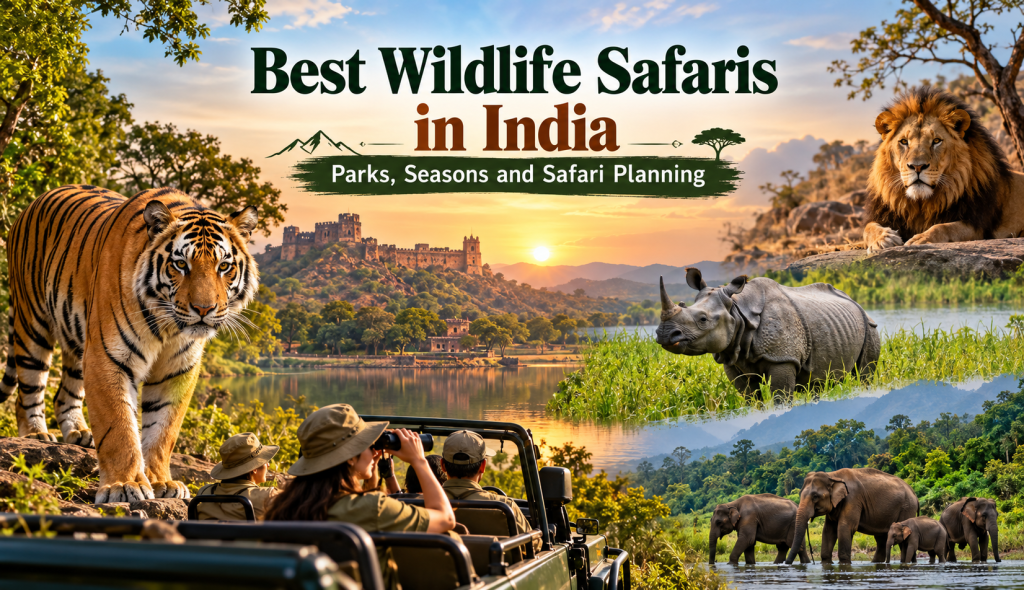
India is one of the world’s most rewarding destinations for wildlife safaris, offering opportunities to explore tiger-inhabited forests, grasslands filled with rhinoceroses, Asiatic lion habitats, elephant corridors and remarkable bird sanctuaries. From the dry deciduous forests of Rajasthan to the lush landscapes of Kerala and the floodplains of Assam, every region offers a different wildlife experience.
The best wildlife safaris in India depend on the animals you hope to see, the season of your visit, your preferred travel style and the time you have available. Ranthambore and Bandhavgarh are popular choices for tiger safaris, Kaziranga is renowned for its greater one-horned rhinoceroses, Gir is famous for Asiatic lions, and Periyar offers a distinctive wildlife experience in the Western Ghats.
For international travellers planning an India wildlife tour, understanding park opening seasons, safari permits, transport connections and responsible wildlife viewing can make the journey more enjoyable. This guide covers the best national parks in India for safaris, the ideal months to visit, practical planning tips and answers to common questions.
What Are the Best Wildlife Safaris in India?
The best wildlife safaris in India include Ranthambore National Park for tiger sightings, Bandhavgarh and Kanha for central Indian forest experiences, Jim Corbett for diverse Himalayan foothill wildlife, Kaziranga for one-horned rhinoceroses, Gir for Asiatic lions and Periyar for elephants and forest landscapes.
For many popular national parks, the main safari season runs approximately from October or November to May or June. However, opening dates differ by destination, and monsoon conditions can affect access. March to May often offers better visibility in some dry forests, while November to February is generally more comfortable for cooler-weather travel and birdwatching
Quick recommendations:
- Best for tiger safaris: Ranthambore, Bandhavgarh, Kanha and Tadoba.
- Best for rhinoceroses: Kaziranga National Park.
- Best for Asiatic lions: Gir National Park.
- Best for elephants and varied landscapes: Jim Corbett and Periyar.
- Best for birdwatching: Keoladeo Ghana, Kaziranga and other wetland and forest reserves.
- Best for combining wildlife with cultural sightseeing: Ranthambore with Jaipur, Agra and Delhi.
1. Ranthambore National Park, Rajasthan
Ranthambore National Park is one of India’s best-known tiger safari destinations. Located in Rajasthan near Sawai Madhopur, the park combines dry deciduous forests, lakes, rocky hills and open grasslands. The historic Ranthambore Fort adds a distinctive cultural backdrop to the surrounding wilderness.
Wildlife Highlights at Ranthambore
The park is particularly famous for Bengal tigers. Visitors may also encounter leopards, sloth bears, sambar deer, spotted deer, nilgai, crocodiles and numerous bird species. Actual sightings depend on animal movement, weather and luck.
Best Time to Visit Ranthambore
Ranthambore’s principal tourist season generally runs from October to June, subject to current forest department rules. October to February is suitable for travellers who prefer milder temperatures, while March to May can offer clearer visibility as vegetation becomes drier.
Safari Planning Tips
- Stay in Sawai Madhopur for convenient access to safari gates.
- Book permits well in advance, particularly during popular holiday periods.
- Consider multiple safari drives rather than relying on a single excursion.
- Combine Ranthambore with Jaipur, Agra and Delhi for a wildlife and heritage itinerary.
Ranthambore works particularly well for international visitors who want to include a tiger safari in a Golden Triangle tour of North India.
2. Bandhavgarh National Park, Madhya Pradesh
Bandhavgarh National Park is a strong choice for travellers seeking a dedicated tiger safari in central India. Its forests, meadows, rocky terrain and historic landscape provide an appealing setting for wildlife photography and guided nature experiences.
What Wildlife Can You See in Bandhavgarh?
Bengal tigers are the main attraction. The park also supports leopards, sloth bears, gaur, deer and a variety of birds. Sightings are never guaranteed, even in areas known for frequent tiger activity.
Best Season for a Bandhavgarh Safari
The principal safari period generally extends from October to June, although exact dates and access differ between zones. November to February is often more comfortable for outdoor activities, while the hotter months may provide better visibility in some locations.
How to Plan Your Visit
Allow two or three nights if your schedule permits, giving yourself time for more than one safari. Choose accommodation with convenient access to your assigned gate, and verify transport connections from regional airports or railway stations before confirming your itinerary.
Bandhavgarh is especially suitable for wildlife enthusiasts who want to focus on forest safaris rather than combine many distant destinations in one short trip.
3. Kanha National Park, Madhya Pradesh
Kanha National Park is known for its extensive sal forests, open meadows and varied wildlife. The landscape is a major part of its appeal, making it an excellent option for visitors who appreciate nature photography, birdwatching and the atmosphere of a large central Indian forest.
Wildlife and Natural Landscapes
Kanha is associated with Bengal tigers, barasingha or hard-ground swamp deer, gaur, leopards, wild dogs and many bird species. Its grasslands and forest clearings provide different viewing opportunities throughout the day.
Best Time to Visit Kanha
The main safari season generally runs from October to June, subject to the current season’s rules and zone availability. Winter offers pleasant daytime conditions, while late spring can improve visibility in certain areas.
Who Should Choose Kanha?
Kanha is a good choice for travellers looking for a balanced wildlife holiday rather than a trip focused exclusively on tiger sightings. A stay of two or three nights can provide time for several drives and a more relaxed experience.
4. Jim Corbett National Park, Uttarakhand
Jim Corbett National Park, part of the wider Corbett Tiger Reserve, lies in the Himalayan foothills of Uttarakhand. Its riverine forests, grasslands, sal forests and surrounding hills create a diverse environment for wildlife.
Wildlife Highlights at Jim Corbett
The reserve is known for Bengal tigers, Asian elephants, deer, crocodiles and rich birdlife. Wildlife viewing varies by habitat and zone, and some areas are more suitable for particular types of nature experiences than others.
Best Time to Visit Jim Corbett
November to February is attractive for travellers who prefer cooler weather and birdwatching. March to May can be warmer but may offer good visibility in some forest areas. Access differs across tourism zones, so do not assume that every zone operates throughout the year.
Planning a Corbett Wildlife Tour
Ramnagar is a common gateway for the reserve. Book an authorised safari in the appropriate tourism zone and check whether your chosen accommodation is close to the correct entry point.
Corbett is particularly appealing to visitors who want to combine wildlife with a scenic stay in the Himalayan foothills.
5. Kaziranga National Park, Assam
Kaziranga National Park is one of India’s most distinctive wildlife destinations, celebrated for its greater one-horned rhinoceros population and extensive grassland and wetland habitats. Located in Assam, it offers a very different safari experience from the dry forests of Rajasthan and central India.
What Makes Kaziranga Special?
The park is known for greater one-horned rhinoceroses, Asian elephants, wild water buffalo, swamp deer and abundant birdlife. Tigers also inhabit the landscape, although visitors should not expect every safari to produce a sighting.
Kaziranga’s wetlands, tall elephant grass and seasonal floodplain environment are especially interesting for wildlife photographers and nature enthusiasts.
Best Time to Visit Kaziranga
November to April is generally the main visitor period, although exact opening dates and accessible ranges are determined by the authorities. Seasonal flooding and monsoon conditions can affect access, so check official announcements before travelling.
Safari Planning Tips for Kaziranga
- Allow at least two nights where possible.
- Confirm which ranges are open during your travel dates.
- Plan transfers from Guwahati or another suitable regional gateway.
- Carry binoculars for birdwatching and distant wildlife observation.
Kaziranga is an excellent addition for travellers who want to see India’s northeastern landscapes and wildlife beyond the familiar tiger reserves.
6. Gir National Park, Gujarat
Gir National Park and its surrounding protected landscape are famous for the Asiatic lion. For travellers hoping to observe these remarkable big cats in the wild, Gir is one of India’s most important destinations.
Wildlife Experiences in Gir
Besides Asiatic lions, the region supports leopards, striped hyenas, jackals, deer, antelope and many bird species. The dry forest, scrub and open woodland create a habitat different from India’s central tiger reserves.
Best Time to Visit Gir
Gir’s main safari season generally runs from mid-October to mid-June, with seasonal closure during the monsoon. Winter is often comfortable for visitors, while summer can be hot. Always confirm the official operating calendar for the exact dates of your trip.
How to Plan a Gir Safari
Sasan Gir is a popular base for exploring the region. Book through the authorised permit system, and allow enough time for transfers and the scheduled safari. If your main objective is to see Asiatic lions, Gir should be a priority rather than an optional stop on a rushed itinerary.
7. Tadoba-Andhari Tiger Reserve, Maharashtra
Tadoba-Andhari Tiger Reserve is an important wildlife destination in Maharashtra and a popular option for travellers interested in tiger-focused safaris. Its forests, lakes and bamboo-covered areas support a variety of mammals and birds.
What Can You See in Tadoba?
The reserve is known for Bengal tigers, leopards, sloth bears, wild dogs, deer and numerous bird species. The likelihood of seeing a particular animal depends on the zone, season, habitat conditions and animal movements.
Best Time for a Tadoba Safari
The principal tourism season often extends from October to June, but operating schedules and zone access can change. Winter provides relatively comfortable conditions, while hotter months may offer improved visibility in some locations.
Safari Advice for First-Time Visitors
Consider spending two or three nights in the area and booking more than one drive. Confirm the designated entry gate before selecting a hotel, since travel time between different gates can affect your daily schedule.
Tadoba can be a good alternative for travellers who have already visited a popular tiger reserve and want to explore another forest ecosystem.
8. Periyar Tiger Reserve, Kerala
Periyar Tiger Reserve, near Thekkady in Kerala, offers a forest experience in the Western Ghats. Its evergreen and moist deciduous forests, hills and lake landscape provide a contrasting setting to the open grasslands and dry forests of North India.
Wildlife and Nature Activities in Periyar
Periyar is associated with Asian elephants, deer, gaur, wild boar and a variety of birds. Tigers also inhabit the reserve, but the park is not best approached as a guaranteed tiger-viewing destination.
Depending on current availability and park rules, visitors may be able to choose from nature walks with authorised guides, boating or other organised nature activities.
Best Time to Visit Periyar
October to March is often a comfortable period for exploring the region. Kerala’s monsoon brings heavy rainfall to parts of the Western Ghats, which can affect outdoor activities and travel conditions.
Combine Periyar with a Kerala Holiday
Periyar fits naturally into a broader Kerala itinerary that includes Kochi, Munnar and the backwaters. It is ideal for travellers who want wildlife, scenic landscapes, local culture and a more varied nature holiday.
Which Indian National Park Is Best for Your Safari?
The right park depends on your primary wildlife interest and the kind of journey you want to experience.
| National park or reserve | Best known for | Typical main visitor season | Ideal trip style |
|---|---|---|---|
| Ranthambore, Rajasthan | Bengal tigers and historic scenery | October–June | Wildlife and heritage |
| Bandhavgarh, Madhya Pradesh | Tiger-focused forest safaris | October–June | Dedicated wildlife trip |
| Kanha, Madhya Pradesh | Tigers, barasingha and meadows | October–June | Forest and nature holiday |
| Jim Corbett, Uttarakhand | Tigers, elephants and birds | Varies by zone; many visitors plan November–May | Foothills and wildlife |
| Kaziranga, Assam | Greater one-horned rhinoceroses | Generally November–April | Grasslands and wetlands |
| Gir, Gujarat | Asiatic lions | Generally mid-October–mid-June | Lion safari |
| Tadoba-Andhari, Maharashtra | Tigers and forest wildlife | Often October–June | Tiger-focused safari |
| Periyar, Kerala | Elephants and Western Ghats landscapes | Often October–March | Nature and Kerala touring |
These are general planning windows, not guarantees of entry. Official closure dates, safari schedules, individual tourism zones and permitted activities can vary by year and local conditions.
Best Time to Go on a Wildlife Safari in India
The best time for an Indian wildlife safari depends on the destination, the species you want to see and your tolerance for heat or rain.
October to February — Comfortable Weather and Lush Landscapes
This period is attractive for travellers who prefer cooler temperatures and more comfortable outdoor conditions. Many parks reopen progressively after the monsoon, although opening dates differ.
It is also a good time to combine wildlife viewing with cultural sightseeing, photography and birdwatching.
March to May — Dry Forests and Potentially Better Visibility
As temperatures rise and vegetation dries in some central and northern Indian forests, visibility may improve around open areas and water sources. This can be appealing to wildlife photographers, but it does not guarantee animal sightings.
Summer safaris require preparation: wear lightweight clothing, carry sun protection and follow your guide’s advice on hydration.
June to September — Monsoon Conditions and Seasonal Closures
The monsoon transforms many Indian landscapes, but heavy rain, flooding and breeding-season protections can restrict access to national parks and tourism zones. Some reserves or buffer areas may have different operating rules.
If you plan to travel during these months, confirm the latest official information and consider alternatives such as birding locations, cultural destinations or nature activities that operate during the rainy season.
How to Plan a Wildlife Safari in India
A successful wildlife holiday involves more than choosing a famous national park. Timing, permits, transport, accommodation and expectations all matter.
1. Choose Your Priority Species
Start by deciding which wildlife experience matters most. For tigers, consider Ranthambore, Bandhavgarh, Kanha or Tadoba. For rhinoceroses, prioritise Kaziranga. For Asiatic lions, choose Gir. For elephants and a broader nature experience, consider Corbett or Periyar.
2. Select the Right Season and Tourism Zone
Check official opening calendars before booking flights or accommodation. A park may be open while particular zones or routes are closed. Your chosen gate can also affect transfer times and the practical value of your hotel location.
3. Book Safari Permits in Advance
Many popular Indian reserves limit the number of vehicles allowed on each drive. Permits may sell out during weekends, school holidays and peak travel periods.
Book through the relevant official forest department or authorised reservation system. Where a tour operator arranges permits, confirm what is included and whether the reservation is actually confirmed.
4. Allow Enough Time for Wildlife Viewing
Avoid planning an entire wildlife holiday around a single safari. If your schedule and budget permit, book multiple drives across different times or dates. Each outing offers a new opportunity to observe animal behaviour, birds and the surrounding landscape.
5. Choose Accommodation Carefully
Look at the distance from your lodge to the correct safari gate, the quality of the naturalist or guiding arrangements, meal timings and transport services. A property marketed as being near a national park may still be inconvenient for a particular entry point.
6. Plan Regional Transport
India’s national parks are spread across a large area, and journeys between them can take longer than expected. Check flights, train services and road-transfer times before combining multiple parks.
For example, Ranthambore fits well into a North India itinerary, while Kaziranga works better as a dedicated northeastern extension. Periyar can be integrated into a Kerala holiday.
7. Pack for the Season
Useful items include neutral-coloured clothing, comfortable layers, a hat, sunscreen, insect repellent, binoculars and a camera. A light jacket is useful for cool morning drives in winter, while summer visits require sun protection and appropriate hydration.
Follow park rules about bags, plastic, photography, noise and prohibited items.
8. Follow Responsible Wildlife Tourism Practices
Wild animals must be observed at a safe and respectful distance. Never ask a driver to chase an animal, block its path, make noise to attract it or leave authorised routes. Avoid feeding wildlife and follow your naturalist’s instructions.
Choose operators who respect wildlife regulations and local communities. Responsible travel supports conservation and helps preserve the experience for future visitors.
How Many Days Do You Need for an India Wildlife Safari?
For a single national park, two or three nights is a useful starting point for many travellers. This allows time for several safari drives without making the trip excessively rushed.
A short wildlife extension can be planned around one priority reserve, while a longer holiday may include two parks with contrasting landscapes or target species.
For example:
- 3–4 days: One park with multiple safari drives.
- 5–7 days: A focused wildlife holiday or one reserve combined with nearby cultural attractions.
- 8–12 days: Two wildlife regions, subject to practical travel connections.
- 12–14 days or longer: A broader India itinerary combining wildlife, heritage, scenery and regional experiences.
These are flexible planning guidelines. Actual trip length depends on transport, permits, seasonal availability and the pace you prefer.
Suggested Wildlife Safari Itineraries in India
Option 1: Golden Triangle and Ranthambore
Combine Delhi, Agra, Jaipur and Ranthambore for a trip that balances historic landmarks with a tiger safari. This route is particularly suitable for first-time visitors to India who want to experience both cultural heritage and wildlife.
Option 2: Central India Tiger Safari
Build an itinerary around Bandhavgarh and Kanha, or consider Tadoba as an alternative depending on flight connections and permit availability. Allow sufficient time in each destination instead of trying to visit too many parks in a short period.
Option 3: Northeast India Wildlife Holiday
Make Kaziranga the centrepiece of a trip through Assam. Depending on the season and travel interests, additional regional experiences can include river landscapes, tea-growing areas and cultural visits.
Option 4: Kerala Nature and Wildlife Tour
Combine Periyar and Thekkady with destinations such as Kochi, Munnar and the Kerala backwaters. This is a strong option for travellers who prefer a varied holiday rather than a safari-only itinerary.
What Does an Indian Wildlife Safari Cost?
The cost of a wildlife safari in India varies by park, permit category, vehicle type, accommodation standard, guide arrangements, season and transport requirements.
A budget-conscious trip may use practical accommodation and standard safari arrangements, while a premium itinerary may include a private vehicle where permitted, specialist naturalists, luxury lodges and private transfers.
Before comparing quotes, check whether the price includes:
- Park entry and safari permits.
- Jeep or other authorised safari vehicle charges.
- Guide or naturalist fees.
- Accommodation and meals.
- Airport, railway station or road transfers.
- Applicable taxes and cancellation conditions.
Safari fees change, so use current official booking portals or a detailed operator quotation rather than relying on outdated online prices.
Why Choose India for a Wildlife Safari?
India offers a remarkable range of habitats and wildlife experiences within one country. Visitors can explore the forests of central India, the grasslands of Assam, the dry landscapes of Gujarat, the wetlands of North India and the biodiversity-rich Western Ghats.
Its wildlife holidays can also be combined with historic forts, temples, regional cuisine, local crafts and cultural experiences. This makes India appealing to international travellers who want more than a conventional safari.
The best trip is not necessarily the one that visits the most parks. It is the one that matches your interests, travel dates and comfort level while respecting wildlife and conservation rules.
Frequently Asked Questions About Wildlife Safaris in India
1. What is the best wildlife safari in India?
The best safari depends on your wildlife interests. Ranthambore, Bandhavgarh, Kanha and Tadoba are popular for tiger safaris, Kaziranga is famous for one-horned rhinoceroses, Gir for Asiatic lions and Periyar for elephants and Western Ghats landscapes.
2. Which is the best national park in India to see tigers?
Ranthambore, Bandhavgarh, Kanha, Tadoba and Jim Corbett are among the well-known destinations for tiger safaris. No national park can guarantee a tiger sighting because animals roam freely in their natural habitat.
3. What is the best month for a wildlife safari in India?
There is no single best month for every park. November to February offers comfortable weather in many regions, while March to May may improve visibility in some dry forests. The best dates depend on park opening schedules and your target species.
4. Which national park in India is best for rhinoceroses?
Kaziranga National Park in Assam is one of India’s most important destinations for seeing the greater one-horned rhinoceros. Visit during its main operating season and confirm which ranges are open.
5. Where can you see Asiatic lions in India?
Gir National Park and its surrounding protected landscape in Gujarat are the principal destination for observing wild Asiatic lions. Safari access is controlled through authorised permits.
6. How many days should I spend on a wildlife safari in India?
Two or three nights at one reserve is a practical starting point for many travellers. A longer stay gives you more opportunities for safari drives and a less rushed experience, although sightings are never guaranteed.
7. Should I book an Indian wildlife safari in advance?
Yes. Advance booking is recommended, especially for popular reserves and peak travel dates. Vehicle and zone permits are limited, and availability may be restricted even when accommodation is available.
8. Are wildlife safaris in India suitable for families?
Many parks offer family-friendly safari options, but suitability depends on the child’s age, the length of drives, weather and the park’s rules. Check minimum-age policies, vehicle arrangements and accommodation facilities before booking.
9. What should I wear on a jungle safari in India?
Wear comfortable, neutral-coloured clothing suited to the season. Carry warm layers for winter mornings and sun protection for hot-weather safaris. Follow the operator’s guidance on footwear, bags and other equipment.
10. Can I combine a wildlife safari with cultural sightseeing in India?
Yes. Ranthambore can be combined with Jaipur, Agra and Delhi; Periyar with Kochi, Munnar and Kerala’s backwaters; and other reserves with suitable regional destinations. Choose combinations that minimise long transfers and leave enough time for wildlife viewing.
11. Are Indian national parks open during the monsoon?
Some parks and tourism zones close or restrict access during the monsoon, while arrangements vary across states and reserves. Always verify the official opening calendar for the park and dates you intend to visit.
12. Is seeing a tiger guaranteed on an Indian safari?
No. Tiger sightings depend on natural animal movements, habitat conditions, weather and chance. Responsible safari operators should explain these limitations honestly rather than promise sightings.
Plan Your Wildlife Safari in India
From tracking Bengal tigers through Rajasthan’s forests to observing rhinoceroses in Assam and exploring Kerala’s rich biodiversity, India’s wildlife destinations offer memorable journeys for nature lovers and adventurous travellers.
The key to planning a successful trip is to select the right national park, travel during a suitable season, book authorised safari permits early and allow enough time to appreciate the natural environment.
Planning a wildlife holiday in India? Explore IndiaTravel.com’s tour options or contact our travel team to create an itinerary that combines the wildlife destinations, cultural experiences and travel pace that suit your interests.