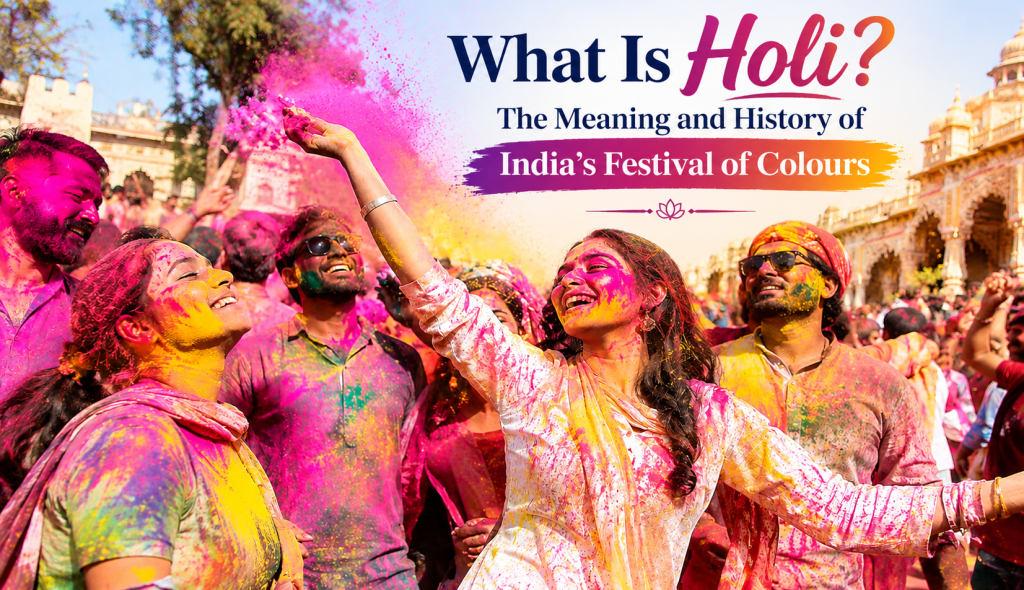
Holi is one of India’s most celebrated Hindu festivals, marking the arrival of spring through vibrant colours, music, traditional food and joyful gatherings. Known around the world as the Festival of Colours, Holi represents the triumph of good over evil, love, renewal and togetherness.
Celebrated across different parts of India, Holi brings families, friends and communities together through traditions rooted in Hindu mythology and Indian culture. For international visitors, it offers a fascinating opportunity to discover India’s religious heritage, experience its cultural diversity and participate in one of the country’s most recognisable celebrations.
What Is the Holi Festival?
The Holi festival is an annual Hindu celebration observed on the full moon day of the Hindu lunar month of Phalguna, generally in February or March. It marks the transition from winter to spring and is associated with happiness, devotion, new beginnings and the victory of good over evil.
Holi is traditionally celebrated over two main stages. The first is Holika Dahan, when communities gather around ceremonial bonfires on the evening before the main festival. The following day, known as Rangwali Holi, is celebrated with coloured powders, water, music and festive gatherings.
Although Holi has religious significance for Hindus, its social celebrations also bring together people from different backgrounds, making it an important part of India’s cultural calendar.
Meaning of Holi Festival
The meaning of Holi festival goes beyond the colourful celebrations seen on the streets. It reflects several important ideas that are deeply connected with Indian traditions and Hindu beliefs.
Renewal and the arrival of spring: Holi welcomes the changing season, when winter gives way to warmer weather and nature begins to flourish.
The victory of good over evil: The traditional story of Prahlad and Holika represents the triumph of faith and goodness over arrogance and wrongdoing.
Love and relationships: The festival is associated with the divine love of Radha and Krishna, whose playful stories are an important part of Holi traditions.
Forgiveness and togetherness: Holi encourages people to reconnect, overcome past disagreements and celebrate friendships and family relationships.
Community and cultural identity: Music, traditional sweets, dancing and colourful gatherings create opportunities for communities to celebrate together.
These traditions make Holi both a religious occasion and a celebration of human connection.
History of Holi in India
The history of Holi in India is closely associated with Hindu mythology, devotional traditions and seasonal celebrations. Two popular religious stories explain many of the customs observed during the festival: the story of Prahlad and Holika, and the association of Radha and Krishna with colours.
These are traditional religious narratives rather than independently established historical accounts. They continue to influence the way Holi is celebrated across India.
The Story of Prahlad and Holika
One of the most widely known stories associated with Holi concerns Prahlad, a devoted follower of Lord Vishnu, one of the principal deities in Hinduism.
According to Hindu mythology, Prahlad was the son of King Hiranyakashipu, who demanded that everyone worship him. However, Prahlad remained devoted to Lord Vishnu, refusing to obey his father’s wishes.
Angered by his son’s devotion, Hiranyakashipu repeatedly attempted to punish him. Eventually, he sought help from his sister Holika, who was believed to possess protection against fire.
Holika entered a blazing fire with Prahlad, intending to destroy him. However, Prahlad survived while Holika was consumed by the flames.
This story represents the triumph of devotion and goodness over arrogance and evil.
The tradition of Holika Dahan originates from this legend. On the evening before Holi, people gather around ceremonial bonfires, symbolising the destruction of negativity and the victory of good over evil.
Radha and Krishna: The Connection Between Holi and Colours
Another popular tradition connects Holi with Radha and Krishna, two important figures in Hindu devotional traditions.
According to legend, Krishna, who had a dark blue complexion, wondered why Radha’s skin was fairer than his. His mother, Yashoda, playfully suggested that he apply colour to Radha’s face. Krishna followed her suggestion, and their playful exchange became associated with the tradition of celebrating Holi with colours.
This story is particularly significant in the Braj region of Uttar Pradesh, which includes Mathura, Vrindavan, Barsana and Nandgaon. These places are closely associated with the life and legends of Krishna.
The traditions of this region feature devotional music, colourful celebrations, flower petals and playful rituals that reflect the stories of Radha and Krishna.
Why Is Holi Celebrated in India?
Holi is celebrated in India for religious, seasonal and social reasons. Although customs differ between regions, the festival generally represents five important themes:
- Triumph of good over evil: The story of Prahlad and Holika reminds people of the importance of faith and righteousness.
- Arrival of spring: Holi celebrates seasonal renewal and the changing natural environment.
- Love and devotion: The stories of Radha and Krishna highlight love, affection and devotion.
- Forgiveness and friendship: People use the occasion to reconnect and strengthen relationships.
- Community celebrations: Music, traditional food and colourful gatherings bring people together.
Holika Dahan and Rangwali Holi are the two central parts of the celebration. The former represents the victory of good over evil, while the latter is an occasion for sharing happiness through colours, music and social gatherings.
How Is Holi Celebrated Across India?
Holi celebrations vary across India, with different regions following their own traditions, rituals and cultural practices.
Mathura and Vrindavan, Uttar Pradesh: These destinations are closely associated with Krishna. Their celebrations include temple festivities, devotional songs, flower celebrations and traditional colour rituals.
Barsana, Uttar Pradesh: Barsana is famous for Lathmar Holi, a traditional celebration in which women playfully strike men with wooden sticks while the men protect themselves with shields.
Jaipur, Rajasthan: Jaipur celebrates Holi through cultural gatherings, traditional music, folk performances and colour festivities. Rajasthan Tourism has also promoted special Holi events for international visitors.
Shantiniketan, West Bengal: Holi is celebrated as Basanta Utsav, or Spring Festival, featuring traditional songs, dances and cultural performances.
Bihar: Known locally as Phagua, Holi is celebrated with folk songs, music, dancing and colourful gatherings.
These regional variations demonstrate that Holi is not a single uniform celebration. Each destination brings its own traditions and cultural identity to the festival.
Why Is Holi Known as the Festival of Colours?
Holi is internationally recognised as the Festival of Colours because of its vibrant tradition of playing with coloured powders and water.
The coloured powder used during celebrations is commonly called gulal. On the main day of Holi, people apply gulal to friends and family, exchange greetings and participate in festive gatherings.
Some communities also celebrate with coloured water, traditional water guns called pichkaris, flower petals, music and dancing.
The use of colours is also associated with the playful stories of Radha and Krishna. Over generations, these traditions have become the most recognisable feature of Holi.
Beyond its colourful appearance, the celebration represents happiness, friendship, togetherness and the joy of welcoming a new season.
Experience Holi in India as an International Traveller
For international travellers, experiencing Holi in India can be a memorable introduction to the country’s culture and traditions. However, choosing the right celebration and understanding local customs can make the experience more enjoyable.
Here are some practical tips for visitors:
- Choose organised celebrations: Consider reputable, family-friendly events or guided cultural experiences.
- Wear comfortable clothing: Choose old, light-coloured clothes that you do not mind getting stained.
- Protect your skin and eyes: Wear sunglasses, cover exposed skin where appropriate and use colours from reputable suppliers.
- Protect your belongings: Keep your phone, camera and other valuables in waterproof protective bags.
- Respect personal boundaries: Ask permission before applying colours to someone or photographing them.
- Understand local traditions: Follow the guidance of local hosts and respect religious ceremonies and temple customs.
If you are planning a visit around the festival, explore Experience Holi in India to discover travel experiences and opportunities to celebrate this remarkable Indian tradition.
Frequently Asked Questions About Holi
1. What is Holi and why is it celebrated?
Holi is a major Hindu festival celebrated to welcome spring and symbolise the triumph of good over evil. Known as the Festival of Colours, it brings people together through coloured powders, music, dancing, traditional food and religious rituals. It is also associated with the stories of Prahlad, Holika, Radha and Krishna.
2. What is the meaning of Holi festival?
The meaning of Holi festival is connected with renewal, happiness, love, forgiveness and togetherness. Its traditions encourage people to overcome negativity, strengthen relationships and celebrate the arrival of spring. For many Hindus, it also represents devotion and the victory of good over evil.
3. When is Holi celebrated in India?
Holi is celebrated annually on the full moon day of the Hindu lunar month of Phalguna, generally in February or March. Its Gregorian calendar date changes every year. Holika Dahan usually takes place on the evening before the main day of colour celebrations.
4. Why is Holi called the Festival of Colours?
Holi is called the Festival of Colours because people celebrate by applying gulal, or coloured powder, to one another. Coloured water, music, dancing and festive gatherings are also common. These colourful traditions reflect the joyful spirit associated with the festival.
5. Can international tourists participate in Holi celebrations in India?
Yes, international tourists can participate in many Holi celebrations in India. Visitors can join organised events, cultural programmes and community festivities. It is important to respect local customs, choose suitable celebrations, use safe colours and seek permission before applying colours or taking photographs.
Conclusion: Discover the Meaning of Holi in India
Holi is much more than a festival of coloured powders. It is a celebration of faith, spring, love, forgiveness and the cultural traditions that bring Indian communities together.
From the story of Prahlad and Holika to the playful legends of Radha and Krishna, its traditions reflect the richness of India’s religious and cultural heritage.
For international travellers, understanding the meaning behind Holi makes experiencing the festival even more rewarding. Whether you explore the traditional celebrations of Mathura and Vrindavan or enjoy the cultural atmosphere of Jaipur, Holi offers a memorable introduction to India’s vibrant traditions.
Planning to experience India’s Festival of Colours? Discover Holi festival travel experiences in India with IndiaTravel.com and explore the traditions behind this extraordinary celebration.