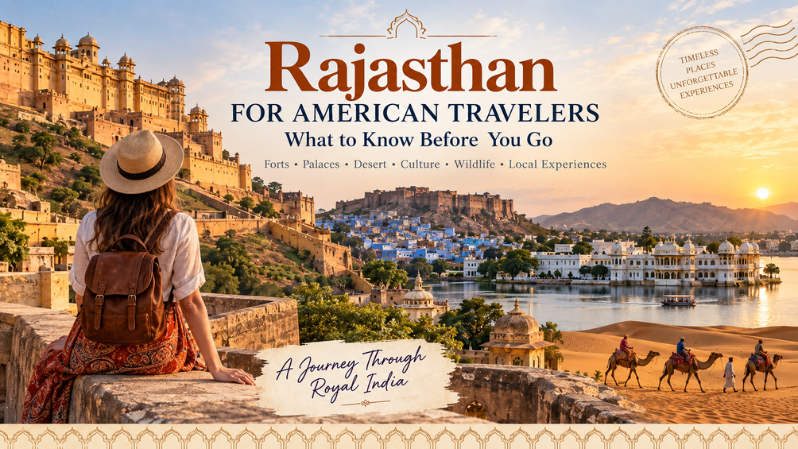
Rajasthan is one of the best places in India for American travelers who want to experience historic forts, royal palaces, colorful markets, desert landscapes, traditional cuisine, wildlife, and local culture in a single trip.
For first-time visitors, however, planning a Rajasthan trip can raise plenty of questions. How many days do you need? When should you visit? Which cities are worth including? Is Rajasthan safe? Should you travel by train or hire a private car and driver? And can you combine Rajasthan with Delhi and the Taj Mahal?
This Rajasthan travel guide for American travelers answers those questions and helps you plan a comfortable, realistic itinerary without trying to see too much too quickly.
Quick Answer: What Should Americans Know Before Visiting Rajasthan?
For most American travelers, 7 to 14 days is a good amount of time for Rajasthan. Jaipur, Jodhpur, and Udaipur form an excellent first-time route, while travelers with more time can add Jaisalmer, Pushkar, Ranthambore, or rural Rajasthan. The cooler months, particularly October through March, are generally the most comfortable for sightseeing.
Many first-time visitors enter Rajasthan via Delhi, making it easy to combine the state with Agra and the Taj Mahal as part of a longer North India journey.
Rajasthan at a Glance
| Travel Question | Quick Answer |
| Best time to visit | Generally October to March |
| Recommended trip length | 7–14 days |
| Best cities for first-time visitors | Jaipur, Jodhpur and Udaipur |
| Desert destination | Jaisalmer |
| Popular wildlife extension | Ranthambore |
| Currency | Indian Rupee (INR) |
| Main international gateway | Delhi is a common starting point |
| Popular transport | Private car and driver, trains and domestic flights |
| Good for first India trip? | Yes, particularly as part of a well-paced itinerary |
Is Rajasthan Worth Visiting for American Travelers?
Yes. Rajasthan is particularly rewarding for travelers interested in Indian history, architecture, food, photography, traditional arts, and cultural experiences.
What makes Rajasthan unusual is the variety of experiences within one region.
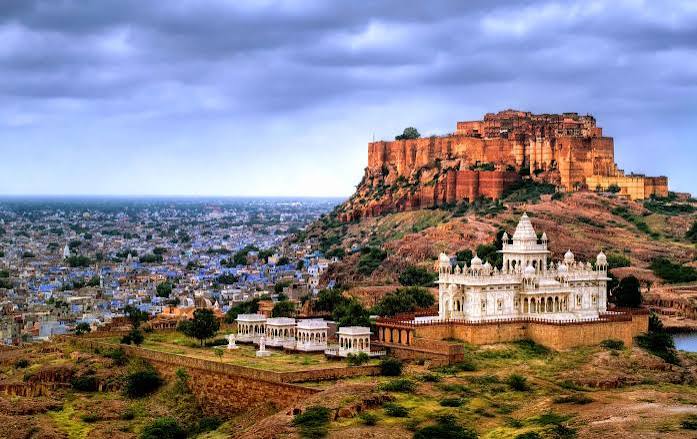
In Jaipur, travelers encounter grand forts, palaces, bazaars, and the distinctive architecture of the Pink City. Jodhpur is dominated by the imposing Mehrangarh Fort and the blue-painted neighborhoods of its old city. Udaipur offers lakes, palaces, and a slower atmosphere, while Jaisalmer introduces travelers to the landscapes of the Thar Desert.
Rajasthan also works well for travelers who want to go beyond famous monuments. Depending on the itinerary, a trip can incorporate village visits, local markets, craft traditions, cooking experiences, wildlife safaris, and stays in heritage properties.
For Americans making their first trip to India, Rajasthan can therefore provide both the famous landmarks they expect and the smaller cultural experiences they may remember most.
Where Is Rajasthan and How Do You Get There From the USA?
Rajasthan is located in northwestern India and shares borders with several Indian states as well as an international border with Pakistan.
Major tourism destinations include Jaipur, Udaipur, Jodhpur, Jaisalmer, Pushkar, Bikaner, and the Ranthambore region.
Flying From the United States to India
American travelers generally reach Rajasthan after arriving in India through a major international gateway. Delhi is particularly useful for Rajasthan itineraries because of its location and transport connections with Jaipur and other parts of North India.
Actual airline routes and schedules change, so travelers should compare current connections when booking rather than relying on a fixed routing recommendation.
Traveling From Delhi to Rajasthan
Delhi is one of the most practical starting points for a first Rajasthan journey.
It also creates an opportunity to combine three of India’s most popular destinations:
Delhi → Agra → Jaipur
This route is commonly known as India’s Golden Triangle.
Instead of finishing in Jaipur, travelers with additional time can continue deeper into Rajasthan:
Delhi → Agra → Jaipur → Jodhpur → Udaipur
This is one of the most logical routes for an American traveler who wants to see the Taj Mahal while also experiencing Rajasthan.
Can You Start Your Rajasthan Trip in Jaipur?
Yes.
Jaipur has air, rail, and road connections with other Indian cities and can work as the starting point for a Rajasthan-focused itinerary.
However, travelers who are visiting India for the first time often benefit from incorporating Delhi and Agra before continuing into Rajasthan, particularly if the Taj Mahal is already on their wish list.
What Is the Best Time to Visit Rajasthan?
For most international travelers, October through March is generally the most comfortable period for visiting Rajasthan because temperatures are usually more suitable for outdoor sightseeing than during the hottest months.
However, Rajasthan is geographically large, and weather conditions vary by destination, season, and time of day.
October and November
October and November are popular months for sightseeing as Rajasthan transitions away from the monsoon period and into cooler conditions.
These months can work well for city sightseeing, forts, markets, and road journeys.
December to February
Winter is one of Rajasthan’s most popular travel periods.
Days can be pleasant, but mornings and evenings may become surprisingly cool in some destinations. Travelers should not assume Rajasthan is warm at all times simply because it contains desert regions.
A light jacket or additional layers can be useful.
March
March can still be a good month for Rajasthan, although temperatures generally begin increasing as the season progresses.
Travelers visiting around major festivals should also plan accommodation and transportation carefully because demand can rise around popular dates.
April to June
These are typically the hottest months across much of Rajasthan.
Sightseeing can become challenging during the middle of the day, particularly for travelers who are not accustomed to high temperatures.
If traveling during this period, itinerary pacing, air-conditioned transportation, hydration, and early sightseeing become particularly important.
July to September
The monsoon affects Rajasthan differently from many other regions of India.
Travel during this period is possible, and some landscapes can become greener, but conditions vary. Travelers should evaluate their specific destinations rather than treating Rajasthan as having one uniform climate.
How Many Days Do You Need in Rajasthan?
Most first-time American travelers should allow 7 to 14 days for Rajasthan.
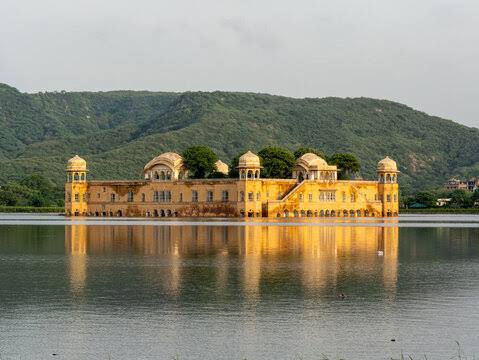
Seven days can cover the major highlights of Jaipur, Jodhpur, and Udaipur, while 10 to 14 days allows for a more relaxed itinerary and additional destinations.
Rajasthan in 7 Days
A straightforward itinerary could include:
Jaipur → Jodhpur → Udaipur
This works well for travelers who want the essential Rajasthan experience without taking a very long trip.
Rajasthan in 10 Days
With approximately 10 days, travelers can slow the pace and incorporate an additional destination or cultural experience.
A route might look like:
Jaipur → Pushkar → Jodhpur → Ranakpur → Udaipur
Alternatively, wildlife enthusiasts could incorporate Ranthambore.
Rajasthan in 14 Days
Two weeks creates much more flexibility.
Travelers can consider:
Jaipur → Pushkar → Jodhpur → Jaisalmer → Udaipur
or combine major cities with wildlife, rural experiences, and heritage stays.
American travelers should remember that distances that appear short on a map can take considerably longer to cover than expected. A slower Rajasthan itinerary is usually more enjoyable than changing hotels every night.
Best Places to Visit in Rajasthan for First-Time Travelers
Rajasthan has dozens of destinations worth visiting, but first-time travelers do not need to see all of them.
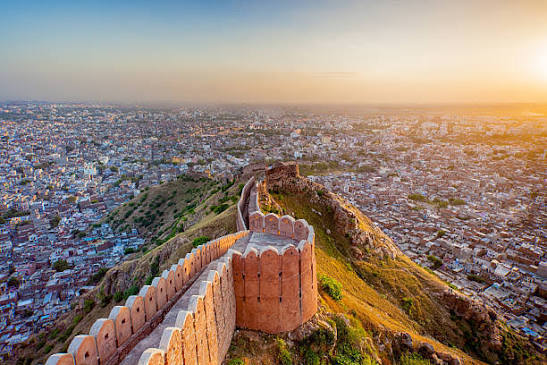
Jaipur: Best Introduction to Rajasthan
Jaipur, the state capital, is usually the most accessible introduction to Rajasthan.
Major attractions include Amber Fort, City Palace, Jantar Mantar, Hawa Mahal, and the old city’s markets.
Jaipur is also part of India’s Golden Triangle, which makes it especially convenient for travelers coming from Delhi and Agra.
Allow at least two full days if possible.
Jodhpur: Forts and the Blue City
Jodhpur is best known for Mehrangarh Fort, one of Rajasthan’s most impressive historic fort complexes.
Below the fort lies the old city, famous for its blue-painted buildings, markets, narrow streets, and traditional neighborhoods.
Jodhpur is an excellent stop between Jaipur and Udaipur or as part of a longer western Rajasthan itinerary.
Udaipur: Lakes, Palaces and a Slower Pace
Udaipur provides a different Rajasthan experience.
Instead of desert scenery, the city is associated with lakes, historic palaces, viewpoints, temples, and heritage hotels.
Highlights include City Palace and Lake Pichola, while the city’s setting makes it a popular place to slow down after a busy multi-city itinerary.
Jaisalmer: For the Thar Desert Experience
Jaisalmer lies farther west and requires more travel time, but it can be worthwhile for travelers interested in desert landscapes.
The city’s historic fort, traditional architecture, havelis, and access to the Thar Desert create a very different experience from Jaipur or Udaipur.
Because of the distances involved, Jaisalmer is better suited to longer Rajasthan itineraries.
Pushkar: For a Smaller-Scale Cultural Stop
Pushkar is known for its sacred lake, temples, markets, and religious importance.
It can provide a useful contrast to Rajasthan’s larger cities and is often incorporated between Jaipur and Jodhpur.
Ranthambore: For Wildlife and Tiger Safaris
Travelers interested in wildlife can add Ranthambore National Park to a Rajasthan itinerary.
Ranthambore is particularly known for its tiger habitat, although wildlife sightings are never guaranteed.
A Ranthambore extension can also connect a Rajasthan itinerary with a broader India wildlife tour.
Suggested Rajasthan Itinerary for American Travelers
For a first visit, one of the most efficient ways to experience North India is to combine the Golden Triangle with Rajasthan.
A sample route is:
Delhi → Agra → Jaipur → Jodhpur → Udaipur
Delhi
Begin with India’s capital, where Old Delhi and New Delhi provide very different perspectives on the city.
Experiences such as an Old Delhi heritage walk, rickshaw ride, or food tour can add cultural context before continuing to Rajasthan.
Agra
Continue to Agra for the Taj Mahal and other Mughal-era monuments.
Jaipur
Jaipur introduces travelers to Rajasthan through forts, palaces, bazaars, crafts, and architecture.
Jodhpur
Continue west toward Jodhpur for Mehrangarh Fort and the historic Blue City.
Udaipur
Finish in Udaipur with its lakes and palaces, providing a more relaxed ending to the journey.
Travelers with additional time can add Jaisalmer, Pushkar, Ranthambore, or rural Rajasthan.
How Much Does a Rajasthan Trip Cost?
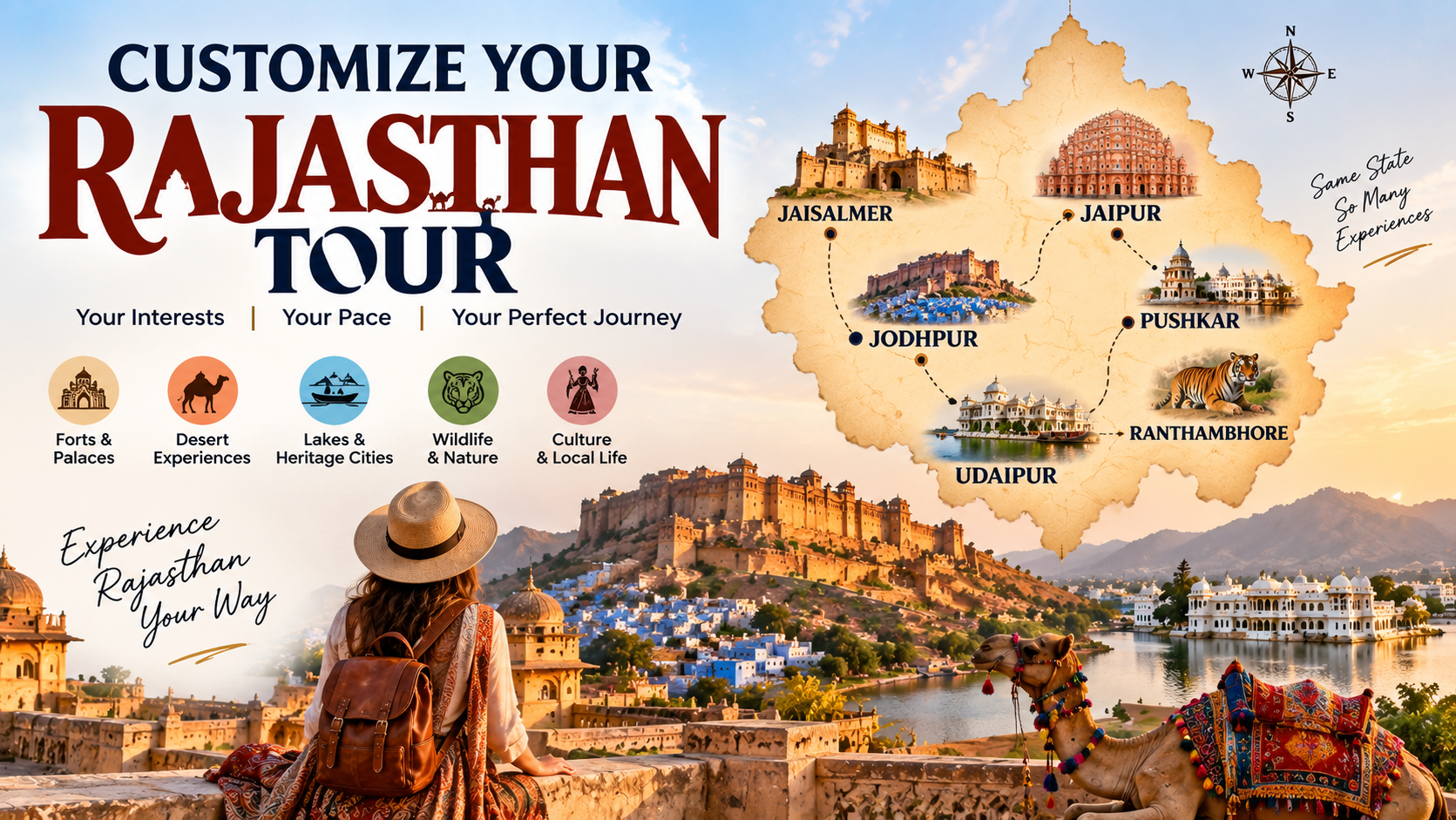
The cost of a Rajasthan trip varies significantly depending on travel style, accommodation, itinerary length, transportation, season, and whether the journey is independent or privately organized.
Instead of relying on a single average price, travelers should think about the main components of their budget.
Accommodation
Rajasthan offers everything from inexpensive guesthouses to internationally recognized luxury hotels and converted heritage properties.
Heritage accommodation can be one of the highlights of a Rajasthan journey, but prices vary considerably by season and property.
Transportation
Transportation costs depend on whether you use trains, domestic flights, taxis, or a private car and driver.
For multi-city itineraries, private transportation can provide additional flexibility, while trains may be useful for selected routes.
Guides and Sightseeing
Professional local guides can add considerable context at major historical sites.
Entrance fees, guided tours, monument visits, and special experiences should therefore be included when comparing tour costs.
Food
Dining costs vary enormously between local restaurants, hotels, cafés, and luxury properties.
Rajasthan also has an extensive vegetarian food tradition, making it relatively easy for vegetarian travelers to find options.
Private Tours
A private Rajasthan tour typically costs more than completely independent travel but can simplify transportation, hotels, guides, sightseeing, and logistics.
When comparing tour prices, look carefully at what is included, rather than comparing headline prices alone.
What Is the Best Way to Get Around Rajasthan?
There is no single best form of transportation for every traveler.
The most appropriate option depends on itinerary length, budget, comfort expectations, and travel style.
Private Car and Driver
For many international visitors, a private car and driver is one of the easiest ways to travel between Rajasthan’s major cities.
It offers flexibility for stops along the way and eliminates the need to organize separate transportation for every journey.
However, road travel can take longer than travelers expect, so itinerary planning still matters.
Trains
India’s rail network connects many major Rajasthan destinations.
Train travel can be an experience in itself, but availability and journey times vary by route.
Advance planning is advisable for popular services.
Domestic Flights
Flights can be useful when covering large distances or combining Rajasthan with destinations elsewhere in India.
Local Transportation
Taxis, auto-rickshaws, and other local options are available in major cities.
Travelers unfamiliar with local transportation may prefer prearranged transfers, particularly when arriving at a new destination.
Should Americans Hire a Private Driver in Rajasthan?
A private driver can be particularly useful for American travelers visiting multiple Rajasthan cities.
The main advantage is convenience. Travelers can avoid coordinating separate train, taxi, and transfer arrangements while retaining flexibility for stops between destinations.
A private driver does not replace a qualified sightseeing guide. The two roles are different: a driver manages transportation, while a guide provides historical and cultural interpretation at destinations.
For travelers who value convenience and have limited time in India, combining private transportation with local guides can make a multi-city Rajasthan itinerary considerably easier to manage.
Is Rajasthan Safe for American Tourists?
Rajasthan is a major international tourism destination, but travelers should use the same practical precautions they would when visiting any unfamiliar region.
Avoid carrying unnecessary valuables, keep passports and important documents secure, use reputable transportation providers, and remain aware in crowded tourist areas.
Travelers should also be cautious of unsolicited offers, overly persistent touts, and situations where pricing is unclear.
Women traveling in Rajasthan may prefer to arrange reliable transportation in advance, particularly for late arrivals or unfamiliar locations.
Before departure, American travelers should review current India travel information and advisories issued by official government sources because entry requirements, local conditions, and travel guidance can change.
What Should Americans Wear in Rajasthan?
Comfortable, lightweight, and relatively modest clothing works well for most Rajasthan sightseeing.
During warmer months, breathable fabrics and sun protection are particularly useful.
When visiting temples and religious sites, travelers should dress respectfully and follow any site-specific rules regarding footwear, photography, or clothing.
During winter, especially from December through February, pack layers for cooler mornings and evenings.
Comfortable walking shoes are important throughout the year because many forts, palaces, markets, and old-city neighborhoods involve substantial walking.
Food and Drinking Water in Rajasthan
Food is one of the highlights of traveling through Rajasthan.
Traditional dishes vary across the state, and vegetarian food is widely available.
Travelers may encounter dishes such as dal baati churma, gatte ki sabzi, ker sangri, and numerous breads, snacks, sweets, and regional preparations.
American travelers who are not accustomed to very spicy food can ask for milder preparation when possible.
For drinking water, use properly sealed bottled water or appropriately filtered drinking water from a reliable source. Travelers with sensitive stomachs may also want to be selective about uncooked foods and street food.
That does not mean avoiding local food entirely. Choosing busy, reputable establishments and following basic food hygiene precautions can help travelers enjoy Rajasthan’s cuisine more confidently.
Cultural Etiquette American Travelers Should Know
Understanding a few local customs can make travel through Rajasthan smoother and more respectful.
Dress Respectfully at Religious Sites
Some temples and religious places have specific expectations regarding clothing and behavior.
Remove Shoes When Required
Shoes commonly need to be removed before entering certain temples, homes, and sacred spaces.
Follow instructions at individual sites.
Ask Before Photographing People
Rajasthan is exceptionally photogenic, but travelers should ask permission before taking close photographs of individuals.
This is especially important in villages, religious settings, and private spaces.
Respect Religious Practices
Avoid interrupting ceremonies or treating religious rituals primarily as photo opportunities.
Bargaining in Markets
Negotiation can be part of shopping in some markets, but it should remain friendly and respectful.
Tipping
Tipping practices in India differ from those in the United States. Expectations can vary depending on the service, establishment, and circumstances, so travelers should seek current local guidance rather than automatically applying American tipping percentages.
Rajasthan vs Golden Triangle: Which Is Better for First-Time Visitors?
The Golden Triangle and Rajasthan are not really competing itineraries. They work extremely well together.
The Golden Triangle traditionally connects:
Delhi → Agra → Jaipur
It is ideal for travelers with limited time who want an introduction to North India and major landmarks such as the Taj Mahal.
A Rajasthan tour continues beyond Jaipur into destinations such as Jodhpur, Udaipur, Jaisalmer, Pushkar, and Ranthambore.
For an American traveler with approximately 10 to 14 days, combining both can provide a more complete first journey:
Delhi → Agra → Jaipur → Jodhpur → Udaipur
Travelers with additional time can then incorporate wildlife, desert experiences, or rural Rajasthan.
10 Rajasthan Travel Tips for American Visitors
- Don’t overpack your itinerary. Travel between Rajasthan cities can take longer than the map suggests.
- Allow at least two nights in major cities. Jaipur, Jodhpur, and Udaipur deserve more than a quick stop.
- Carry comfortable walking shoes. Forts and historic neighborhoods often involve uneven surfaces and considerable walking.
- Start sightseeing early during warmer months. This can help you avoid the hottest part of the day.
- Carry sun protection. A hat, sunscreen, and reusable water bottle can be useful.
- Keep some Indian rupees available. Cards and digital payments may not be practical for every small transaction.
- Use experienced local guides where they add value. Rajasthan’s monuments become considerably more meaningful when their historical context is explained properly.
- Don’t judge travel time by distance alone. Road conditions, traffic, and stops can change journey times.
- Include experiences, not just monuments. Markets, food, crafts, village visits, heritage walks, and cultural activities can make the trip more memorable.
- Leave room for flexibility. Trying to see every Rajasthan destination on one trip often results in spending too much time in transit.
Frequently Asked Questions About Rajasthan for American Travelers
Is Rajasthan safe for American tourists?
Rajasthan is one of India’s major tourism regions and receives international visitors throughout the year. Travelers should nevertheless take normal precautions with valuables, transportation, crowded areas, food, and personal safety. Check current official travel guidance before your trip because conditions and advisories can change.
How many days are enough for Rajasthan?
Most first-time travelers should plan 7 to 14 days. Seven days can cover Jaipur, Jodhpur, and Udaipur, while 10–14 days provides enough time to add Jaisalmer, Pushkar, Ranthambore, or cultural experiences without making the itinerary excessively rushed.
What is the best month to visit Rajasthan?
There is no single best month for every traveler, but October through March is generally the most popular period because conditions are usually more comfortable for sightseeing than during Rajasthan’s hottest months.
Is Rajasthan good for a first trip to India?
Yes. Rajasthan is a strong choice for first-time visitors because it combines major historical attractions, distinctive cities, heritage accommodation, food, markets, cultural experiences, desert landscapes, and wildlife possibilities. It can also be easily combined with Delhi and Agra.
What is the best Rajasthan itinerary for 10 days?
A first-time 10-day Rajasthan itinerary can include Jaipur, Jodhpur, and Udaipur, with an additional stop such as Pushkar, Ranakpur, or Ranthambore depending on the traveler’s interests. Travelers wanting to include Jaisalmer should carefully account for the additional travel time.
Can I combine Rajasthan with the Taj Mahal?
Yes. This is one of the most practical ways to plan a first North India journey. A popular route is Delhi → Agra → Jaipur → Jodhpur → Udaipur, allowing travelers to visit the Taj Mahal before continuing deeper into Rajasthan.
Should I hire a private driver in Rajasthan?
A private car and driver can make a multi-city Rajasthan itinerary easier, particularly for travelers who prioritize convenience and flexibility. Trains and flights can also be incorporated where they make logistical sense.
Is English spoken in Rajasthan?
English is commonly used in hotels, major tourism businesses, and by many professional guides, although proficiency varies. Hindi and regional languages are widely spoken in everyday life.
What should Americans wear in Rajasthan?
Lightweight, comfortable, relatively modest clothing is practical for most sightseeing. Travelers should dress respectfully at religious sites and carry layers during the cooler winter months. Comfortable walking shoes are strongly recommended.
Can you travel Rajasthan without a tour?
Yes. Independent travel is possible using trains, flights, taxis, and locally arranged accommodation. However, travelers with limited time may find that a professionally organized private itinerary simplifies transportation, sightseeing, guides, and hotel logistics.
Is Rajasthan suitable for senior travelers?
Rajasthan can be suitable for senior travelers when the itinerary is planned at an appropriate pace. Factors such as stairs at forts, walking distances, road journeys, hotel accessibility, and rest time should be considered when designing the trip.
What food should I try in Rajasthan?
Regional specialties include dal baati churma, gatte ki sabzi, ker sangri, breads, snacks, sweets, and other local preparations. Rajasthan also offers extensive vegetarian options.
Do Americans need a visa to visit Rajasthan?
Rajasthan is part of India, so American citizens must meet India’s current entry and visa requirements. Because visa policies and eligibility rules can change, travelers should verify the latest requirements through the official Government of India visa resources before booking or traveling.
Plan Your Rajasthan Journey
Rajasthan rewards travelers who give it enough time.
Rather than trying to visit every famous city, first-time American travelers will usually have a better experience by choosing a logical route and allowing enough time to understand each destination.
For a shorter first visit to North India, Delhi, Agra, and Jaipur provide an excellent introduction through the Golden Triangle.
With more time, continue from Jaipur into Jodhpur and Udaipur, or extend the journey with Jaisalmer, Ranthambore, Pushkar, village experiences, or other parts of Rajasthan.
IndiaTravel.com can help travelers build a private Rajasthan itinerary around their preferred travel dates, pace, accommodation style, cultural interests, wildlife experiences, and the amount of time available in India.
Whether Rajasthan is your entire trip or part of a larger journey through India, careful planning can turn it from a checklist of forts and palaces into a much deeper introduction to India’s history, landscapes, food, and living culture.