
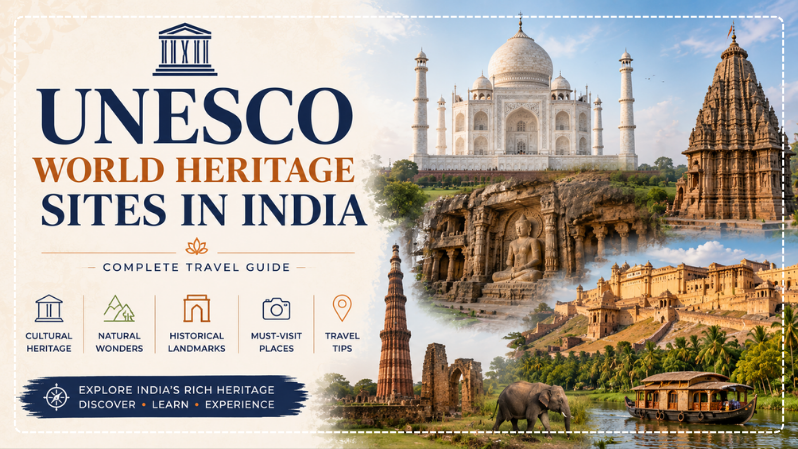
India has 45 UNESCO World Heritage Sites as of 2026 37 cultural, 7 natural, and 1 mixed. These sites span over 4,000 years of history, from the ancient Harappan city of Dholavira in Gujarat to the Maratha Military Landscapes inscribed in 2025. Visiting them gives you access to some of the world’s finest ancient monuments, temples, forts, and wildlife reserves.
Why UNESCO World Heritage Sites in India Deserve Your Attention
India ranks 6th globally for UNESCO-designated heritage properties, according to the UNESCO World Heritage Centre. Each site meets strict criteria for “Outstanding Universal Value” in culture, history, architecture, or ecology.
These aren’t just museum-piece ruins. Many remain living spaces, functioning temples, inhabited cities, and active railway lines. The Mountain Railways of India (Darjeeling, Nilgiri, and Shimla lines) still carry passengers daily. Jaipur’s walled city, inscribed in 2019, is home to over 3 million residents.
- 37 cultural sites cover temples, forts, caves, stepwells, and planned cities
- 7 natural sites protect critical ecosystems and endangered species
- 1 mixed site Khangchendzonga National Park in Sikkim qualifies on both cultural and natural grounds
For travelers, UNESCO India tourism offers a ready-made framework for trip planning. Each inscription comes with detailed documentation of what makes the site exceptional, helping you prioritize based on your interests.
Cultural Heritage Sites in India: Ancient Monuments You Should Visit
India’s 37 cultural World Heritage Sites form the largest category and cover nearly every major dynasty, religion, and architectural tradition on the subcontinent.
The Taj Mahal in Agra remains the most visited heritage place of India, drawing over 6 million visitors annually. Built between 1632 and 1653 under Mughal emperor Shah Jahan, it represents the peak of Mughal architecture. The Archaeological Survey of India (ASI) manages the site and caps daily visitor numbers during peak season.
Top cultural sites by region:
- North India: Taj Mahal, Agra Fort, Qutub Minar (Delhi), Red Fort (Delhi), Fatehpur Sikri, Humayun’s Tomb
- West India: Ajanta Caves, Ellora Caves, Rani ki Vav stepwell (Gujarat), Dholavira, Maratha Military Landscapes
- South India: Group of Monuments at Hampi, Great Living Chola Temples, Mahabalipuram, Sacred Ensembles of the Hoysala
- East India: Sun Temple at Konark, Moidams of the Ahom Dynasty (Assam), Ancient Buddhist Site of Sarnath
Planning Visits to Major Ancient Monuments in India
Most ASI-managed sites charge a two-tier entry fee; Indian nationals pay ₹40–50, while international visitors pay ₹600–1,000 depending on the site. The Taj Mahal charges ₹1,100 for international visitors (₹50 for Indians), with a separate Mausoleum access fee of ₹200.
Visit cultural sites early in the morning. Gates typically open at sunrise and close at sunset. The first two hours offer the best light for photography and the smallest crowds. For Hampi or Khajuraho, budget at least two full days a single afternoon is not enough to cover the spread of monuments.
Natural World Heritage Sites in India: Biodiversity Hotspots Worth Exploring
India’s seven natural World Heritage Sites protect some of the most ecologically significant landscapes in Asia. These sites conserve endangered species, unique geological formations, and critical habitats.
Kaziranga National Park in Assam shelters the world’s largest population of the Greater One-Horned Rhinoceros. According to the 2022 census, Kaziranga’s rhino population stood at 2,613 — roughly two-thirds of the global total. The park also supports healthy populations of tigers, elephants, and wild water buffalo.
- Kaziranga National Park (Assam) one-horned rhino, Bengal tiger, Asian elephant.
- Manas Wildlife Sanctuary (Assam) golden langur, pygmy hog, wild water buffalo
- Sundarbans National Park (West Bengal) largest mangrove forest, Royal Bengal Tiger
- Nanda Devi and Valley of Flowers (Uttarakhand) alpine meadows, snow leopard habitat
- Western Ghats (across six states) one of the world’s eight biodiversity hotspots
- Great Himalayan National Park (Himachal Pradesh) western Tragopan, musk deer
- Keladeo National Park (Rajasthan) migratory bird haven, Siberian crane wintering ground
Best Time to Visit Natural Heritage Sites
Timing matters for natural World Heritage Sites in India. Kaziranga opens from November to April the park closes during monsoon flooding. The Western Ghats are greenest from June to September, but trekking trails become slippery and leeches are common. Valley of Flowers blooms from July to September, making monsoon the only window for that site.
Book safari permits well in advance. Kaziranga and Sundarbans both limit daily visitor numbers. The Wildlife Institute of India and respective state forest departments manage these quotas.
How to Plan a Heritage Trip Across India’s UNESCO Sites
A practical approach to UNESCO India tourism is grouping sites into regional circuits rather than trying to cover the entire country in one trip.
Golden Triangle + Rajasthan Circuit (7–10 days): Start in Delhi (Qutub Minar, Red Fort, Humayun’s Tomb), drive to Agra (Taj Mahal, Agra Fort, Fatehpur Sikri), continue to Jaipur (Jantar Mantar, walled city), and extend to Jodhpur or Udaipur. Indian Railways connects Delhi–Agra–Jaipur on the Shatabdi and Gatimaan Express routes.
South India Temple Circuit (8–12 days): Fly into Chennai, visit Mahabalipuram, drive south to Thanjavur and Madurai for the Great Living Chola Temples, and end with Hampi in Karnataka. The Sacred Ensembles of the Hoysala inscribed in 2023 are a short detour from Hampi via Belur and Halebidu.
- Maharashtra Cave Circuit: Combine Ajanta and Ellora Caves in a 3–4 day trip from Aurangabad (now Chhatrapati Sambhajinagar). Both sites are within 100 km of the city.
- Northeast India: The Moidams of the Ahom Dynasty in Assam and Kaziranga can share a single itinerary from Guwahati.
Common mistake: Trying to visit more than two or three major historical attractions in India per day. Heritage fatigue is real. A slower pace gives you better photographs, deeper understanding, and fewer missed details.
Key Takeaways
- India has 45 UNESCO World Heritage Sites as of 2026 37 cultural, 7 natural, and 1 mixed ranking 6th globally.
- The Archaeological Survey of India (ASI) manages most cultural sites; entry fees differ for Indian and international visitors.
- Group sites into regional circuits (Golden Triangle, South India, Maharashtra caves) for efficient travel.
- Natural sites like Kaziranga and Sundarbans require advance safari permits and have strict seasonal windows.
- The newest addition, the Ancient Buddhist Site of Sarnath, was inscribed in July 2026 at the 48th World Heritage Committee session in Busan.
- Budgeting at least two full days per major heritage destination rushing through ancient monuments in India defeats the purpose.
Frequently Asked Questions About UNESCO sites in India
1. How many UNESCO World Heritage Sites are there in India?
As of 2026, India has 45 properties inscribed on the UNESCO World Heritage List, including 37 cultural sites, 7 natural sites, and 1 mixed site. These include famous attractions such as the Taj Mahal, Agra Fort, Jaipur City, Qutb Minar, Hampi, and Kaziranga National Park.
2. What are the most famous UNESCO World Heritage Sites in India?
Some of the most famous UNESCO World Heritage Sites in India include the Taj Mahal, Agra Fort, Qutb Minar, Jaipur City, Hampi, Ajanta and Ellora Caves, Khajuraho, and Kaziranga National Park. These sites showcase India’s diverse history, architecture, religion, culture, and natural heritage.
3. Which UNESCO World Heritage Sites should first-time visitors to India visit?
First-time visitors can consider the Taj Mahal, Agra Fort, Qutb Minar, Jaipur City, and Fatehpur Sikri for a strong introduction to India’s history and architecture. Travelers with more time can explore Hampi, the Ajanta and Ellora Caves, or natural sites such as Kaziranga National Park.
4. What is the best UNESCO World Heritage Site to visit in India?
The Taj Mahal in Agra is one of the best UNESCO World Heritage Sites for first-time visitors to India. Built by Mughal Emperor Shah Jahan in memory of Mumtaz Mahal, this white-marble monument is regarded by UNESCO as an outstanding masterpiece of Indo-Islamic architecture and was inscribed in 1983.
5. Is the Taj Mahal a UNESCO World Heritage Site?
Yes, the Taj Mahal is a UNESCO World Heritage Site. Located in Agra, Uttar Pradesh, it was inscribed on the UNESCO World Heritage List in 1983. Built in the 17th century by Mughal Emperor Shah Jahan, the monument is internationally recognized for its exceptional architecture and cultural significance.