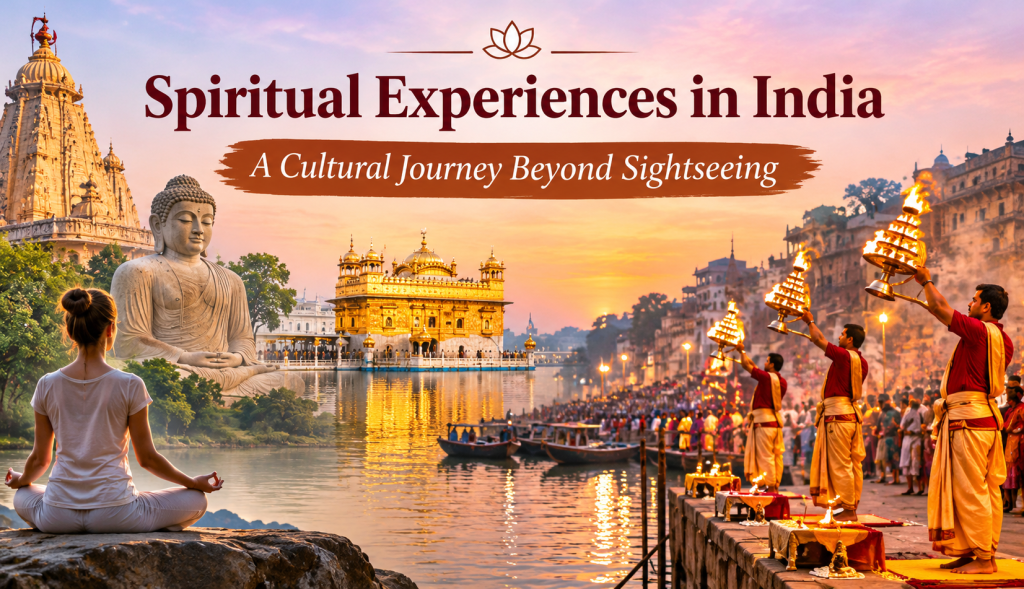
India offers travellers far more than historic monuments, beautiful landscapes and famous attractions. Across the country, spirituality is woven into everyday life through temple rituals, sacred rivers, meditation practices, religious festivals and community traditions. For international visitors, these experiences provide an opportunity to understand India’s cultural identity from a different perspective.
The spiritual experiences in India range from witnessing the evening Ganga Aarti in Varanasi to practising yoga in Rishikesh, exploring Buddhist heritage in Bodh Gaya and discovering Sikh traditions in Amritsar. Each destination has its own beliefs, customs and atmosphere. Whether you are interested in meditation, ancient architecture or local religious traditions, a spiritual journey through India can bring you closer to the country’s diverse communities and ways of life.
What Makes Spiritual Experiences in India Unique?
India is home to several major religious and philosophical traditions, including Hinduism, Buddhism, Jainism and Sikhism. These traditions have shaped the country’s architecture, festivals, pilgrimage routes, art and everyday customs over centuries.
Spirituality is not limited to places of worship. It can also be experienced through community kitchens, meditation sessions, traditional ceremonies, yoga classes and religious festivals. Sacred rivers, particularly the Ganges, hold deep cultural and religious significance for millions of people.
Experiences vary considerably between regions. A Buddhist monastery in Bodh Gaya offers a different atmosphere from a Hindu temple in Madurai or a Sikh place of worship in Amritsar. Understanding these differences makes spiritual tourism in India more meaningful and helps visitors appreciate the country’s cultural diversity.
8 Meaningful Spiritual Experiences to Have in India
1. Witness the Evening Ganga Aarti in Varanasi
One of the most memorable religious experiences in India is witnessing the evening Ganga Aarti at Dashashwamedh Ghat in Varanasi. This devotional ceremony takes place beside the River Ganges and attracts worshippers and visitors from around the world.
As evening approaches, priests perform coordinated rituals using large oil lamps, incense and traditional offerings. Devotional music, bells and chanting create a distinctive atmosphere along the riverfront.
Visitors can observe the ceremony from the ghats or from boats, subject to local arrangements and conditions. It is important to remember that the Ganges is a sacred river for many people, so visitors should approach the ceremony with respect.
2. Experience Yoga and Meditation in Rishikesh
Located beside the Ganges in the Himalayan foothills, Rishikesh is widely associated with yoga, meditation and spiritual learning. Its ashrams and wellness centres welcome visitors interested in exploring traditional practices.
Travellers can choose from beginner yoga classes, guided meditation sessions, breathing exercises and longer wellness retreats. Some centres also offer opportunities to learn about yogic philosophy and traditional approaches to mindful living.
You do not need previous yoga experience to attend an introductory class. However, it is worth checking the teaching approach, qualifications, accommodation arrangements and daily schedule before booking a retreat.
3. Explore the Sacred Temples of India
India’s ancient temples provide insight into its religious beliefs, regional architecture and artistic traditions. Visiting them can be an important part of a cultural journey, even for travellers who are not following a pilgrimage.
The Kashi Vishwanath Temple in Varanasi is an important Hindu shrine dedicated to Lord Shiva. In southern India, the Meenakshi Amman Temple in Madurai is admired for its elaborate towers, sculptural details and religious significance. The Ramanathaswamy Temple in Rameswaram is another major pilgrimage destination, known for its long corridors and sacred associations.
Temple entry rules, photography restrictions and dress requirements vary. Visitors should check local guidance before arriving.
4. Discover Buddhist Spirituality in Bodh Gaya
For those interested in Buddhist heritage, Bodh Gaya is among the most significant spiritual places to visit in India. It is traditionally recognised as the place where Siddhartha Gautama attained enlightenment and became the Buddha.
The Mahabodhi Temple is the central attraction of the pilgrimage site. Visitors can explore its historic temple complex, observe Buddhist devotional practices and see the sacred Bodhi Tree associated with the Buddha’s enlightenment.
Bodh Gaya is also home to monasteries representing Buddhist communities from different countries. Their architecture, prayer traditions and cultural influences offer visitors an opportunity to understand the international reach of Buddhism.
5. Experience Sikh Spiritual Traditions at the Golden Temple
The Golden Temple, also known as Harmandir Sahib, is one of the most important centres of Sikhism. Located in Amritsar, its golden architecture, peaceful surroundings and welcoming atmosphere make it a meaningful destination for visitors from different backgrounds.
One of its most distinctive traditions is Seva, meaning selfless service. Visitors can also learn about Langar, the community kitchen that serves free meals to people regardless of religion, nationality or social background.
The experience highlights Sikh values of equality, service and community. Visitors should cover their heads, remove their footwear and follow the site’s instructions. Photography and access rules should also be respected.
6. Experience Traditional Ashram Life
An ashram experience offers a different way to explore India’s spiritual traditions. Unlike a conventional hotel stay, an ashram may follow a structured daily routine that includes meditation, yoga, prayer, spiritual discussions and simple meals.
Some ashrams welcome short-term visitors for introductory programmes, while others offer residential retreats lasting several days or weeks. The type of experience depends on the institution and its traditions.
Before choosing an ashram, check whether it accepts international visitors, what activities are included, whether participation is optional and what accommodation is available. A suitable programme can offer a valuable introduction to traditional spiritual practices and mindful living.
7. Witness India’s Spiritual Festivals
Religious festivals are among the most colourful cultural experiences in India. They bring communities together through prayers, music, processions, decorations and traditional food.
Diwali is celebrated by many communities and is associated with light, renewal and the victory of good over evil. Holi is known for its colourful celebrations and seasonal traditions. The Kumbh Mela is a major religious gathering associated with sacred bathing and pilgrimage.
Festival dates, locations and local customs vary. Travellers should plan ahead, particularly for large gatherings, and follow crowd-management and safety instructions.
8. Experience Spirituality Through Nature in the Himalayas
The Himalayas have a special place in India’s spiritual and pilgrimage traditions. Their mountains, rivers and remote valleys are associated with meditation, religious journeys and reflection.
Destinations such as Kedarnath and Badrinath attract pilgrims travelling through the Garhwal Himalayas. These journeys combine religious significance with demanding mountain landscapes.
For visitors, the experience may involve exploring traditional settlements, observing pilgrimage customs and appreciating the natural environment. Himalayan travel requires careful planning because weather, altitude, road conditions and seasonal access can affect journeys.
Best Places for Spiritual Tourism in India
India has many destinations where travellers can explore different religious traditions and cultural practices. Some of the most notable include:
-
Varanasi, Uttar Pradesh: Known for the Ganges ghats, evening Aarti and Hindu pilgrimage traditions.
-
Rishikesh, Uttarakhand: A popular destination for yoga, meditation and ashram experiences.
-
Bodh Gaya, Bihar: An important centre of Buddhist pilgrimage associated with the Buddha’s enlightenment.
-
Amritsar, Punjab: Home to the Golden Temple and Sikh traditions of service and community.
-
Haridwar, Uttarakhand: A sacred city on the Ganges, known for its ghats and religious ceremonies.
-
Madurai, Tamil Nadu: Famous for Meenakshi Amman Temple and its Dravidian architecture.
-
Puri, Odisha: An important pilgrimage destination associated with the Jagannath Temple.
-
Dharamshala, Himachal Pradesh: Known for Tibetan Buddhist culture, monasteries and meditation opportunities.
These destinations can be explored individually or combined into longer journeys according to travel time and personal interests.
How International Travellers Can Experience India’s Spiritual Culture Respectfully
Understanding local customs can make spiritual journeys more rewarding. Religious places are active centres of worship, not simply tourist attractions, so visitors should be considerate of people who come to pray.
Keep these practical points in mind:
-
Dress appropriately: Choose modest clothing that covers shoulders and knees where required.
-
Remove footwear: Many temples, gurdwaras and other religious sites require visitors to remove their shoes.
-
Ask before taking photographs: Some places restrict photography, particularly inside prayer areas.
-
Respect religious practices: Avoid interrupting ceremonies or making unnecessary noise.
-
Follow participation rules: Observe rituals without assuming that visitors can take part in every activity.
-
Check entry restrictions: Some temples have specific access rules based on religious tradition.
-
Choose responsible centres: Research yoga schools and meditation retreats before enrolling.
Understanding local customs is an important part of experiencing India’s spiritual heritage. From traditional greetings and temple etiquette to religious celebrations and everyday practices, knowing what to expect can make your journey more meaningful. Read our guide to Indian Traditions and Customs to learn more about local culture and respectful travel practices.
Best Time to Plan a Spiritual Journey Through India
The best time depends on the destinations and activities included in your trip. For many North Indian destinations, October to March generally offers more comfortable sightseeing weather. Varanasi, Bodh Gaya, Amritsar and Rishikesh can be considered during this period, although local conditions vary.
Himalayan pilgrimage destinations such as Kedarnath and Badrinath have seasonal access, and their opening periods depend on official announcements and weather conditions. Travellers should check current route information before planning.
If you want to experience festivals such as Diwali, Holi or Kumbh Mela, plan around their specific dates and locations. Yoga and meditation retreats operate at different times throughout the year, so check the programme schedule before booking.
How to Plan a Spiritual Tour in India
A well-planned spiritual tour should reflect your interests rather than trying to cover every religious destination in one trip.
-
Choose your focus: Decide whether you are most interested in Hindu traditions, Buddhist heritage, Sikh culture, yoga or meditation.
-
Combine suitable destinations: Varanasi and Rishikesh can be included in a wider North India journey, depending on available time.
-
Explore Buddhist heritage: Add Bodh Gaya to a trip focused on Buddhist history and pilgrimage.
-
Include Amritsar: Discover Sikh traditions and the community experience at the Golden Temple.
-
Allow time for meaningful experiences: Avoid rushing between destinations if you want to attend ceremonies or join a retreat.
-
Arrange local guidance: Knowledgeable guides can help explain the history, customs and significance of religious sites.
Travellers interested in Buddhist heritage can also explore our Buddhist Tourism Circuit in India for ideas on connecting important Buddhist destinations. Those interested in exploring Varanasi alongside another important spiritual destination can consider our Ayodhya and Varanasi Tour Package.
Frequently Asked Questions About Spiritual Experiences in India
1. What are the best spiritual experiences in India for foreigners?
Some meaningful experiences include watching Ganga Aarti in Varanasi, attending yoga classes in Rishikesh, visiting Bodh Gaya, exploring the Golden Temple in Amritsar and learning about traditional Indian ashram life.
2. Which city is best for spiritual tourism in India?
Varanasi is one of India’s best-known spiritual destinations because of its temples, sacred ghats and Ganga Aarti. Rishikesh is particularly popular among visitors interested in yoga, meditation and wellness retreats.
3. Can foreigners attend Ganga Aarti in Varanasi?
Yes. International visitors can generally observe the evening Ganga Aarti at Dashashwamedh Ghat. They can watch from the riverfront or explore suitable boat-viewing arrangements, subject to local conditions.
4. Where can tourists experience yoga and meditation in India?
Rishikesh is a popular destination for yoga and meditation. Other options include Dharamshala and wellness centres in different parts of India. Visitors should check individual programmes and teaching credentials.
5. Are there traditional ashrams where international travellers can stay?
Yes. Some Indian ashrams accept international visitors for short stays, yoga programmes and meditation retreats. Accommodation, participation requirements and facilities differ, so confirm arrangements directly with the institution.
Conclusion – Discover the Spiritual Side of India
India’s spiritual heritage offers a different way to discover the country. From the evening rituals of Varanasi and the meditation centres of Rishikesh to Buddhist landmarks in Bodh Gaya and the community traditions of Amritsar, each destination reveals a distinct part of India’s cultural identity.
The most rewarding spiritual experiences in India come from taking time to understand local beliefs, respecting religious customs and connecting with the communities that keep these traditions alive.
Whether you are planning a cultural holiday, a meditation retreat or a wider pilgrimage-inspired journey, India offers many possibilities beyond conventional sightseeing. Explore thoughtfully planned India tours with IndiaTravel.com and discover the country’s spiritual and cultural heritage.