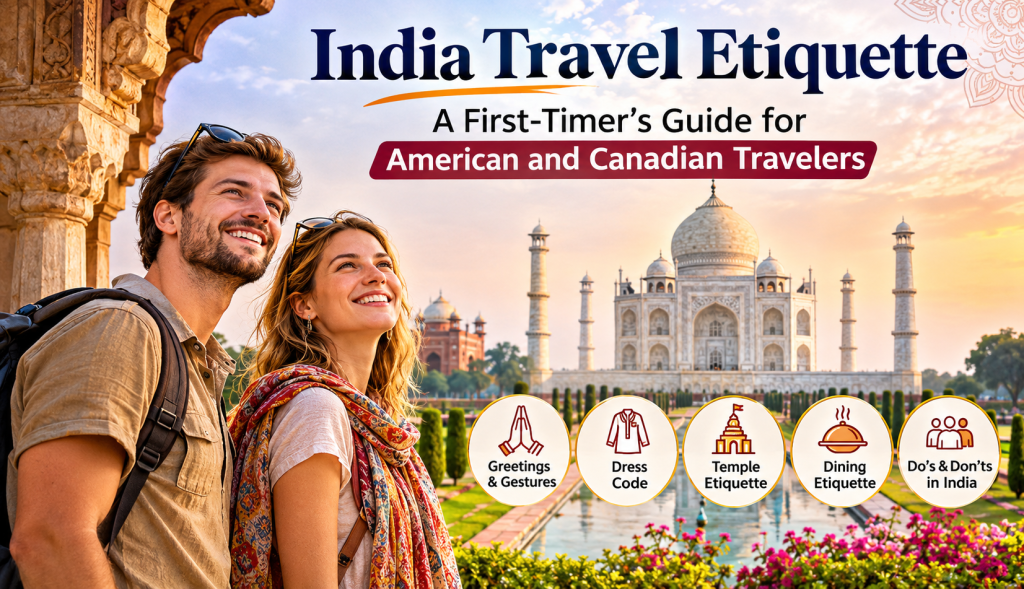
Visiting India for the first time can be an unforgettable experience. From exploring historic monuments and colorful markets to experiencing traditional festivals and regional cuisines, the country offers an extraordinary variety of cultural experiences. However, understanding India travel etiquette before your journey can make your interactions with local communities more comfortable and meaningful.
For travelers from the United States and Canada, some everyday practices in India may feel unfamiliar. Greetings, dining habits, clothing expectations and religious customs can differ from those in North America. India is also incredibly diverse, with traditions varying across states, languages, religions and communities.
Whether you are planning to explore Delhi, experience Rajasthan’s royal heritage, visit the temples of South India or discover Kerala’s traditional lifestyle, knowing a few cultural guidelines will help you travel respectfully.
This guide covers essential Indian customs for tourists, including social interactions, temple etiquette, dining manners, appropriate clothing and practical do’s and don’ts for first-time international visitors.
Understanding India Travel Etiquette and Cultural Norms
India does not have one uniform set of cultural practices. Its traditions are shaped by regional identities, religious beliefs, languages, historical influences and modern lifestyles.
For example, the social environment of Mumbai or Bengaluru may feel different from that of a traditional village in Rajasthan or a small Himalayan community. Similarly, customs in Kerala may differ considerably from those in Punjab or West Bengal.
Understanding these differences is an important part of responsible travel.
Here are three cultural aspects worth understanding before your visit:
-
Regional diversity: Food, greetings, clothing and celebrations vary across Indian states. Do not assume that a custom you encounter in Delhi applies throughout the country.
-
Family and hospitality: Family relationships and respect for elders are important in many Indian households. Guests may be welcomed with refreshments or invitations to share a meal.
-
Religious diversity: Hinduism, Islam, Sikhism, Christianity, Buddhism, Jainism and other traditions contribute to India’s cultural landscape. Religious practices influence festivals, architecture, food and everyday activities.
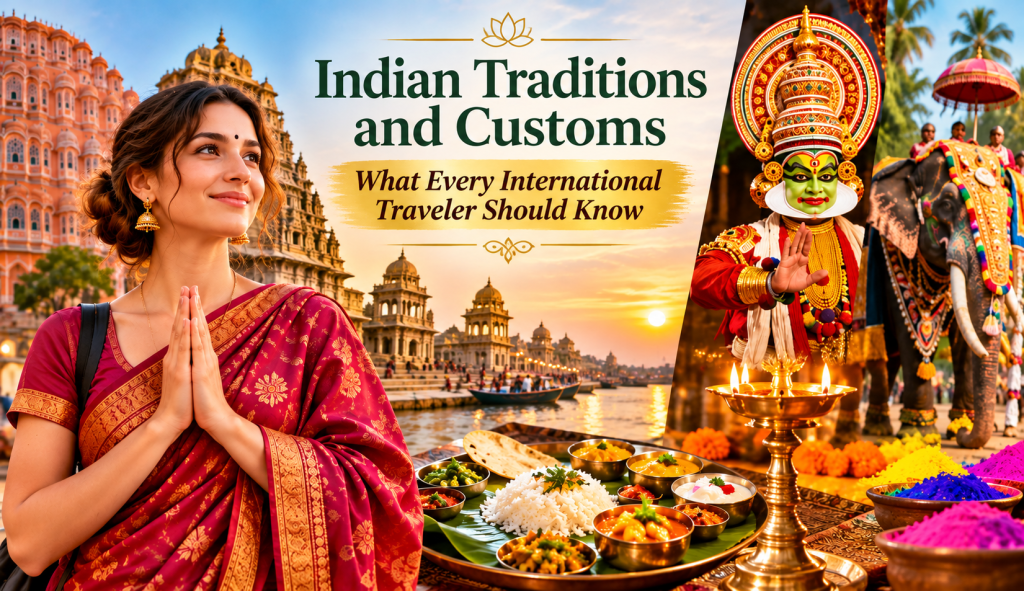
For a broader understanding of the country’s heritage, explore our guide to Indian traditions and customs, which explains India’s cultural background, regional traditions and social practices.
Indian Customs Every First-Time Tourist Should Know
Understanding Indian customs for tourists does not require memorizing hundreds of rules. A few thoughtful habits can make everyday interactions easier.
Respect Elders and Local Communities
In many Indian families, elders receive particular respect. Greeting older people politely and using courteous language is generally appreciated.
You do not need to follow unfamiliar family traditions, but showing consideration toward older people and community practices helps create positive interactions.
Understand Personal Space
Crowded streets, markets, railway stations and public transportation can feel more congested than many places in the United States or Canada.
Physical proximity in these environments is not necessarily intentional. Remain patient, avoid unnecessary confrontation and respect personal boundaries whenever possible.
Follow Local Behavior in Public Places
When visiting markets, religious sites or traditional neighborhoods:
-
Follow queues where they are maintained.
-
Keep conversations at a considerate volume in sacred spaces.
-
Avoid littering or disturbing public activities.
-
Respect local residents and their privacy.
-
Follow instructions from authorized guides and site personnel.
Behave Respectfully in Indian Homes
If you receive an invitation to an Indian home, it can be a wonderful opportunity to understand local lifestyles.
Before entering, ask whether you should remove your shoes. Follow your host’s guidance about seating and meals, and avoid entering private rooms without permission.
A small gift, such as sweets or flowers, can be a thoughtful gesture when visiting someone’s home.
Indian Greetings, Gestures and Social Etiquette
Greetings are one of the easiest ways to establish a friendly connection with people in India.
Namaste: A Respectful Traditional Greeting
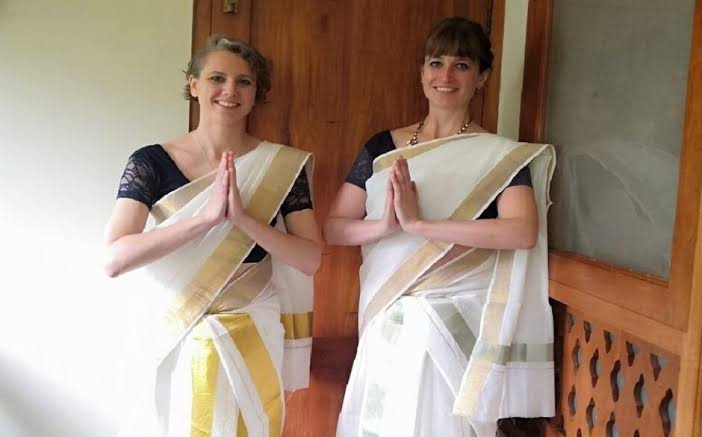
Namaste is a widely recognized Indian greeting performed by bringing both palms together near the chest, accompanied by a slight bow of the head.
It can be used when meeting someone, expressing gratitude or saying goodbye. It is an appropriate greeting for international visitors and does not require physical contact.
Handshakes and Other Greetings
Handshakes are common in professional environments, hotels and many urban social interactions. However, greeting preferences vary between individuals and communities.
A respectful approach is to follow the other person’s lead rather than automatically initiating physical contact.
You may also encounter regional greetings such as:
-
Namaskar – used in several parts of India.
-
Vanakkam – commonly associated with Tamil Nadu.
-
Sat Sri Akal – associated with Sikh and Punjabi communities.
-
Aadab – a respectful greeting used in some Urdu-speaking settings.
Use Respectful Body Language
Some gestures have cultural significance in India.
-
Use your right hand when offering or receiving items in settings where this custom is observed.
-
Avoid pointing your feet toward religious images or people when seated.
-
Do not touch someone’s head without permission.
-
Avoid unnecessary physical contact if you are unsure about another person’s preferences.
What to Wear in India: Dress Code for Foreign Tourists
India does not have a universal dress code for tourists. Clothing expectations depend on the destination, weather, religious institution and social environment.
In major cities and popular tourist destinations, ordinary comfortable clothing is generally acceptable. However, modest clothing is a thoughtful choice when visiting religious places or culturally conservative communities.
Clothing for Religious Places
When visiting temples, mosques, gurdwaras or monasteries, consider wearing clothing that covers your shoulders and knees.
Some religious institutions require visitors to cover their heads. Carrying a lightweight scarf or shawl is a practical solution.
For example, visitors to the Golden Temple in Amritsar must cover their heads and remove their footwear.
What to Pack for India
Consider carrying:
-
Lightweight cotton shirts and trousers for warmer destinations.
-
Comfortable walking shoes and easy-to-remove footwear.
-
A scarf or shawl for religious sites.
-
Warm layers for Himalayan destinations and winter travel.
-
Rain protection during monsoon travel.
-
Comfortable clothing suitable for long sightseeing days.
Beachwear may be appropriate at designated beaches, but covering up when leaving the beach is a considerate choice.
Indian Temple Etiquette and Religious Customs
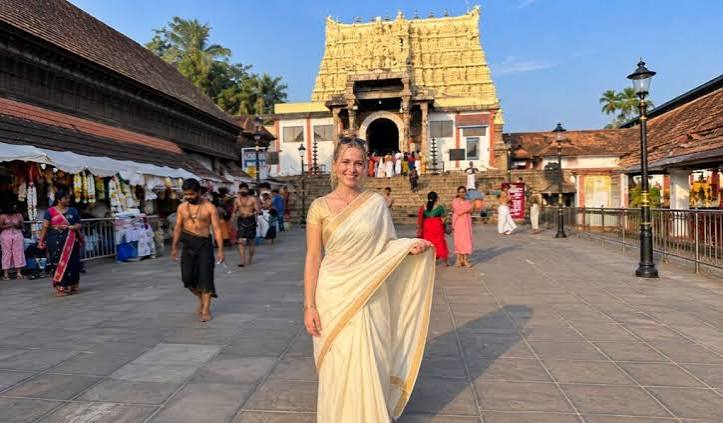
Remove Footwear Where Required
Removing footwear is customary at many Hindu temples and is also practiced at many mosques, gurdwaras and Buddhist religious sites.
Look for designated shoe-storage areas and follow instructions at the entrance.
Follow Clothing and Head-Covering Requirements
Some institutions require modest clothing or head coverings. At Sikh gurdwaras, for example, covering the head is an important visitor requirement.
The Golden Temple in Amritsar welcomes visitors from different backgrounds, subject to its visitor guidelines.
Respect Photography Restrictions
Photography policies vary between religious institutions.
Some sites permit photographs in outdoor areas but restrict cameras inside sanctums or prayer spaces. Others prohibit photography more broadly.
Always check signs and ask staff before taking photographs.
Respect Religious Ceremonies
When visiting a place of worship:
-
Maintain a respectful volume.
-
Avoid interrupting prayers.
-
Do not touch religious objects unless permitted.
-
Follow instructions from religious authorities.
-
Avoid entering restricted areas.
Some Hindu temples restrict entry to non-Hindus, so check individual visitor policies before planning your visit.
Indian Dining Etiquette: Food Customs and Table Manners
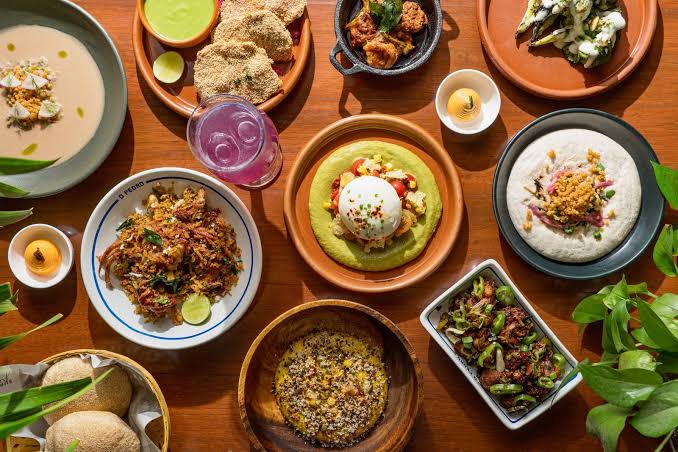
Eating With Hands in India
Eating with hands is common in several Indian communities, particularly when enjoying traditional meals.
When this practice is followed, the right hand is generally used for eating. However, international visitors are not expected to know every traditional dining custom. Using cutlery is perfectly acceptable when available.
Vegetarian and Non-Vegetarian Food Traditions
India offers an extensive variety of vegetarian and non-vegetarian dishes.
Vegetarian food is particularly important in some religious communities. Jain dietary practices, for example, include specific restrictions on ingredients.
If you have dietary requirements, allergies or food preferences, explain them clearly when ordering.
Sharing Meals and Dining Etiquette
In some Indian households, meals are shared among family members, while restaurants may serve individual portions or shared dishes.
Keep these suggestions in mind:
-
Wash your hands before traditional meals.
-
Use serving utensils where provided.
-
Avoid wasting food.
-
Ask about ingredients if you have allergies.
-
Communicate your spice tolerance.
-
Respect religious and dietary preferences.
Food Hygiene and Drinking Water
For international visitors, food and water hygiene deserve attention.
Choose reputable restaurants, eat freshly prepared food and use properly treated or sealed drinking water. If you have food allergies, confirm ingredients and preparation methods rather than relying only on dish names.
Indian Hospitality Customs: What Foreign Visitors Should Expect
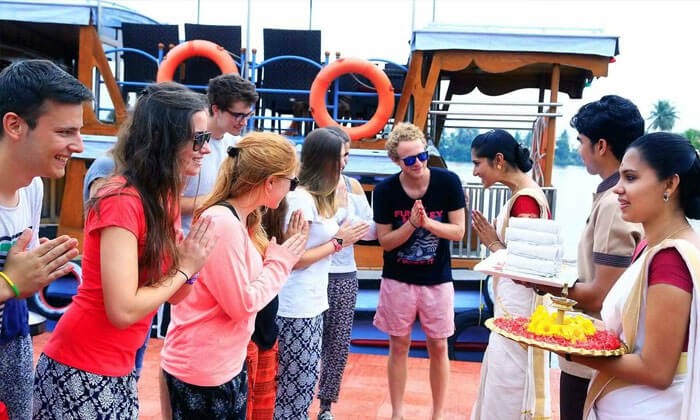
The traditional expression Atithi Devo Bhava conveys the idea of treating guests with great respect.
If someone invites you to their home:
-
Ask whether you should remove your footwear.
-
Accept refreshments if you would like them.
-
Politely explain any dietary restrictions.
-
Follow your host’s guidance during meals.
-
Ask before photographing family members or private spaces.
If you cannot accept an invitation or food offering, a friendly and respectful explanation is perfectly appropriate.
Gift-Giving Etiquette
A small gift can be a thoughtful gesture when visiting an Indian home. Sweets, flowers or a souvenir from your home country are possible choices.
Avoid assuming that gifts are expected at every social interaction.
Discover India’s Culture Beyond Sightseeing
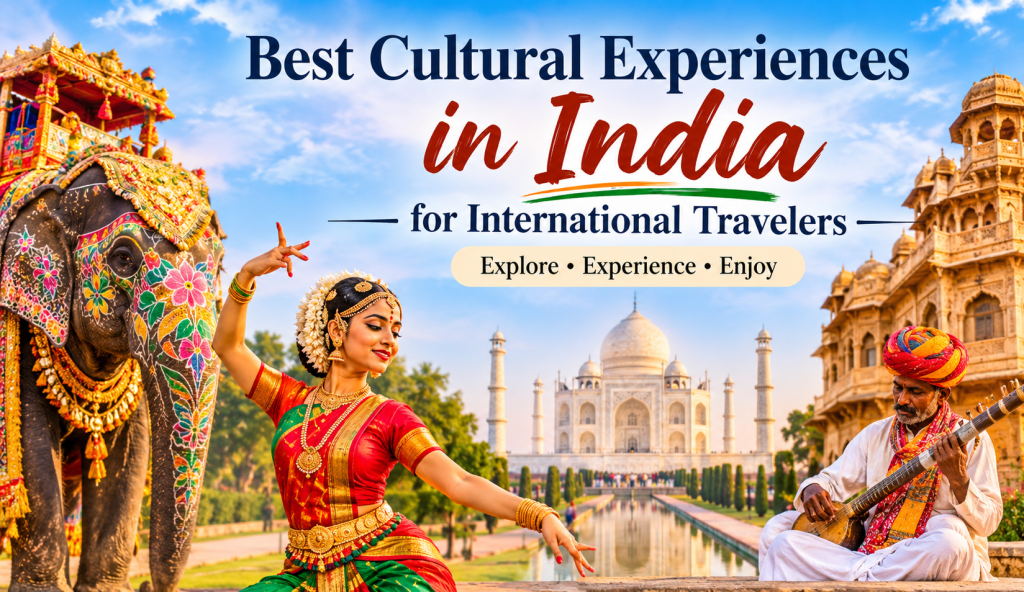
Once you understand local customs, you can explore India’s culture more meaningfully through heritage walks, regional food experiences, traditional performances and local community interactions.
Discover our guide to the best cultural experiences in India for inspiration.
Planning Your First Trip to India?
Understanding India’s cultural etiquette is only one part of preparing for an unforgettable journey. From exploring historic cities and architectural landmarks to discovering regional cuisines and local traditions, India offers experiences for every kind of traveler.
Explore our India travel packages and discover journeys that match your interests.
Cultural Differences Between India, the USA and Canada
American and Canadian visitors may notice differences in everyday communication, social interactions and public behavior. These differences should be understood as cultural variations rather than universal rules.
| Cultural aspect | What travelers may notice in India |
|---|---|
| Personal space | Crowded public spaces may involve closer physical proximity. |
| Greetings | Namaste and regional greetings are common alongside handshakes. |
| Communication | Some conversations use indirect or context-dependent expressions. |
| Food habits | Shared meals and eating with hands are common in certain settings. |
| Time expectations | Traffic and local circumstances can affect schedules. |
| Religion | Multiple religious traditions are visible in public life. |
| Hospitality | Guests may be offered refreshments or meals. |
| Family relationships | Extended family connections are important in many households. |
| Social interactions | Expectations around clothing and public affection vary. |
| Public behavior | Customs and expectations differ across cities and communities. |
For example, if a local contact says they will try to arrange something, politely confirm whether the arrangement is actually finalized. This is useful for travel bookings and appointments, regardless of cultural background.
Do’s and Don’ts in India for American and Canadian Travelers
| Do’s | Don’ts |
|---|---|
| Greet people politely. | Assume everyone prefers handshakes. |
| Dress respectfully at religious places. | Ignore site-specific dress requirements. |
| Remove shoes where required. | Enter restricted areas wearing footwear. |
| Ask permission before photographing people. | Photograph strangers without consent. |
| Follow local religious customs. | Interrupt prayers or ceremonies. |
| Respect dietary preferences. | Make insensitive comments about food or religion. |
| Be patient in crowded areas. | Push or behave aggressively. |
| Follow household customs. | Enter private spaces without permission. |
| Use designated waste bins. | Litter at monuments and natural attractions. |
| Bargain politely where appropriate. | Haggle in fixed-price shops or malls. |
Common Mistakes Foreigners Make When Visiting India
Even well-prepared travelers can misunderstand certain cultural expectations. These are some common mistakes worth avoiding.
1. Assuming India has one uniform culture: Customs vary significantly between states and communities. Research your specific destinations.
2. Ignoring religious-site instructions: Clothing, footwear, photography and entry requirements differ between institutions. Check before visiting.
3. Photographing people without permission: Always ask before taking close-up photographs of individuals, children or private gatherings.
4. Underestimating travel times: Traffic, weather, road conditions and festivals can affect journey schedules. Keep some flexibility in your itinerary.
5. Making insensitive cultural comments: Food habits, religious beliefs and local traditions deserve respect, even when unfamiliar.
6. Ignoring dietary ingredients: Travelers with allergies or dietary restrictions should communicate their needs clearly.
7. Expecting identical communication styles: Listen carefully, clarify arrangements and confirm important bookings.
Practical India Travel Etiquette Tips Before Your First Trip
Before travelling from the USA or Canada to India, use this checklist to prepare:
-
Research the cultural practices of your destinations.
-
Check local festivals and public celebrations.
-
Pack comfortable and appropriate clothing.
-
Learn a few basic Hindi expressions.
-
Carry a scarf for religious-site visits.
-
Check individual temple and monument visitor guidelines.
-
Ask permission before photographing people.
-
Understand local transportation arrangements.
-
Communicate food allergies and dietary restrictions.
-
Respect regional differences and local communities.
-
Keep your itinerary flexible enough for traffic and unexpected delays.
A little preparation can help you enjoy India’s cultural experiences with greater confidence.
Frequently Asked Questions About India Travel Etiquette
1. What should American tourists know before visiting India?
American tourists should understand India’s regional diversity, religious traditions, dress expectations and dining customs. Respect local practices, check religious-site rules and allow extra time for transportation.
2. What should Canadian travelers know about Indian culture?
Canadian travelers should be aware that Indian social customs, food traditions, greetings and communication styles can differ between regions. Being polite, culturally aware and open to local experiences will help make the trip more rewarding.
3. What are the most important etiquette rules in India?
The most important guidelines include respecting religious traditions, dressing appropriately at places of worship, removing footwear where required, asking permission before photographing people and respecting local dietary preferences.
4. Is it necessary to dress modestly in India?
Modest clothing is recommended at temples, mosques, gurdwaras and other religious institutions. In cities and tourist areas, clothing expectations are generally more relaxed, although local customs should always be considered.
5. Can foreigners eat with their hands in India?
Yes. Foreign visitors can comfortably eat with their hands. In traditional dining settings, the right hand is generally used. Using cutlery is also acceptable.
6. Is Namaste an appropriate greeting for tourists?
Yes. Namaste is a widely recognized and respectful greeting. Bring your palms together near your chest and slightly bow your head when greeting someone.
7. What should tourists avoid doing in India?
Avoid disrespecting religious beliefs, photographing people without permission, ignoring local dress requirements, littering, interrupting religious ceremonies and entering restricted areas.
8. What are the biggest cultural differences between India and North America?
Some noticeable differences involve personal space in crowded environments, communication styles, dining customs, family relationships, religious practices and social expectations. However, these vary considerably between individuals and communities.
Conclusion: Travel India with Cultural Awareness and Confidence
India is a destination where every journey offers opportunities to discover something new. Its historic cities, religious landmarks, regional cuisines, traditional celebrations and welcoming communities create experiences that go beyond conventional sightseeing.
Understanding India travel etiquette allows American and Canadian travelers to approach these experiences with greater awareness and respect. Simple gestures, such as greeting people politely, following religious-site guidelines, respecting local food traditions and asking permission before taking photographs, can make a meaningful difference.
Whether you are discovering Rajasthan’s heritage, exploring Kerala’s backwaters, visiting Varanasi’s spiritual landmarks or experiencing the cultural diversity of India’s major cities, travel with curiosity and an open mind.
Plan Your India Journey with IndiaTravel.com
Planning your first journey to India from the United States or Canada?
IndiaTravel.com can help you discover the country’s cultural, heritage, wildlife and regional experiences through thoughtfully planned travel journeys.
Explore our India tour packages or contact our team to discuss a personalized itinerary based on your travel dates, preferred destinations and interests.
Get in touch with IndiaTravel.com
-
Website: www.indiatravel.com
-
Email: info@indiatravel.com
-
WhatsApp: +91 98210 88817
-
Contact page: Speak with our travel team
Discover India with confidence, cultural awareness and experiences worth remembering.