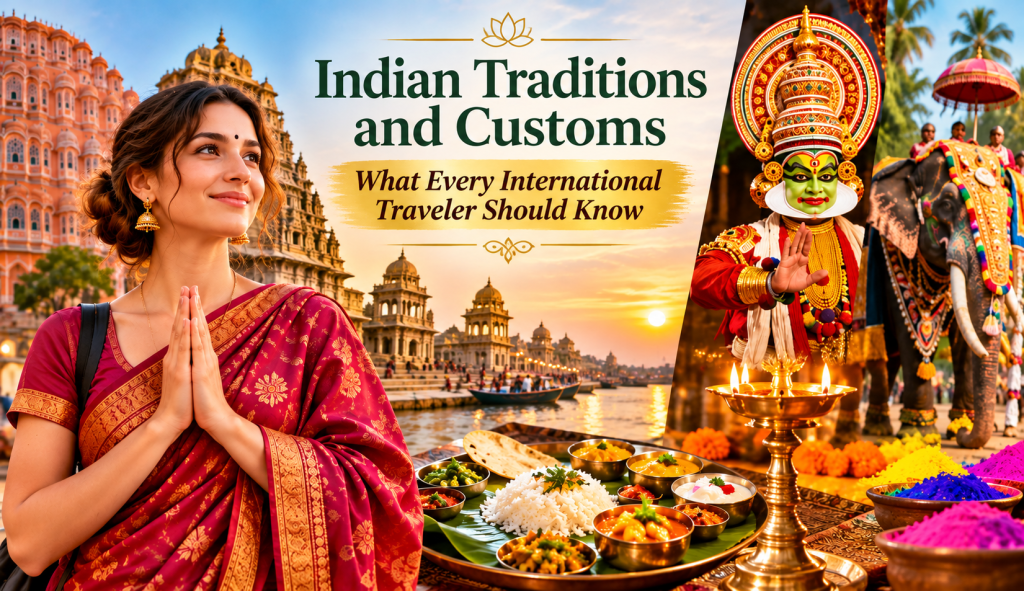
India is a destination where every journey introduces travelers to something new, from centuries-old temples and colorful festivals to traditional family meals and welcoming local communities. Understanding Indian traditions and customs can make your visit more meaningful, particularly if you are traveling from the USA, Canada, the UK or Europe for the first time. What may seem unfamiliar initially often reflects the country’s deep-rooted values, religious beliefs and regional heritage.
India is not defined by a single culture. Its traditions vary across states, languages, religions and communities. A greeting in Rajasthan may differ from one in Kerala, while food habits in Punjab can be very different from those in Tamil Nadu. Learning a few cultural practices before your trip helps you interact respectfully, understand local lifestyles and enjoy experiences beyond conventional sightseeing.
From knowing how to greet people and dress at religious sites to understanding traditional dining habits and celebrating local festivals, this guide explains the essential things international travelers should know before visiting India.
Understanding Indian Culture and Traditions
Indian culture and traditions have developed over thousands of years through diverse civilizations, religions, languages and regional communities. The country’s heritage includes Hindu, Buddhist, Jain, Sikh, Islamic, Christian and other cultural influences, each contributing to its architecture, food, festivals, music and everyday life.
One of the most interesting aspects of India is how traditions coexist with modern lifestyles. Cities such as Delhi, Mumbai and Bengaluru feature contemporary business districts, international restaurants and modern entertainment, while historic neighborhoods and rural communities continue to preserve traditional practices.
Regional Diversity Across India
India’s cultural identity changes significantly from one region to another.
- North India: Rajasthan, Punjab, Uttar Pradesh and Himachal Pradesh are known for traditional music, historic forts, religious celebrations and distinctive cuisines.
- South India: Kerala, Tamil Nadu, Karnataka and Andhra Pradesh feature classical dance, ancient temples, traditional architecture and regional food cultures.
- East India: West Bengal, Odisha, Assam and neighboring states have distinctive artistic traditions, literature, religious celebrations and handloom crafts.
- West India: Gujarat, Maharashtra and Goa offer diverse cultural experiences, including folk dances, coastal traditions, historic architecture and colorful festivals.
These differences make exploring multiple Indian regions especially rewarding for international visitors.
Family, Hospitality and Community Values
Family relationships and community connections play an important role in many Indian households. Respect for elders, family gatherings, religious celebrations and shared meals are common features of social life, although practices differ between families and generations.
Hospitality is another familiar cultural value. Guests may be welcomed with refreshments, homemade food or friendly conversation. You might hear the expression “Atithi Devo Bhava,” commonly translated as “The guest is equivalent to God.” It expresses the traditional importance placed on welcoming visitors.
For travelers interested in experiencing everyday Indian life, visiting a local home through an appropriately arranged cultural experience can provide valuable insight.
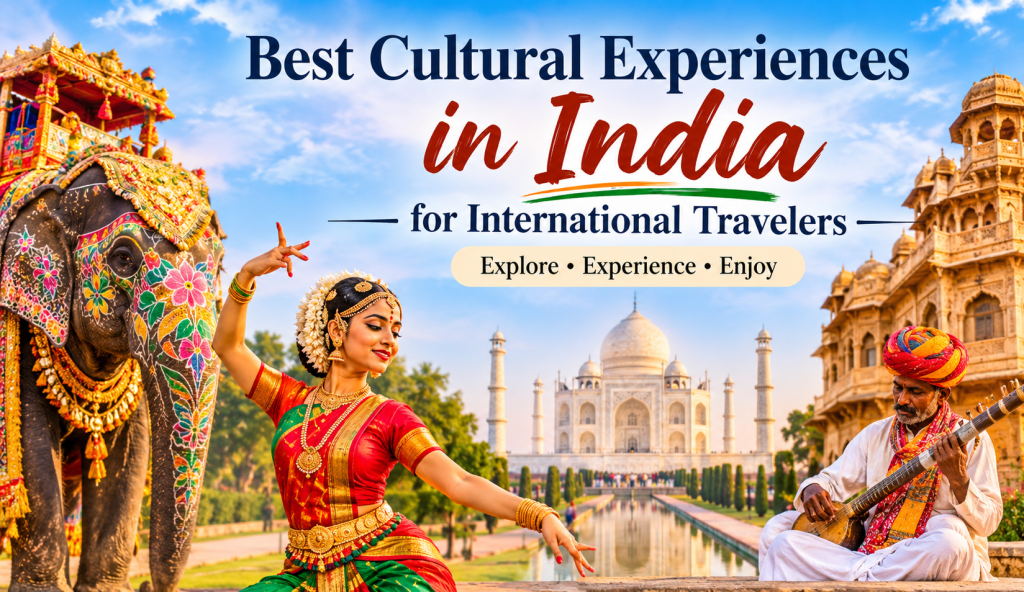
For more inspiration, explore our guide to the best cultural experiences in India for international travelers.
Indian Customs for Foreigners: Essential Things to Know
Understanding Indian customs for foreigners does not require memorizing complicated rules. A few thoughtful habits can make social interactions more comfortable.
Respect Elders and Local Traditions
In many Indian families and communities, elders receive particular respect. Younger family members may greet older relatives first, listen to their advice and use respectful forms of address.
As a visitor, greeting older people politely and speaking courteously is generally appreciated.
Understand Hospitality and Social Invitations
You may be offered tea, snacks or a meal when visiting someone’s home. Accepting a small refreshment is a friendly gesture, although politely declining is also acceptable.
If invited to a local home:
- Ask whether you should remove your shoes.
- Avoid entering private rooms without permission.
- Bring a small gift if appropriate.
- Follow your host’s guidance during meals.
- Respect household religious practices.
Be Considerate in Public Spaces
India’s public spaces can be busy, particularly in markets, railway stations and religious areas. Be patient, respect queues where they are maintained and avoid unnecessarily loud behavior in quiet or sacred environments.
Personal space may also feel different from what travelers are accustomed to in Western countries, particularly in crowded urban settings.
Indian Greetings and Gestures
Greetings are among the easiest ways to connect with people when visiting another country. India has several regional languages and greeting traditions, but a few common expressions are widely understood.
Namaste: A Traditional Indian Greeting
Namaste is one of India’s most recognizable greetings. It is performed by bringing both palms together near the chest, with a slight bow of the head.
The gesture is commonly associated with respect and acknowledgment. It can be used when meeting someone, saying goodbye or expressing appreciation.
International travelers can comfortably use Namaste in hotels, shops, cultural experiences and everyday interactions.
Handshakes and Other Greetings
Handshakes are common in professional settings, hotels and many urban social interactions. However, greeting preferences can vary depending on the person, community and situation.
A respectful approach is to follow the other person’s lead rather than automatically assuming physical contact is expected.
You may also hear regional greetings such as:
- Namaskar – commonly used in several parts of India.
- Vanakkam – a traditional greeting in Tamil Nadu.
- Sat Sri Akal – a greeting associated with Sikh and Punjabi communities.
- Aadab – a respectful greeting used in some Urdu-speaking cultural settings.
Respectful Body Language
Small gestures can communicate respect.
- Use your right hand when offering or receiving something in situations where this custom is observed.
- Avoid pointing your feet directly toward religious images or people when seated.
- Ask before touching someone’s head or personal belongings.
- Avoid unnecessary physical contact when you are unsure about someone’s preferences.
Indian Dress Code for Tourists
India does not have one universal dress code. Clothing expectations depend on the destination, weather, religious institution and social setting.
For most tourist destinations, comfortable everyday clothing is acceptable. However, dressing modestly is a thoughtful choice when visiting religious places or culturally conservative communities.
What to Wear at Religious Places
When visiting temples, mosques, gurdwaras and other religious institutions, consider wearing clothing that covers your shoulders and knees.
Some places may also require visitors to cover their heads. A lightweight scarf or shawl is useful to carry during sightseeing.
Traditional Indian Clothing
Travelers may also enjoy trying traditional Indian clothing.
Popular choices include:
- Saree – a traditional garment worn by women, particularly for celebrations and formal occasions.
- Salwar Kameez – a comfortable outfit consisting of a tunic and trousers, commonly worn by women.
- Kurta – a traditional tunic worn by men and women.
- Dhoti – a traditional unstitched garment worn by men in several regions.
- Lehenga – a traditional skirt-based outfit often worn during weddings and festivals.
Wearing traditional clothing is not necessary, but it can be an enjoyable way to participate in cultural activities when appropriate.
Clothing According to Weather and Region
India experiences different climatic conditions across its regions.
Lightweight cotton clothing is useful during hot weather, while warmer layers are necessary for Himalayan destinations and winter visits. During the monsoon season, quick-drying clothing and suitable footwear can make sightseeing more comfortable.
Indian Temple Etiquette: Rules Every Visitor Should Know
Religious sites are among India’s most important cultural attractions. They are also active places of worship, so visitors should understand local expectations before entering.
Remove Your Footwear Where Required
Removing shoes before entering temples is customary at many Hindu temples. Similar practices are followed at many mosques, gurdwaras and Buddhist religious sites, although the exact arrangements vary.
Look for shoe racks or designated footwear areas near entrances.
Dress Respectfully
Modest clothing is recommended at many religious institutions. Some sites have specific requirements for covering the head, shoulders or legs.
For example, visitors to the Golden Temple in Amritsar are expected to cover their heads and remove their footwear.
Follow Photography Restrictions
Photography rules vary considerably between religious sites.
Some temples allow photographs in outdoor areas but prohibit cameras inside the main sanctum. Other religious institutions restrict photography throughout their premises.
Always check signs and ask staff before taking pictures.
Respect Prayer and Worship
When visiting a place of worship:
- Maintain a respectful volume.
- Avoid interrupting prayers or ceremonies.
- Follow instructions from temple or site authorities.
- Do not touch religious objects unless permitted.
- Ask before participating in rituals.
Important: Some religious institutions restrict entry to particular groups or have specific visitor policies. Check the rules of the individual site before planning your visit.
Indian Dining Etiquette and Food Traditions
Food is an essential part of Indian culture. Each region has its own ingredients, cooking techniques, flavors and dining traditions.
A meal in Rajasthan may include dal baati churma, while Kerala is known for dishes such as appam, puttu and traditional meals served on banana leaves. In Punjab, visitors can explore rich curries and tandoori preparations, while eastern India is known for distinctive rice, fish and sweet dishes.
Eating With Hands
Eating with hands is a traditional practice in several parts of India, particularly when enjoying certain regional meals.
In settings where this custom is followed, people generally use their right hand for eating. You are not expected to know the technique immediately, and using cutlery is perfectly acceptable when available.
Vegetarian and Non-Vegetarian Food Traditions
India has a wide variety of vegetarian and non-vegetarian cuisines.
Vegetarian food is particularly important in several religious and regional communities. Jain dietary traditions, for example, follow specific restrictions that go beyond ordinary vegetarian diets.
Some restaurants and households may maintain separate cooking arrangements for vegetarian and non-vegetarian food.
If you have dietary preferences, allergies or restrictions, communicate them clearly when ordering.
Sharing Meals and Hospitality
Meals are often an opportunity for families and friends to spend time together. Guests may be offered additional servings as an expression of hospitality.
If you are invited to share a traditional meal, appreciate the experience and follow your host’s guidance.
Practical Dining Etiquette
- Wash your hands before eating traditional meals.
- Use serving utensils when provided.
- Ask about ingredients if you have allergies.
- Avoid wasting food.
- Respect vegetarian and religious dietary preferences.
- Inform restaurant staff about spice tolerance and food restrictions.
Indian Festivals and Celebrations
Indian festivals offer international visitors an opportunity to understand the country’s cultural and religious traditions. Celebrations differ across regions, and many follow lunar or traditional calendars, meaning their dates change each year.
Diwali: The Festival of Lights
Diwali, also known as Deepavali, is one of India’s most widely celebrated festivals. Homes and public spaces are decorated with lamps, candles and colorful decorations.
The festival is associated with light, prosperity, new beginnings and the victory of good over evil. Families exchange sweets and gifts, offer prayers and gather for celebrations.
UNESCO inscribed Deepavali on its Representative List of the Intangible Cultural Heritage of Humanity in 2025.
Holi: The Festival of Colors
Holi is a spring festival popularly associated with colored powders, music, dancing and community celebrations.
The festival is celebrated in different ways across India. Mathura and Vrindavan in Uttar Pradesh are particularly well known for their Holi traditions.
Visitors should participate respectfully, use skin-friendly colors and respect anyone who does not wish to join the celebrations.
Durga Puja: A Major Celebration in West Bengal
Durga Puja is especially prominent in Kolkata and other parts of West Bengal.
The festival celebrates Goddess Durga through elaborate temporary structures called pandals, artistic displays, devotional music and community gatherings.
UNESCO recognized Durga Puja in Kolkata as Intangible Cultural Heritage in 2021.
Navratri: Nine Nights of Celebration
Navratri is celebrated in several parts of India through religious ceremonies, fasting, music and dance.
Gujarat is especially known for Garba and Dandiya Raas, traditional group dances performed during the celebrations.
Eid Celebrations
Eid al-Fitr and Eid al-Adha are important Islamic festivals celebrated by Muslim communities across India.
Festivities may include special prayers, family gatherings, traditional clothing and sharing meals. Local food markets and historic neighborhoods can offer visitors a glimpse into these celebrations.
Onam and Pongal
Onam is an important harvest-related festival in Kerala, associated with floral decorations, traditional feasts called Onasadya, cultural performances and boat races.
Pongal is a major harvest festival in Tamil Nadu. Families prepare a traditional rice dish called Pongal and celebrate the agricultural season through rituals and community activities.
Experience Indian Festivals Respectfully
Festival celebrations can become busy, especially in popular destinations.
Plan accommodation and transportation in advance, respect religious spaces, follow local instructions and ask permission before photographing participants.
For travelers interested in cultural holidays, choosing a destination around a regional festival can create a memorable travel experience.
Want to experience India’s culture beyond the usual sightseeing routes? Explore our guide to the best cultural experiences in India and discover heritage walks, traditional food, local crafts and regional celebrations.
Indian Social Customs and Cultural Etiquette
Understanding Indian social customs can help travelers build positive relationships with local communities.
Family Relationships and Respect for Elders
Family connections remain important in many Indian communities. Festivals, weddings and special occasions often bring extended families together.
Respectful communication with older people is appreciated, although social expectations vary between generations and regions.
Photography Etiquette
India offers countless photography opportunities, from colorful markets to historic monuments and religious ceremonies.
However, always ask permission before photographing individuals, particularly children, private gatherings and people engaged in religious activities.
Follow photography restrictions at monuments and places of worship.
Public Displays of Affection
Public attitudes toward physical affection vary across India. Some metropolitan areas are more socially relaxed, while other communities and locations are more conservative.
Travelers should remain considerate of the local environment and avoid assuming that social expectations are identical throughout the country.
Respect Religious Symbols and Practices
Religious symbols, statues, sacred spaces and ceremonies are important to many communities.
Avoid making jokes about religious beliefs or interrupting worship. If you are unfamiliar with a practice, politely asking a local guide can help you understand its meaning.
Cultural Differences in India: What Western Travelers Should Understand
Travelers from the USA, Canada, the UK and Europe may notice differences in everyday interactions when visiting India.
These differences are not better or worse; they reflect different social environments and cultural expectations.
| Cultural aspect | What international travelers may notice |
| Greetings | Namaste and other regional greetings are common alongside handshakes. |
| Personal space | Crowded public spaces may involve closer physical proximity. |
| Communication | Conversations can include indirect expressions and context-dependent responses. |
| Time expectations | Scheduling and punctuality can vary by destination and situation. |
| Hospitality | Guests may be offered food, tea and refreshments as a welcoming gesture. |
| Food habits | Shared meals, regional cuisines and eating with hands are common in some settings. |
| Religion | Multiple religious traditions are visible in daily life and public celebrations. |
| Social behavior | Expectations around clothing and public affection vary between communities. |
Understanding Communication Styles
In some situations, people may use polite or indirect language rather than giving an immediate negative response.
For example, a phrase such as “I will try” may communicate uncertainty rather than a confirmed commitment. When arranging transport, bookings or activities, politely confirm important details.
Understanding Time and Travel Expectations
Traffic, weather, local events and transportation conditions can affect travel schedules.
Allow extra time for road journeys and connections, particularly when traveling between major cities or during festival periods.
Appreciating Different Food Habits
Indian meals can include multiple dishes served together, and dining customs differ between households and restaurants.
Being open to regional food experiences is one of the most rewarding ways to explore the country’s culture.
Dos and Don’ts in India for Tourists
Following a few practical guidelines can help international visitors enjoy a comfortable and respectful trip.
| Do | Don’t |
| Greet people politely using Namaste when appropriate. | Assume everyone prefers physical greetings. |
| Dress modestly at religious sites. | Ignore local dress requirements. |
| Remove footwear where required. | Enter sacred areas wearing shoes against instructions. |
| Ask permission before photographing people. | Photograph strangers or children without consent. |
| Follow local rules during religious ceremonies. | Interrupt prayers or touch sacred objects without permission. |
| Respect vegetarian and non-vegetarian food preferences. | Make insensitive comments about dietary or religious practices. |
| Be patient in crowded public places. | Push, argue or behave aggressively. |
| Ask your host about household customs. | Assume every home follows the same traditions. |
| Use designated waste bins. | Litter at beaches, monuments or natural attractions. |
| Support genuine local artisans and businesses. | Purchase souvenirs made from protected wildlife products. |
How to Experience Indian Traditions and Customs During Your Trip
The best way to understand Indian culture is to experience it beyond famous monuments and popular tourist attractions.
International visitors can include several meaningful cultural activities in a customized India itinerary.
Join a Heritage Walk
Explore historic neighborhoods in Delhi, Jaipur, Agra or Varanasi with knowledgeable local guides.
Heritage walks provide insights into traditional architecture, local markets, historical communities and everyday life.
Learn Traditional Indian Cooking
Cooking classes are an excellent way to discover regional ingredients and food traditions.
Travelers can learn to prepare Indian breads, curries, regional snacks and traditional desserts while understanding the cultural significance of different dishes.
Attend Classical Music and Dance Performances
India has several classical dance and music traditions.
Visitors can explore Bharatanatyam in Tamil Nadu, Kathak in North India and Kathakali in Kerala. These performances introduce audiences to stories, costumes, music and artistic traditions.
Explore Handicraft Workshops
India’s handicraft traditions include block printing, pottery, weaving, embroidery, metalwork and wood carving.
Jaipur, for example, is known for block printing and blue pottery, while several other regions preserve distinctive weaving and craft traditions.
Participating in a workshop or purchasing directly from artisans can provide a closer connection to local craftsmanship.
Visit Villages and Experience Local Life
Village visits offer opportunities to understand rural lifestyles, traditional occupations, agricultural practices and regional food cultures.
Choose responsibly arranged experiences that respect residents’ privacy, consent and daily routines.
Plan Your Journey Around Regional Festivals
If you are interested in a particular celebration, plan your itinerary around its location and dates.
For example:
- Visit Jaipur or Gujarat during Navratri celebrations.
- Explore Kolkata during Durga Puja.
- Experience Kerala during Onam.
- Visit Mathura and Vrindavan during Holi.
- Explore Indian cities during Diwali.
Festival dates change each year, so confirm the calendar before booking your trip.
Include Cultural Experiences in a Customized India Tour
A well-planned India journey can combine heritage destinations, traditional food, religious landmarks and regional cultural experiences.
For example, a Golden Triangle itinerary covering Delhi, Agra and Jaipur can introduce travelers to Mughal architecture, Rajput heritage, traditional markets and regional cuisine.
Visitors with more time can extend their journey to Varanasi, Amritsar or Kerala for a broader understanding of India’s cultural diversity.
IndiaTravel.com can help travelers explore different destinations and plan journeys around their interests, available travel time and preferred experiences.
Frequently Asked Questions About Indian Traditions and Customs
1. What should foreigners know about Indian culture?
Foreigners should understand that India has diverse regional, linguistic and religious traditions. Respecting religious practices, dressing appropriately at sacred sites, asking permission before photography and appreciating local customs can make travel more enjoyable.
2. What are the most important Indian traditions?
Important traditions include celebrating religious festivals, respecting elders, welcoming guests, sharing meals, participating in family gatherings and preserving regional arts, music and crafts. Their importance varies between communities.
3. What should tourists avoid doing in India?
Tourists should avoid disrespecting religious practices, photographing people without permission, ignoring temple rules, littering, making insensitive comments about cultural beliefs and entering restricted religious areas.
4. Is it necessary to dress modestly in India?
Modest clothing is recommended when visiting temples, mosques, gurdwaras and other religious places. Everyday clothing expectations vary by destination, and tourists should follow the specific requirements of each institution.
5. Can foreigners visit Indian temples?
Many Indian temples welcome international visitors, but entry policies differ. Some temples restrict entry to particular groups or have specific visitor requirements. Check the rules before visiting.
6. Is eating with hands common in India?
Yes. Eating with hands is common in several Indian communities, particularly when enjoying traditional meals. The right hand is generally used in settings where this practice is followed. Using cutlery is also acceptable.
7. How should tourists greet Indian people?
Namaste is a respectful and widely recognized greeting. It involves bringing both palms together near the chest and slightly bowing the head. Handshakes are also common in many professional and urban settings.
8. What is considered respectful behavior in India?
Respectful behavior includes greeting people politely, following religious-site rules, dressing appropriately, asking before taking photographs, respecting elders and being considerate of local traditions and communities.
Conclusion: Experience the Cultural Richness of India
India offers much more than historic monuments, beautiful landscapes and popular tourist attractions. Its traditions, festivals, food, architecture, music and community life make every region a distinctive cultural experience.
Understanding Indian traditions and customs helps international travelers connect more meaningfully with local communities and appreciate the country’s remarkable diversity. Whether you are exploring the historic streets of Jaipur, attending Durga Puja in Kolkata, enjoying a traditional meal in Kerala or witnessing the evening Ganga Aarti in Varanasi, each experience offers a different perspective on Indian life.
The most rewarding journeys often come from slowing down, exploring local traditions and approaching unfamiliar customs with curiosity and respect.
Discover the Cultural Heart of India with IndiaTravel.com
Planning a cultural journey through India? IndiaTravel.com can help you explore heritage destinations, traditional experiences, regional festivals and local lifestyles through thoughtfully planned India travel journeys.
Whether you are visiting India for the first time or returning to discover more, explore our India tour packages and find experiences that match your interests.
Start planning your India journey today.
Visit: https://indiatravel.com/
Email: info@indiatravel.com
Contact: +91 98210 88817