
gurudwara

Golden Temple, Wagah Border, Jallianwala Bagh and Punjabi food in Amritsar

Amritsar Travel Guide: Golden Temple & Beyond

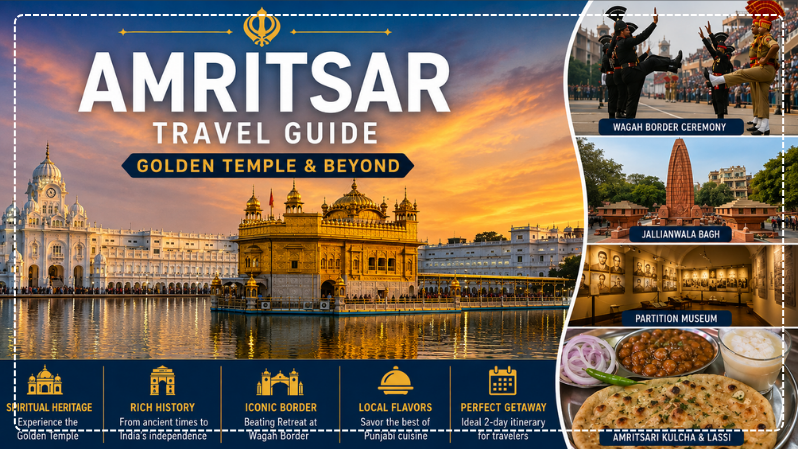
 Amritsar is one of North India’s most rewarding cultural destinations. Two full days are enough to experience the Golden Temple, Jallianwala Bagh, the Partition Museum, Punjabi street food and the Beating Retreat ceremony at the Attari-Wagah Border. Amritsar Travel Guide for First-Time Visitors Amritsar is far more than a single-attraction city. While the Golden Temple draws millions each year, the city combines Sikh heritage, Partition-era history, border theatre and celebrated Punjabi street food within a compact area. This Amritsar travel guide covers what to see, eat and plan for a practical, respectful visit. Why Is Amritsar Worth Visiting? Amritsar deserves more than a quick Golden Temple stop. The Golden Temple offers one of Asia’s most moving spiritual experiences  open to all, 24 hours a day, free. Nearby, Jallianwala Bagh memorialises colonial violence. The Partition Museum documents the 1947 division of India. And 30 kilometres west, the Attari-Wagah Border stages a daily flag-lowering ceremony that draws thousands. A first-time visitor can experience all of this across two well-planned days. Golden Temple Amritsar: What First-Time Visitors Should Know The Golden Temple  formally Sri Harmandir Sahib is the most sacred site in Sikhism. Founded in the 16th century by Guru Arjan Dev Ji, its upper structure is covered in approximately 750 kilograms of gold, added by Maharaja Ranjit Singh in 1830. It sits at the centre of the Amrit Sarovar (Pool of Nectar), from which the city takes its name. The temple welcomes all faiths, 24 hours a day, with no entry fee. Remove your shoes (free lockers available) and wash your feet before entering. Head covering is mandatory  free cloths are provided. Dress modestly, covering shoulders and knees. Photography is permitted along the parikrama (marble walkway) but avoid photographing during prayers. Visit during early morning prayers (around 3–4 AM) or at night when the temple glows under floodlights. The Palki Sahib ceremony  the Guru Granth Sahib carried in a golden palanquin  takes place around 9:45 PM. Golden Temple Langar Experience Langar is the Sikh community kitchen tradition, rooted in equality. At the Golden Temple, it operates around the clock, serving vegetarian meals to everyone regardless of faith or nationality  an estimated 100,000 people daily. International visitors are welcome. Sit on the floor alongside everyone and eat respectfully. This is not “free food”  it is Sikh values of service and equality in practice. Best Things to Do in Amritsar Beyond the Golden Temple Jallianwala Bagh On 13 April 1919, British soldiers under Brigadier General Dyer opened fire on thousands of unarmed civilians protesting the Rowlatt Act. The site is now a national memorial  bullet marks remain on walls, and the Martyrs’ Well is preserved. Free entry. A short walk from the Golden Temple; allow 30–45 minutes. Partition Museum The world’s first museum dedicated to the 1947 Partition, in the Town Hall on Heritage Street. Fourteen galleries document displacement through artefacts, oral histories and photographs. INR 250 for foreign nationals. Open 10 AM–6 PM, closed Mondays and public holidays. Allow 1–2 hours. Attari-Wagah Border Ceremony The daily Beating Retreat ceremony by India’s BSF and Pakistan Rangers is approximately 30 km from Amritsar. Free entry but arrive 2–3 hours early for security. Timing varies seasonally  roughly 4:30 PM in winter, 5:30–6 PM in summer. Confirm the schedule before departing. Explore Old Amritsar Heritage Street connects the Golden Temple to the Town Hall. Hall Bazaar and Katra Jaimal Singh sell textiles, juttis (Punjabi footwear) and phulkari embroidery. Best explored on foot. What to Eat in Amritsar Food is a defining reason to visit. Amritsari kulcha (stuffed flatbread with chole) is the signature dish. Punjabi lassi is rich and filling. Try sarson da saag with makki di roti (seasonal), tandoori meats and jalebi. Kesar Da Dhaba (since 1916) and Bharawan Da Dhaba are well-known establishments. For international visitors: choose busy stalls, drink bottled water, and ease into rich Punjabi food gradually. Best Time to Visit Amritsar October to March generally offers the most comfortable weather for sightseeing. October to March Temperatures range from 10°C to 25°C. December–January can be cold with morning fog. Peak tourist season. April to June Temperatures exceed 40°C. Midday outdoor sightseeing is exhausting. July to September Monsoon brings humidity and heavy rain. Most attractions stay open. How Many Days Do You Need in Amritsar? Two days are enough for most first-time visitors. This covers the Golden Temple (morning and night), Jallianwala Bagh, the Partition Museum, local food and the Wagah Border ceremony. One day is possible but rushed; three days allow a more relaxed pace. Perfect 2-Day Amritsar Itinerary Day 1: Golden Temple, Jallianwala Bagh & Old Amritsar Start early at the Golden Temple (quieter before 8 AM). Spend 2–3 hours. Walk to Jallianwala Bagh. Continue along Heritage Street for kulcha and lassi. Explore bazaars through the afternoon. Return to the Golden Temple at night for the Palki Sahib ceremony (~9:45 PM). Day 2: Partition Museum, Local Culture & Attari-Wagah Border Partition Museum at 10 AM (1.5–2 hours). Explore remaining old-city areas or favourite food spots. Depart for the Wagah Border early afternoon — allow 2.5–3 hours before the ceremony. Confirm timing before leaving. How to Reach Amritsar By Air Sri Guru Ram Dass Jee International Airport is ~11 km from the centre, with domestic flights from Delhi (~1 hour), Mumbai and other cities. By Train Amritsar Junction connects to Delhi (6–8 hours) and other North Indian cities via Indian Railways. About 2 km from the Golden Temple. By Road ~450 km from Delhi (7–8 hours via NH44), ~230 km from Chandigarh (~4 hours). How to Get Around Amritsar Auto-rickshaws are widely available. Ola and Uber operate but are inconsistent in the old quarter. For the Wagah Border, hire a taxi. The historic centre is best on foot. Where to Stay in Amritsar Near the Golden Temple: Walking access to the temple, Jallianwala Bagh and Heritage Street. Trade-off: narrow streets, more noise. Central areas (Ranjit Avenue, Lawrence Road): Larger hotels, easier vehicle access, quieter. Short rickshaw ride to attractions. Budget guesthouses from

Amritsar Travel Guide: Golden Temple & Beyond Read More »
sri akal takht sahib

The Eternal Seat of Sikh Authority and Courage

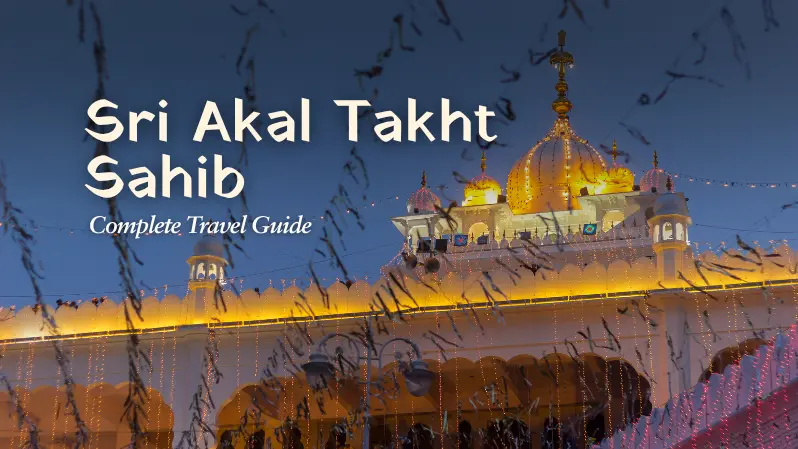
Among the most sacred places in Sikhism, Sri Akal Takht Sahib stands as a timeless symbol of justice, courage, equality, and spiritual leadership. Located within the revered Golden Temple complex in Amritsar, Punjab, this sacred institution represents the highest seat of temporal authority in the Sikh faith. Every year, millions of pilgrims and travelers visit to seek blessings, understand Sikh history, and witness the deep connection between spirituality and social responsibility. Unlike many religious monuments that are known only for their architectural beauty, carries profound historical significance. It serves as a place where important religious decisions are announced, community issues are addressed, and the principles established by the Sikh Gurus continue to guide generations. Whether you are planning a pilgrimage, researching Sikh heritage, or exploring India’s spiritual landmarks, understanding the history and significance of Sri Akal Takht Sahib offers an unforgettable cultural experience. What Is Sri Akal Takht Sahib? Sri Akal Takht Sahib is one of the Five Takhts, or seats of authority, in Sikhism. The words “Akal Takht” translate to “The Throne of the Timeless One,” symbolizing the eternal authority of God. It stands directly opposite Harmandir Sahib (Golden Temple) within the Sri Harmandir Sahib complex in Amritsar. While Harmandir Sahib represents spiritual devotion, the Gurudwara represents justice, leadership, and the responsibility to protect righteousness. Together, they reflect the Sikh philosophy of balancing spiritual wisdom with worldly responsibilities. For Sikhs around the world, Sri Akal Takht Sahib is more than a historical monument—it is the supreme institution for religious guidance and community leadership. History of Sri Akal Takht Sahib The history of Sri Akal Takht Sahib dates back to the early seventeenth century when the Sixth Sikh Guru, Guru Hargobind Sahib Ji, established it in 1606. Following the martyrdom of Guru Arjan Dev Ji, Guru Hargobind introduced the concept of Miri-Piri, representing the balance between temporal power and spiritual authority. To embody this philosophy, Guru Hargobind Sahib constructed Sahib as the center from which matters concerning justice, governance, and the protection of the Sikh community could be addressed. Historically, Sikh warriors gathered here before embarking on missions to defend religious freedom and human rights. Important announcements, religious decisions, and community matters have been proclaimed from this sacred platform for centuries. Today, Sri Akal Takht Sahib continues to serve as the highest authority for many significant religious decisions within Sikhism. Why Takht Sahib Holds Great Importance The importance of Sri Akal Takht Sahib extends far beyond its physical structure. It represents the Sikh belief that faith should inspire action, justice, and service to humanity. Unlike institutions focused solely on worship, reminds followers that spirituality must also include protecting the oppressed, standing against injustice, and serving society without discrimination. The institution symbolizes courage, equality, compassion, and responsibility—values that continue to inspire millions across the globe. Architecture The magnificent architecture of Sri Akal Takht reflects both royal dignity and spiritual humility. The beautifully designed white marble façade, golden domes, intricate carvings, and traditional Sikh architectural elements create a stunning visual presence within the Golden Temple complex. The structure has undergone several renovations throughout history while carefully preserving its original significance. During the evening, the illuminated building creates a breathtaking atmosphere that enhances the spiritual experience of visitors. Every architectural detail symbolizes strength, purity, and devotion, making one of the most photographed religious landmarks in Punjab. Spiritual Experience at Sri Akal Takht Sahib Visiting Sri Akal Takht Sahib is a deeply moving experience for people from all backgrounds. The atmosphere combines peaceful prayer with a profound sense of history and resilience. Pilgrims often begin their visit with prayers at Harmandir Sahib before paying their respects at Sri Akal Takht Sahib. The continuous recitation of Gurbani, the sound of devotional hymns, and the disciplined conduct of devotees create an environment filled with peace and reverence. Many visitors describe the experience as spiritually uplifting because it reflects the Sikh ideals of humility, equality, and fearless devotion. Sri Akal Takht Sahib and the Golden Temple Complex One of the most remarkable aspects of Sri Akal Takht Sahib is its location within the world-famous Golden Temple complex in Amritsar. Together, these two sacred institutions represent the complete Sikh philosophy. Harmandir Sahib symbolizes spiritual enlightenment through prayer and meditation, while Sri Akal Takht Sahib represents justice, responsibility, and ethical leadership. Visitors can also explore the sacred Sarovar (holy pool), participate in Langar, visit the Sikh Museum, and experience the remarkable hospitality offered by volunteers who serve thousands of people every day regardless of religion, nationality, or social background. Best Time to Visit Gurudawara welcomes visitors throughout the year. However, the months between October and March offer pleasant weather for exploring the Golden Temple complex comfortably. Major Sikh festivals such as Gurpurab, Baisakhi, and Hola Mohalla attract thousands of pilgrims and create a vibrant spiritual atmosphere. During these celebrations, the complex is beautifully illuminated, devotional music fills the air, and special ceremonies showcase the rich traditions of Sikhism. Early morning and late evening are considered ideal times to experience the peaceful surroundings and witness the beauty of the illuminated shrine. How to Reach Sri Akal Takht Sahib is located in the heart of Amritsar, one of Punjab’s most important spiritual and cultural cities. By Air: Sri Guru Ram Dass Jee International Airport connects Amritsar with major Indian cities and several international destinations. By Train: Amritsar Junction is well connected to Delhi, Chandigarh, Mumbai, Kolkata, and many other cities. By Road: Excellent highways make Amritsar easily accessible by buses, taxis, and private vehicles from across North India. The Golden Temple complex is located just a short distance from the railway station and airport, making transportation convenient for visitors. Travel Tips for Visiting Visitors are expected to respect Sikh traditions while entering the sacred complex. Covering the head, removing footwear before entering, maintaining silence, and dressing modestly are important practices followed by all visitors. Photography may be restricted in certain areas, so travelers should always follow the guidance of the temple management. Participating in Langar offers a meaningful opportunity to

The Eternal Seat of Sikh Authority and Courage Read More »