
India tour blog

Is india worth visiting for americans- jaipur city

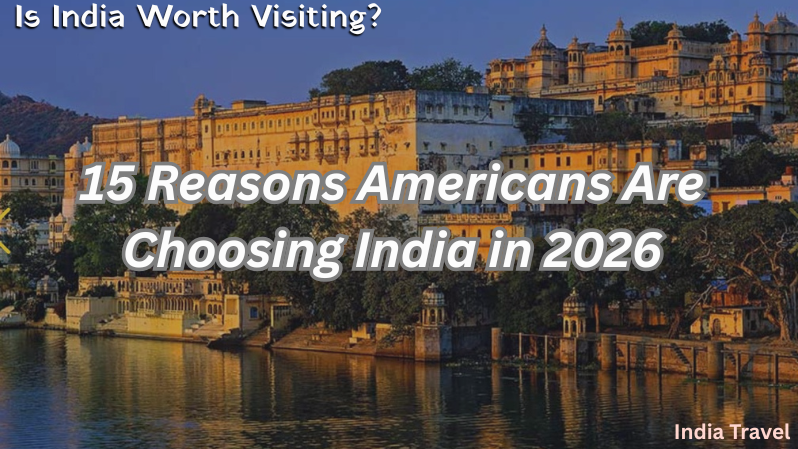
Is India Worth Visiting? 15 Reasons Americans Are Choosing India in 2026

Is india worth visiting for americans?. Every year, millions of American travelers pull up Google and type the same question: is India worth visiting? The short answer is yes and it’s not even close. India is the kind of destination that fundamentally rewires how you think about travel. But let’s be honest. Most Americans weighing an international trip aren’t comparing India to Europe anymore. They’re comparing it to Southeast Asia  Thailand, Vietnam, Bali. Those destinations feel safer, more “Instagrammable” and easier to navigate. So why should India be on your radar instead? Here are 15 reasons Americans are choosing India in 2026  and why the hesitation is costing you the trip of a lifetime. 1. Your Dollar Stretches Further Than Anywhere Else India delivers jaw-dropping value for money that makes even Thailand and Bali look expensive. A five-star heritage hotel in Rajasthan runs $80–150 a night. A private car with a driver for an entire day costs $25–40. A world-class meal at a top restaurant in Delhi or Mumbai rarely crosses $30 per person. Compare that to Bali, where a decent villa now runs $150–250 a night, or Thailand, where Bangkok hotel prices have climbed steadily since 2023. India hasn’t just kept its value it’s widened the gap. is india worth visiting for american? india offers rich culture, food, and travel experience For Americans watching exchange rates, the Indian Rupee consistently offers more purchasing power per dollar than the Thai Baht or Indonesian Rupiah when you factor in the quality of what you’re buying. 2. The Taj Mahal Is Not Overhyped — It’s Underhyped   Most travelers expect to be underwhelmed by the Taj Mahal. They’ve seen the photos a thousand times. Then they stand in front of it at sunrise, and every single one of them says the same thing: no picture does it justice. The Taj Mahal is one of the few monuments on earth that genuinely exceeds expectations. The inlay work, the way the marble changes color with the light, the symmetry  it’s a sensory experience that photographs simply cannot capture. And unlike the Mona Lisa or the Pyramids, you can spend hours here without feeling rushed or roped off. For American travelers, Agra is a natural starting point. Pair it with Delhi and Jaipur on the Golden Triangle route and you’ve got a week-long trip that delivers more cultural density than a month in Southeast Asia.  3. India’s Food Scene Destroys Every Competitor Thailand’s street food gets all the glory. Bali’s smoothie bowls dominate Instagram. But ask any serious food traveler  the chef, the food writer, the Anthony Bourdain devotee  and they’ll tell you India’s culinary landscape is unmatched. Every 200 kilometers the cuisine changes completely. The creamy butter chicken of Delhi has nothing in common with the tangy fish curries of Kerala. Hyderabadi biryani is a different universe from a Kolkata kathi roll. And the street food  chaat in Old Delhi, dosas in Bengaluru, vada pav in Mumbai  costs pennies and delivers flavors you will remember for years. India isn’t just a food destination. It is arguably the single greatest food destination on the planet. And for American travelers used to the Americanized versions of Indian food, eating the real thing is genuinely revelatory. Is india worth visiting for americans. 4. Spiritual Depth That Southeast Asia Can’t Match     Bali has beautiful temples. Thailand has serene monasteries. But India is where the spiritual traditions were born. Hinduism, Buddhism, Jainism, Sikhism  four major world religions originated here, and their living practices are woven into everyday life in a way that feels authentic rather than performative. Attend the Ganga Aarti ceremony in Varanasi at sunset. Meditate at a Vipassana center in Dharamshala where the Dalai Lama lives. Walk through the Golden Temple in Amritsar, where 100,000 people are fed for free every single day regardless of faith, nationality or background. These aren’t tourist experiences. They’re encounters with traditions that have been continuous for thousands of years. For Americans seeking meaning beyond sightseeing, India offers a depth of spiritual experience that no other country can replicate. 5. Wildlife Safaris That Rival Africa at a Fraction of the Cost Most Americans don’t associate India with wildlife safaris. That’s a mistake. India is home to Bengal tigers, Asiatic lions, one-horned rhinoceroses, snow leopards, wild elephants and over 1,300 bird species. A tiger safari in Ranthambore or Jim Corbett National Park costs a fraction of what you’d pay in Kenya or Tanzania and the chance of spotting a tiger in the wild is actually higher in certain Indian parks. Kaziranga in Assam offers rhino sightings that are almost guaranteed. And the Andaman Islands deliver snorkeling and diving that stands up against anything in Southeast Asia. India has 100+ national parks and 500+ wildlife sanctuaries. The biodiversity per dollar is simply unbeatable. 6. The Diversity Is Staggering — One Country, Fifty Trips Here’s what makes India fundamentally different from Thailand, Vietnam or Bali: it’s not one destination. It’s a continent masquerading as a country. Snow-capped Himalayan peaks in Ladakh. Tropical backwaters in Kerala. Desert fortresses in Rajasthan. French colonial charm in Pondicherry. Pristine beaches in Goa. Bustling megacities like Mumbai and Delhi. Tea plantations in Darjeeling. Tribal villages in Northeast India that feel like a hidden corner of Southeast Asia. Is india worth visiting for americans. You could visit India ten times and have ten completely different trips. No other country on earth offers that range within a single visa. 7. Direct Flights From the US Make It Easier Than Ever One of the biggest reasons Americans skipped India in the past was the hassle of getting there. That’s changed dramatically. Nonstop flights from New York, Chicago, San Francisco and other major US cities to Delhi and Mumbai now run daily on multiple airlines. Flight times are comparable to flying to Southeast Asia roughly 14–17 hours  and fares have become increasingly competitive. The Indian e-Visa process is straightforward and can be completed online in minutes. No embassy visit required. For

Is India Worth Visiting? 15 Reasons Americans Are Choosing India in 2026 Read More »
Is India safe to travel for Americans in 2026 Honest answer covering safe regions, areas to avoid, tips for solo women, families & first-timers. Updated guide by India Travel experts.

Is India Safe to Travel for Americans in 2026?

You’ve been dreaming about India the Taj Mahal at sunrise, the colors of Rajasthan, the backwaters of Kerala, the chaos and magic of Varanasi. But before you book, you want to know the honest answer to one question: Is India actually safe for Americans? The short answer: Yes for the vast majority of India, and for most types of travelers, it is safe to visit. Millions of Western tourists visit India every year without incident. But like any destination, it requires the right preparation. And there are specific regions and situations you need to know about. This guide gives you the real picture not the overly cautious warnings, not the rose colored travel brochure version. Just the facts, so you can make an informed decision and have the best possible trip.   Quick Summary for India Tour The U.S. State Department issues a Level 2 (“Exercise Increased Caution”) advisory for India. This is the same level applied to popular destinations like France, Italy, and Germany it does not mean “don’t go.” Most major tourist destinations in India Rajasthan, Kerala, Goa, Tamil Nadu, Agra, Mumbai, Delhi are actively visited by thousands of Americans every year with no problems. A small number of regions near borders or with active unrest should be avoided.   What the U.S. Government Actually Says About India The U.S. Department of State rates India at Level 2: Exercise Increased Caution. This is an important distinction India is NOT rated Level 3 (Reconsider Travel) or Level 4 (Do Not Travel) for most of the country. However, specific regions carry higher warnings Region Advisory Level Reason Jammu & Kashmir (except Leh/Ladakh) Level 4 — Do Not Travel Terrorism and civil unrest India-Pakistan Border Level 4 — Do Not Travel Potential armed conflict Parts of Central & East India (Maoist areas) Level 4 — Do Not Travel Naxalite (Maoist) extremist activity Some Northeastern States Level 3 — Reconsider Terrorism and isolated violence Delhi, Agra, Rajasthan, Goa, Kerala, Tamil Nadu, Mumbai, Ladakh (Leh) Level 2 — Caution Main tourist areas — safe with standard precautions   The key takeaway: every destination your India Travel tour takes you to — Golden Triangle, Rajasthan, Kerala, Goa, Ladakh falls in the safe zone. The Level 4 regions are far from any standard tourist itinerary.   2. The Real Risks for American Tourists Here is what actually affects travelers, ranked by how likely it is to impact your trip:   1 Most Common Risk: Petty Theft & Scams This is the number-one thing to watch for. Pickpockets operate in crowded markets, train stations, airports, and around major monuments. Bag-snatching, purse-slitting, and elaborate tourist scams (fake guides, gem export schemes, “closed” monuments) are the most reported issues by foreign travelers. Always use a money belt or anti-theft bag under your clothing Keep passport in your hotel safe, carry a photocopy instead Book guides and taxis only through your hotel or a reputable tour operator If someone approaches you with an unsolicited “deal” walk away Use official prepaid taxi counters at airports, or Uber/Ola apps 2 Food & Water Safety Traveler’s stomach is the most common health issue Americans face in India. The water supply is not safe to drink directly from the tap. Drink ONLY bottled or filtered water including for brushing teeth Avoid raw salads, unpeeled fruits, and street food from unhygienic stalls Eat at busy local restaurants (high turnover = fresh food) or your hotel restaurant Carry oral rehydration salts and basic stomach medicines your doctor can prescribe them before departure The CDC recommends visiting a travel clinic 4–6 weeks before your trip for vaccinations (Hepatitis A, Typhoid are commonly recommended) 3 Traffic & Road Safety India’s roads can be chaotic this surprises many Western visitors. Traffic is dense, rules are loosely followed, and roads in rural areas can be poorly lit. Never self-drive unless you are very experienced with left hand traffic Always sit in the back seat and wear a seatbelt Avoid overnight buses on mountain routes take trains or domestic flights instead For long distances, use India’s excellent train network or internal flights 4 Heat & Sun India gets extremely hot, especially April through June when temperatures in Rajasthan and Delhi can exceed 110°F (43°C). Heat stroke is a genuine risk for unprepared travelers. Visit between October and March for the most comfortable weather across North India Stay hydrated at least 2–3 liters of bottled water per day Wear loose, light, breathable clothing and a hat 💡 The Good News About Violent Crime Violent crime against foreign tourists is rare in India. The State Department notes that while crime exists, attacks specifically targeting American tourists are uncommon. Most visitors complete their entire trip without experiencing anything more serious than an aggressive rickshaw driver or an overpriced souvenir pitch.   Is India Safe for Solo Female Travelers from the US?   This is one of the most searched questions about India and it deserves a direct, honest answer. India can absolutely be visited solo by women, and many American women do so every year and have wonderful experiences. However, female travelers especially those traveling alone do face a higher risk of verbal harassment and unwanted attention compared to many other destinations. This is especially true in North India’s cities and rural areas. The US State Department specifically advises women not to travel alone in India. This doesn’t mean don’t go it means go prepared.   Practical Tips for Solo Female Travelers Dress conservatively cover shoulders, chest, and knees, especially outside major cities and at religious sites. This reduces unwanted attention significantly. Use women-only metro and train carriages available in Delhi, Mumbai, and other major cities they are free and comfortable Book accommodation carefully stick to well reviewed hotels with 24-hour reception, not isolated guesthouses Share your itinerary daily with someone back home Avoid walking alone at night in unfamiliar areas Trust your gut if a situation feels wrong, leave it Consider booking a guided tour for your first India trip a

Is India Safe to Travel for Americans in 2026? Read More »