
India Tour

Discover the key differences between North and South India—culture, food, climate & travel tips for first-time international visitors.

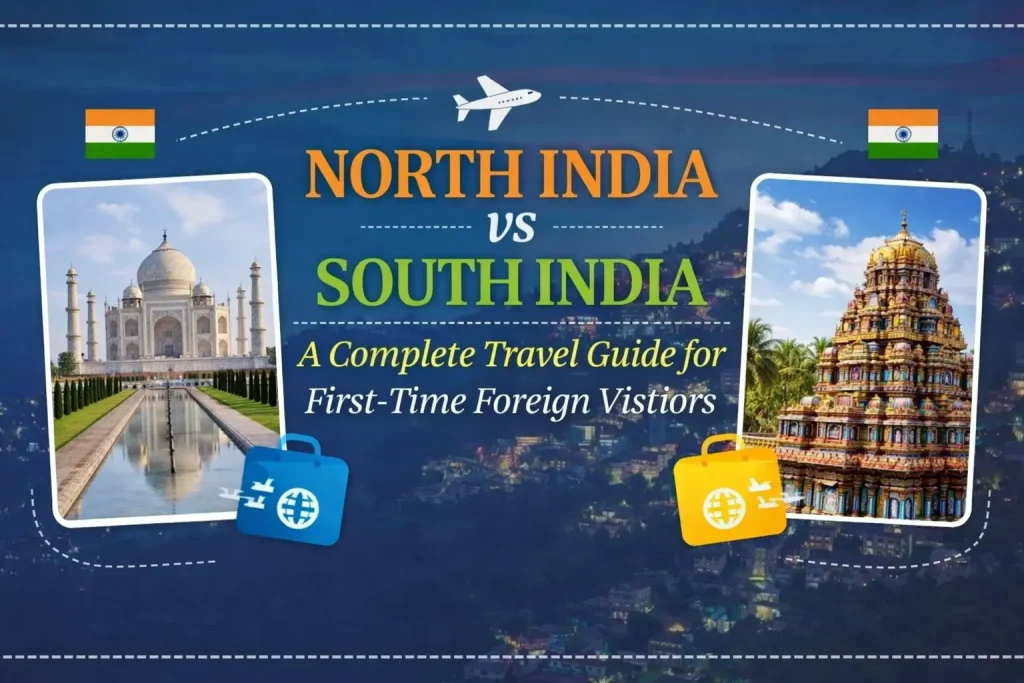
North India vs South India: A Complete Travel Guide for First-Time Foreign Visitors

Two regions, two entirely different Indias. Here is how to choose the one that fits your trip. India is not a single destination. It is many worlds existing side by side, and nowhere is that contrast sharper than between North India and South India. The architecture is different, the food is different, the languages are different, and the pace of daily life is different. For a first-time foreign visitor, understanding this divide before you book your flights is one of the most valuable pieces of trip-planning research you can do. This guide breaks down every key difference so you can make an informed decision and build a trip that actually matches what you are looking for. In this paragrap we’re going to discuss About North India Vs. South India What Each Region Looks and Feels Like North India North India covers the Indo-Gangetic Plain and the Himalayan states. The major tourist destinations are Delhi, Agra, Jaipur, Varanasi, Amritsar, Rishikesh, and Ladakh. This is the India of Mughal forts and marble mausoleums, of sand-colored desert palaces and snow-capped mountain passes. It is fast, crowded, historically dense, and at times overwhelming. The energy of a city like Varanasi, where cremation ceremonies and morning prayers unfold simultaneously on the banks of the Ganges, is unlike anything else on the planet. North India rewards visitors who arrive prepared for intensity and leave room in their itinerary to process what they have seen. South India South India covers the Deccan Plateau and both coastlines, encompassing Kerala, Tamil Nadu, Karnataka, and Goa. The landscape is tropical and lush. The major destinations include Kochi, the Kerala backwaters, Munnar, Mysuru, Hampi, Madurai, Mahabalipuram, and the beaches of Goa. The Dravidian temple culture here is ancient and unbroken, with towering gopuram gateways covered in thousands of painted sculptures that have no equivalent in the north. The pace is slower, the infrastructure for tourism is more organized, and the overall experience is significantly easier to navigate for a first-time visitor. North vs South India: Key Differences at a Glance Category North India South India Landscape Plains, deserts, Himalayan mountains Tropical coast, jungle, tea estates Cultural roots Mughal, Persian, Rajput heritage Ancient Dravidian civilization Staple food Wheat, rich gravies, dairy-heavy Rice, coconut, fermented batters Must-try dish Butter Chicken or Dal Makhani Masala Dosa or Kerala fish curry Best travel season October to March November to February Travel difficulty More challenging, chaotic Easier, more organized Iconic landmark Taj Mahal, Agra Meenakshi Temple, Madurai Best for History, adventure, spirituality Wellness, nature, beach, temples Food: Two Completely Different Culinary Worlds North Indian food is rich, wheat-based, and deeply influenced by Mughal court cooking. Gravies are built on slow-cooked onion, tomato, and spice bases finished with cream or butter. Breads like naan and roti are central to every meal. The tandoor clay oven, burning at over 400 degrees Celsius, produces the charred, smoky kebabs and blistered breads that define the cuisine internationally. Delhi’s street food scene, particularly in Chandni Chowk, is one of the great culinary experiences anywhere in Asia. South Indian food operates on entirely different principles. Rice replaces wheat. Coconut oil and tamarind replace butter and cream. Fermentation is central: the batter for dosa and idli ferments overnight, giving these foods a subtle sourness that makes them both distinctive and easy to digest. The breakfast culture of South India, anchored by crispy dosas served with coconut chutney and sambar alongside a glass of chicory-blend filter coffee, is one of the world’s great morning meals. For vegetarian travelers, South India is particularly well catered for, with a thali tradition that turns a single meal into a nutritionally complete, repeatedly refilled experience. Climate and the Best Time to Visit North India experiences extreme seasonal variation. Summers in Delhi and Rajasthan regularly exceed 45 degrees Celsius and are genuinely difficult to travel in. The monsoon from July to September brings relief from heat but disrupts roads and outdoor sightseeing. The peak season runs from October to March, when temperatures are mild, the sky is clear, and the Taj Mahal in December morning mist delivers one of the most iconic visual experiences available to any traveler anywhere. South India’s tropical climate is warmer and more consistent year-round but follows two distinct monsoon patterns. The southwest monsoon drenches Kerala and the western coast from June to September. The northeast monsoon hits Tamil Nadu from October to December. The safest window for most South Indian destinations is November to February. Kerala during the monsoon months of June to August is, however, the ideal time for Ayurvedic treatment retreats, as traditional practitioners consider the open pores and high humidity optimal for therapeutic oil therapies. Which Region Should You Choose Choose North India if you want to see world-famous landmarks including the Taj Mahal and Amber Fort, experience the spiritual intensity of Varanasi’s ghats, explore Rajasthan’s desert palaces and forts, or trek in the Himalayas and Ladakh. Choose South India if you want a more relaxed and organized first experience of the country, are interested in Ayurveda and wellness, want to spend time on beaches or backwaters, are fascinated by ancient temple architecture, or are traveling as a solo female visitor and want a lower-friction environment. Choose both if you have three weeks or more. The ideal circuit for a first-time visitor with sufficient time is ten days in the north covering Delhi, Agra, Jaipur, and Varanasi, followed by a domestic flight south to Kerala, then a road journey through Tamil Nadu finishing in Chennai. This structure lets you experience the full contrast of the country without rushing either region. Practical Tips for First-Time Foreign Visitors Visa: Most nationalities can apply for an e-Visa online before travel. Apply at least two weeks in advance of your arrival date. Transport: Trains are the most authentic and economical way to travel between cities. Book in advance through the IRCTC platform, which holds a tourist quota for foreign visitors. Use domestic flights to bridge the gap between north and south. Uber and Ola

North India vs South India: A Complete Travel Guide for First-Time Foreign Visitors Read More »

Plan your India tour from Australia with this complete guide. Learn about flights, visa, cost, top places, and itineraries

India Tour from Australia: Complete Travel Guide (Cost, Flights, Visa & Itinerary)

India is one of the most diverse, colourful, and culturally rich destinations in the world. From the snow-capped Himalayas to the golden deserts of Rajasthan, from peaceful backwaters in Kerala to the spiritual heartlands of Varanasi India offers unforgettable experiences for every type of traveller. If you are planning an India tour from Australia, this comprehensive guide will give you everything you need: flight routes, visa processes, costs, itineraries, safety tips, and top destinations to explore. Let’s begin your dream journey!Why India Is a Top Destination for Australian Travellers India is becoming increasingly popular among Australians, and the reasons are clear:1. Culture-rich experiences India is the land of festivals, ancient temples, Mughal architecture, royal palaces, yoga retreats, and soulful spirituality. Australians admire India for its deep cultural roots and hospitality.2. Easy one-stop flights from major Australian cities Though there are no direct flights yet, one-stop connections make travel simple and efficient. You can reach India in 12–16 hours.3. Very affordable compared to most Asian destinations Hotels, food, internal flights, and sightseeing are significantly cheaper compared to Europe, Japan, or the Middle East.4. Perfect for all types of travellers Backpackers Families Couples Luxury travellers Culture lovers Wildlife enthusiasts Adventure seekers Seniors 5. A vast range of destinations Foreign tourists love how India offers beaches, mountains, deserts, wildlife safaris, spiritual centres, and world heritage attractions all in one country.6. Easy online e-Visa for Australians The Indian government offers e-Tourist Visa, making entry convenient and quick. If you’re planning your India tour from Australia, the best part is India welcomes every traveller with warmth and endless surprises.How to Reach India from Australia Planning your India tour begins by choosing the right flights. Here’s everything you need to know. Best Airlines for Australia → India Routes Most flights are one-stop and comfortable. Popular airlines include: Singapore Airlines (via Singapore) Malaysia Airlines (via Kuala Lumpur) Thai Airways (via Bangkok) SriLankan Airlines (via Colombo) Cathay Pacific (via Hong Kong) Air India (via Southeast Asia or Middle East partners) Qantas + Air India code-share options Australia to India Flight Time Depending on the city you depart from, the travel time ranges between 12–16 hours: Sydney to Delhi — 13–15 hours (1 stop) Melbourne to Delhi/Mumbai — 12–16 hours Brisbane to Delhi — 13–17 hours Perth to Mumbai — 12–14 hours Adelaide to Chennai — 14–16 hours India Visa Requirements for Australian Citizens Australia is eligible for India’s e-Tourist Visa, which makes the process extremely simple. Types of Indian e-Visa for Australians Visa Type Validity Entries Ideal For 30-Day e-Tourist Visa 30 days Double entry Short holidays 1-Year e-Tourist Visa 365 days Multiple entry Frequent travellers 5-Year e-Tourist Visa 5 years Multiple entry Long-term India lovers Documents Required Passport with 6+ months validity Recent passport-size photograph Return flight ticket Hotel details or tour package information Arrival Tips Carry a printed copy of your e-Visa Passport control may include biometric scanning Keep hotel or tour operator details handy Visa is quick, easy, and reliable making your India tour from Australia hassle-free. Best Time to Visit India from Australia India offers different experiences throughout the year. Here’s the seasonal breakdown: October–March (Peak Tourist Season) Best weather Ideal for Rajasthan, Golden Triangle, Delhi, Varanasi Warm days + cool evenings April–June (Summer) Best for hill stations: Himachal Pradesh Uttarakhand Kashmir Darjeeling Great time for Himalayan treks July–September (Monsoon) Lush greenery Perfect for Kerala backwaters Waterfalls & nature experiences Festival Months to Consider Holi (March) Diwali (Oct–Nov) Dussehra (Oct) Pushkar Fair (Nov) Festivals add cultural richness to your India experience.Best Places to Visit in India (For Australian Travellers) India is huge, so we’ve shortlisted the most popular and traveller-friendly destinations. 1. Golden Triangle: Delhi – Agra – Jaipur Perfect for first-time visitors: Taj Mahal Amber Fort India Gate Qutub Minar Fatehpur Sikri 2. Rajasthan – The Land of Kings Explore royal palaces, deserts, and forts: Udaipur (City of Lakes) Jaisalmer (Golden Desert) Jaipur (Pink City) Jodhpur (Blue City) 3. Kerala – God’s Own Country Ideal for nature, wellness & relaxation: Munnar tea gardens Backwater houseboats Kerala Ayurveda treatments Kovalam beaches 4. South India Temples & Heritage Tamil Nadu temples Pondicherry Hampi ruins Mysore Palace 5. Himalayan Destinations Kashmir (Paradise on Earth) Himachal (Shimla, Manali, Dharamshala) Uttarakhand (Rishikesh, Nainital) 6. Wildlife Destinations India is a global wildlife hotspot: Ranthambore (Tigers) Kaziranga (Rhinos) Gir (Lions) Jim Corbett 7. Beach Destinations Goa Andaman Islands Lakshadweep Something for every kind of Australian traveller.Why Book Your India Tour with a Trusted Operator When travelling internationally especially to a culturally diverse country like India—booking through a trusted tour operator ensures safety, comfort, and a hassle-free experience. For travellers from Australia, Shikhar Travel and IndiaTravel.com are two of the most reliable and experienced names in the industry.Why Choose Shikhar Travel/Indiatravel.com? 45+ years of experience (est. 1979) Specialists in India tours, Himalayan expeditions, cultural journeys & wildlife safaris Expert guides across India 24/7 support for international travellers Tailor-made itineraries based on your interests Exceptional ratings & trusted by global travellers Frequently Asked Questions (FAQs)1. Is India safe for Australian tourists? Yes, India is safe. Use basic precautions.2. Do Australians need a visa for India? Yes, but the e-Tourist Visa is quick and easy.3. How long is the flight from Australia to India? 12–16 hours on average.4. Best time to visit India? October–March for most travellers.5. Is India expensive? No, India is affordable for all budgets.6. Can Australians use AUD in India? No. Convert to INR, but ATMs are easily available.7. Is vegetarian food easy to find? Yes, India is a paradise for vegetarian travellers.8. What’s the ideal India trip duration? 10 – 14 days is perfect for first-timers.Conclusion An India tour from Australia is more than just a holiday it’s a journey through history, culture, spirituality, adventure, and vibrant experiences. Whether you want to explore ancient monuments, relax on beaches, cruise the Kerala backwaters, or witness Himalayan beauty, India offers something magical for everyone. If you’re ready to plan your trip, connect with Shikhar Travel or visit IndiaTravel.com for the

India Tour from Australia: Complete Travel Guide (Cost, Flights, Visa & Itinerary) Read More »

Golden Triangle Tour

Why US Tourists Love the Golden Triangle Tour of India

The Golden Triangle Tour in India represents the nation’s most renowned travel itinerary due to its superior blend of attractions. The triangular route between the cities of Delhi Agra and Jaipur showcases an excellent mixture of historical sites, cultural showcases, architectural masterpieces, local cuisine and colorful traditions. This travel route provides American visitors with their initial exposure to India’s abundant heritage alongside its diverse aspects. The Golden Triangle Tour has earned its place as an essential destination for US travelers visiting India because it serves both new visitors and experienced tourists.A Perfect Introduction to India’s HeritageIndia exists as a dream travel spot for numerous Americans who seek to explore ancient temples alongside colorful festivities alongside mystic tales. The Golden Triangle route consolidates three Indian cultural cities to deliver distinct historical views of the nation’s existence..Delhi The capital Delhi stands out as a city which combines British colonial and Mughal noble architecture with present-day urban culture. Agra Agra stands as a significant destination because it has the Taj Mahal which represents everlasting love yet remains one of the Seven Wonders of the World. Jaipur The royal city of Jaipur holds its fame as the Pink City thanks to its numerous palaces and forts alongside its artisan markets.Easy Access & Travel Infrastructure American travelers choose this itinerary because their accessibility to India remains simple: Travelers from New York and Chicago along with San Francisco and Los Angeles can book their international flight to New Delhi easily. The short 200 to 250 kilometer journey between cities provides quick access to visit the circuit during 6 to 8 days. The circuit connects through maintained road systems along with railway options such as private car tours or luxury trains that include Palace on Wheels. Bucket-List Attractions: Iconic Landmarks You Can’t MissUS visitors greatly appreciate experiencing the Golden Triangle Tour because it boasts outstanding historical landmarks which include numerous UNESCO World Heritage Sites. In addition to being incredibly beautiful, the sites highlight Indian history through their beautiful architecture and old dynasties. Each site maintains its own special qualities which can be explored further: Taj Mahal (Agra) – The Eternal Symbol of Love Why It’s Famous: One of the Mughal Empire’s finest architectural accomplishments which became known as the most beautiful building in the world stands today as the Taj Mahal. Emperor Shah Jahan commissioned its construction to honor his wife Mumtaz Mahal in the 17th century. White Makrana marble embraces the ivory masterpiece while precious stones create intricate details that transform its appearance from pink blush to moonlit gold. Why US Tourists Love It: World travel sites repeatedly place the destination within their Top 10 list of must-visit sites. Honeymooners and American couples choose this symbol of affection as their preferred romantic destination. Photographers eagerly seek opportunities to capture images at dawn because the monument shines with golden light at this time. 📸 Insider Tip: Travelers should aim to see the Red Fort during sunrise when lighting is perfect along with reduced visitor numbers. Red Fort (Delhi) – A Legacy of the Mughal Empire Why It’s Famous: For 200 years the main Mughal royal residence consisted of the massive red sandstone fortress named Red Fort. The establishment combines Persian and Timurid and Indian architectural traditions through its walls that surround gardens and pavilions and audience halls. Why US Tourists Love It: This historic site attracts nationwide celebrations for India’s Independence Day thereby making it hold symbolic value. Explore this location to learn about a number of amazing tales that highlight the Mughal buildings that have been maintained from India’s imperial past. The evening Sound and Light Show at this destination provides a fully interactive experience of history. 📸 Don’t Miss: Two must-see attractions at the Red Fort complex include the Diwan-i-Aam (Hall of Public Audience) as well as Diwan-i-Khas (Hall of Private Audience). Qutub Minar (Delhi) – A Towering Achievement in Architecture Why It’s Famous: This 73-meter high Qutub Minar stands as the world’s tallest brick minaret together with being one of India’s oldest Islamic constructions from 1193 AD. The tower features intricate carvings with Quranic verses written on its fluted sandstone surface that illustrates the artistic mastery during the Delhi Sultanate period. Why US Tourists Love It: Visitors and tourists around the world come to admire this World Heritage Site because of its sophisticated artwork and unique Indo-Islamic structural design. The Qutub Complex area features both historic tombs and an iron pillar that has withstood rust for more than a thousand years. The site provides visitors with a tranquil outdoor experience despite operating in the heart of Delhi. 🧭 Fun Fact: Scientists marvel at the minaret’s resilience against centuries of weather because it endures with only small structural damage to its engineering structure. Amber Fort (Jaipur) – The Majestic Hilltop Fortress Why It’s Famous: A hilltop position defines Amber Fort (also named Amer Fort) as it stands above Maota Lake with its yellow sandstone and white marble construction. Visitors can explore the fairytale-like site that features ornate gates combined with mirrored halls (Sheesh Mahal) and beautiful views from its vantage point. Why US Tourists Love It: Walking through this location feels like visiting a real movie production because it features royal courtyards alongside battlements. Tourists have multiple options to enter through the cobbled path using elephant rides or jeeps. The structure unites military Rajput defensive construction with extravagant royal building designs. 🎭 Don’t Miss: Evening visitors should not miss the magical light and sound presentation which retells the story of this fort. Hawa Mahal (Jaipur) – The Palace of Winds Why It’s Famous: The royal women were able to view celebrations below without revealing themselves through the 953 windows which made up the five-story, pink sandstone facade of this architectural masterpiece. The most photographed tourist attraction and significant example of Rajasthani architectural design belongs to Jaipur. Why US Tourists Love It: The traditional latticework windows create magnetic visual effects between light and darkness that appeal to photographers. The highest point reveals a fantastic view

Why US Tourists Love the Golden Triangle Tour of India Read More »