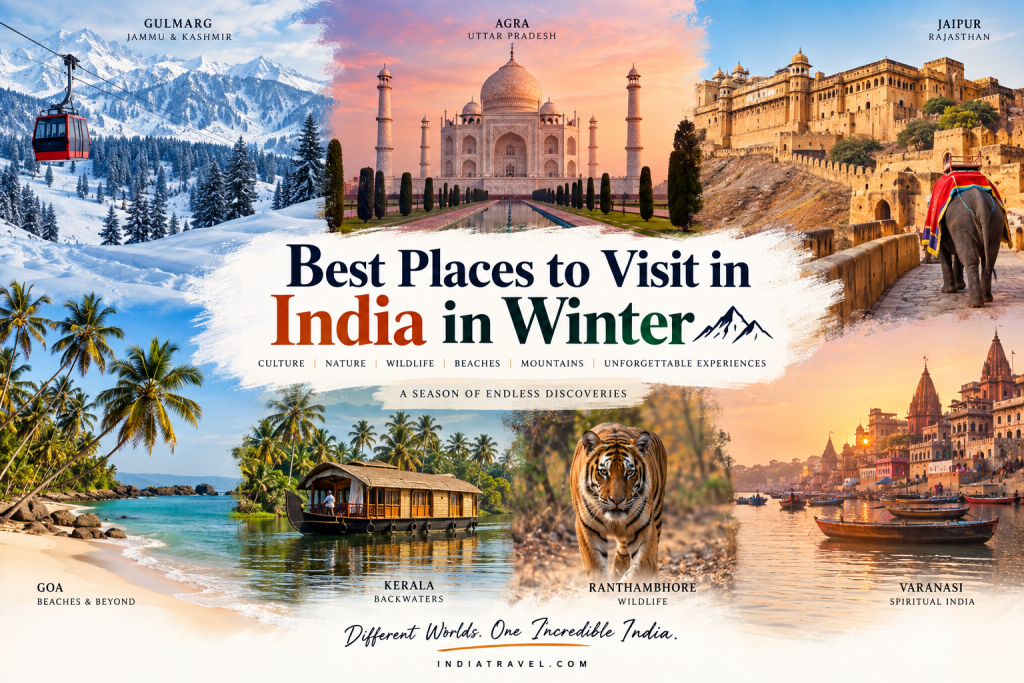
If you are planning your first trip to India, winter is one of the most rewarding seasons for exploring many parts of the country. The best places to visit in India in winter range from Rajasthan’s magnificent forts and desert landscapes to Kerala’s tropical backwaters, Goa’s beaches, wildlife reserves and snow-covered Himalayan destinations.
The winter season in India generally covers December, January and February, but conditions vary greatly between regions. Northern cities can have chilly mornings and evenings, while southern and coastal destinations remain much warmer. In the Himalayas, winter brings snow and much colder conditions.
For international travelers from the USA, UK, Canada, Australia and Europe, this India winter travel guide highlights 15 destinations worth considering, along with practical advice on weather, itineraries and choosing the right winter experience.
Why Visit India in Winter?
Winter can be an excellent season for cultural sightseeing across northern and western India. Exploring the monuments of Delhi, Agra and Rajasthan is generally more comfortable than during the hottest months, while destinations such as Kerala, Goa and the Andaman Islands provide warmer escapes.
The season also creates opportunities for wildlife safaris and Himalayan snow experiences. However, India covers a vast geographical area, so there is no single winter climate.
The best time to visit India ultimately depends on where you want to go and what you want to experience. A traveler visiting Rajasthan will pack very differently from someone heading to Kerala or Gulmarg.
15 Best Places to Visit in India in Winter
1. Rajasthan
Rajasthan is one of the most rewarding winter destinations for international travelers interested in Indian history, architecture and traditional culture. Cooler conditions make exploring its forts, palaces, old cities and desert landscapes more comfortable.
Jaipur offers royal architecture and bustling bazaars, Jodhpur is known for Mehrangarh Fort and its blue-painted old city, Udaipur combines palaces with lakes, while Jaisalmer provides access to the Thar Desert.
Top Experiences: Amer Fort, Mehrangarh Fort, Udaipur’s lakes and palaces, Jaisalmer Fort and a Thar Desert excursion.
Best For: Culture, heritage, photography and first-time visitors
Suggested Stay: 7–10 days
2. Agra
Agra is home to the Taj Mahal and is an essential stop for many first-time visitors. Winter can be comfortable for exploring its Mughal monuments, although early-morning fog sometimes affects northern India.
Beyond the Taj Mahal, travelers can explore Agra Fort and other examples of Mughal architecture.
Top Experiences: Taj Mahal, Agra Fort, Mehtab Bagh and Mughal heritage.
Best For: History, architecture, couples and first-time visitors
Suggested Stay: 1–2 nights
3. Delhi
Delhi works both as an international gateway and a fascinating destination in its own right. The city combines centuries-old monuments, markets and neighborhoods with modern restaurants, museums and shopping districts.
Exploring Old Delhi provides a particularly vivid introduction to local food, bazaars and historic architecture.
Top Experiences: Old Delhi, Humayun’s Tomb, Qutub Minar, historic markets and local food experiences.
Best For: History, food and culture
Suggested Stay: 2–3 nights
4. Varanasi
Varanasi offers international travelers one of India’s most distinctive cultural experiences. Life along the Ganges, centuries-old ghats and religious ceremonies provide insight into traditions that have shaped the city for generations.
A sunrise boat ride can offer a very different perspective from an evening walk along the river.
Top Experiences: Ganges boat ride, ghats, evening Ganga Aarti, old-city walks and Sarnath.
Best For: Culture, spirituality and photography
Suggested Stay: 2–3 nights
5. Ranthambore
Ranthambore National Park is a convenient wildlife addition to Rajasthan and Golden Triangle itineraries. Its landscapes combine forest, lakes, ruins and wildlife habitats.
Safari drives offer opportunities to observe deer, birds and other wildlife, with the possibility of seeing Bengal tigers. Tiger sightings should never be considered guaranteed.
Top Experiences: Wildlife safari, birdwatching, nature photography and Ranthambore landscapes.
Best For: Wildlife enthusiasts, photographers and families
Suggested Stay: 2–3 nights
6. Kerala
For travelers seeking warmer weather, Kerala is an appealing contrast to northern India. Tropical landscapes, tea-growing hills, historic Kochi and peaceful backwaters make it suitable for slower journeys.
A classic itinerary can combine Kochi, Munnar and the backwaters around Alleppey or Kumarakom.
Top Experiences: Backwater cruise, Kochi heritage, Munnar, local cuisine and cultural performances.
Best For: Couples, families, nature and relaxation
Suggested Stay: 6–8 days
7. Goa
Goa is among India’s best-known destinations for a warm winter break. Beaches are the main attraction, but international visitors can also explore Portuguese-influenced heritage, churches, markets and regional cuisine.
Travelers can choose lively coastal areas or quieter beaches depending on their preferred travel style.
Top Experiences: Beaches, Old Goa, local cuisine, markets and heritage neighborhoods.
Best For: Beaches, couples, friends and relaxation
Suggested Stay: 3–5 nights
8. Kashmir and Gulmarg
International travelers looking for a genuine snow experience can consider Kashmir. Gulmarg is especially well known for snowy mountain landscapes and winter activities.
Travel here requires greater flexibility because snowfall and weather conditions can affect roads, flights and planned activities.
Top Experiences: Gulmarg, snow landscapes, winter activities and Kashmiri cuisine.
Best For: Snow, adventure, couples and photography
Suggested Stay: 4–6 days
9. Himachal Pradesh
Himachal Pradesh offers another side of the Indian Himalayas. Destinations around Shimla and Manali attract travelers seeking mountain scenery, cool weather and seasonal snow.
Conditions vary significantly by altitude, so travelers should check accessibility before planning higher-altitude excursions.
Top Experiences: Mountain scenery, heritage walks, Himalayan culture and seasonal snow.
Best For: Nature, adventure and mountain holidays
Suggested Stay: 4–6 days
10. Uttarakhand
Uttarakhand combines Himalayan landscapes, spiritual centers and mountain towns. Rishikesh is particularly interesting for travelers interested in yoga, wellness and the Ganges, while other areas offer nature and mountain experiences.
Higher elevations can experience snow and weather-related access limitations.
Top Experiences: Rishikesh, Himalayan scenery, nature walks and cultural experiences.
Best For: Wellness, spirituality and nature
Suggested Stay: 4–6 days
11. Andaman Islands
The Andaman Islands are worth considering for travelers who prefer tropical beaches to cold weather. Their coastal landscapes and marine experiences provide a very different type of Indian winter holiday.
They can work particularly well as a relaxing extension after a cultural journey through northern India.
Top Experiences: Beaches, snorkeling, island excursions and marine activities.
Best For: Couples, beaches and relaxation
Suggested Stay: 5–7 days
12. Madhya Pradesh
Madhya Pradesh combines wildlife experiences with important historic and cultural attractions. It is particularly suitable for travelers who want to explore beyond India’s most familiar tourist routes.
The state can be incorporated into a longer journey combining heritage sites with national parks.
Top Experiences: Wildlife safaris, historic architecture, cultural sites and photography.
Best For: Wildlife, heritage and repeat visitors
Suggested Stay: 5–7 days
13. Gujarat
Gujarat offers historic cities, traditional crafts, regional cuisine and distinctive landscapes. Winter is a useful period for travelers who want to explore its cultural attractions without the intense heat experienced during some other months.
Top Experiences: Ahmedabad, heritage architecture, handicrafts, regional cuisine and cultural landscapes.
Best For: Culture, food and repeat visitors
Suggested Stay: 5–8 days
14. Amritsar
Amritsar is an important destination for understanding Sikh heritage and Punjabi culture. The Golden Temple is the centerpiece of the city and welcomes visitors from around the world.
International travelers can also experience Punjabi cuisine and explore the city’s history.
Top Experiences: Golden Temple, community kitchen, old city and Punjabi food.
Best For: Culture, spirituality, history and food
Suggested Stay: 2–3 nights
15. Golden Triangle
The Delhi–Agra–Jaipur Golden Triangle remains one of the easiest introductions to India for first-time international visitors. It combines Delhi’s historical layers, Agra’s Taj Mahal and Jaipur’s forts and palaces within a relatively compact route.
It can also be extended to Ranthambore, Rajasthan or Varanasi.
Top Experiences: Delhi sightseeing, Taj Mahal, Agra Fort, Amer Fort and Jaipur.
Best For: First-time visitors, culture and history
Suggested Stay: 6–8 days
Where to Go in India in Winter Based on Your Travel Style
If you are wondering where to go in India in winter, choosing according to your interests makes planning much easier.
For culture and heritage, consider Rajasthan, Delhi, Agra and Varanasi. For beaches and warmer weather, Goa, Kerala and the Andaman Islands are strong choices. Wildlife enthusiasts can include Ranthambore or reserves in Madhya Pradesh, while travelers looking for snow can consider Kashmir and suitable Himalayan destinations.
For a first visit, the Golden Triangle remains one of the most practical starting points.
India in December: Where Should You Go?
Traveling through India in December can work particularly well for Rajasthan, Delhi, Agra, Kerala and Goa. Travelers seeking snow can also explore suitable Himalayan destinations, depending on weather and accessibility.
The Christmas and New Year period can bring higher demand to popular hotels, resorts and beach destinations, making advance planning worthwhile.
India in January: Best Winter Experiences
India in January offers opportunities for cultural sightseeing, wildlife trips, southern escapes and Himalayan snow experiences.
Rajasthan and the Golden Triangle remain popular choices, while Kerala provides warmer weather. Northern India can have cold mornings and occasional fog, so travelers with important road, rail or flight connections should allow some flexibility.
India in February: Where to Visit
India in February can be particularly attractive as many destinations begin moving from winter towards spring.
Rajasthan, Agra, Delhi and Varanasi remain suitable for cultural journeys, while Kerala and Goa offer warmer options. February can also work well for travelers hoping to combine heritage, wildlife and outdoor sightseeing within one trip.
Suggested India Winter Itinerary for First-Time Visitors
A practical 12-day India winter itinerary could follow:
Delhi → Agra → Jaipur → Jodhpur → Udaipur → Varanasi
Spend two nights exploring Delhi before continuing to Agra for the Taj Mahal. Travel onwards to Jaipur, then deeper into Rajasthan through Jodhpur and Udaipur. Finish with Varanasi for a completely different cultural experience.
Travelers with fewer days can focus on Delhi, Agra and Jaipur. With two weeks or more, consider adding Ranthambore or another Rajasthan destination rather than trying to cover distant regions too quickly.
What to Pack for Winter Holidays in India
Packing for winter holidays in India depends heavily on your itinerary. Northern cities may require layers and a warm jacket, particularly during mornings and evenings. Himalayan journeys need substantially warmer clothing, while Kerala, Goa and the Andaman Islands require lighter clothing.
Pack comfortable walking shoes, sun protection, a reusable water bottle and modest clothing for religious sites. If your journey covers both northern and southern India, layers are particularly useful.
Is Winter the Best Time to Visit India?
The best time to visit India depends on your destination and interests. Winter is particularly convenient for Rajasthan, the Golden Triangle, many wildlife destinations and cultural sightseeing.
It is also the season for travelers seeking Himalayan snow. Meanwhile, southern and coastal regions offer a warmer alternative.
Rather than choosing a season for India as a whole, consider the climate of each destination on your itinerary.
Tips for International Travelers Visiting India in Winter
Book popular accommodation early during peak holiday periods and keep travel distances realistic. India is large, and journeys between destinations can take longer than they appear on a map.
Northern India can experience winter fog, sometimes affecting road, rail and air travel. Leave reasonable time between important connections.
Check weather conditions separately for every destination, dress respectfully at religious sites and carry clothing appropriate for your specific route.
Plan Your Winter Trip to India
The best places to visit in India in winter can offer completely different experiences within the same journey. Rajasthan and the Golden Triangle are excellent for history and architecture, Kerala and Goa provide warmer landscapes, Ranthambore introduces wildlife, while Kashmir and the Himalayas offer snow and mountain scenery.
For international travelers, a successful winter trip is less about visiting as many places as possible and more about building a logical itinerary around your interests and available time.
IndiaTravel.com can help international visitors create customized winter journeys combining cultural experiences, heritage, wildlife, nature and carefully selected destinations.
Frequently Asked Questions
What are the best places to visit in India in winter?
Rajasthan, Delhi, Agra, Varanasi, Kerala, Goa, Ranthambore, Kashmir and the Golden Triangle are excellent options depending on whether you prefer culture, wildlife, beaches or snow.
Is December a good time to visit India?
Yes. December can be suitable for Rajasthan, the Golden Triangle, Kerala, Goa and several other destinations. Conditions vary considerably by region.
Is January a good month to travel to India?
January can work well for cultural sightseeing, wildlife trips and southern destinations. Northern India can experience cold mornings and occasional fog.
Where is warm in India during winter?
Kerala, Goa and the Andaman Islands generally offer much warmer winter conditions than northern India and Himalayan destinations.
How cold is India during winter?
It varies significantly. Himalayan destinations can experience snow and freezing conditions, northern cities can have cold mornings and evenings, while southern coastal areas remain much warmer.
How many days are enough for a winter trip to India?
Around 10–14 days is a useful starting point for a first-time visitor. It allows travelers to explore a logical route without spending too much of the holiday moving between destinations.