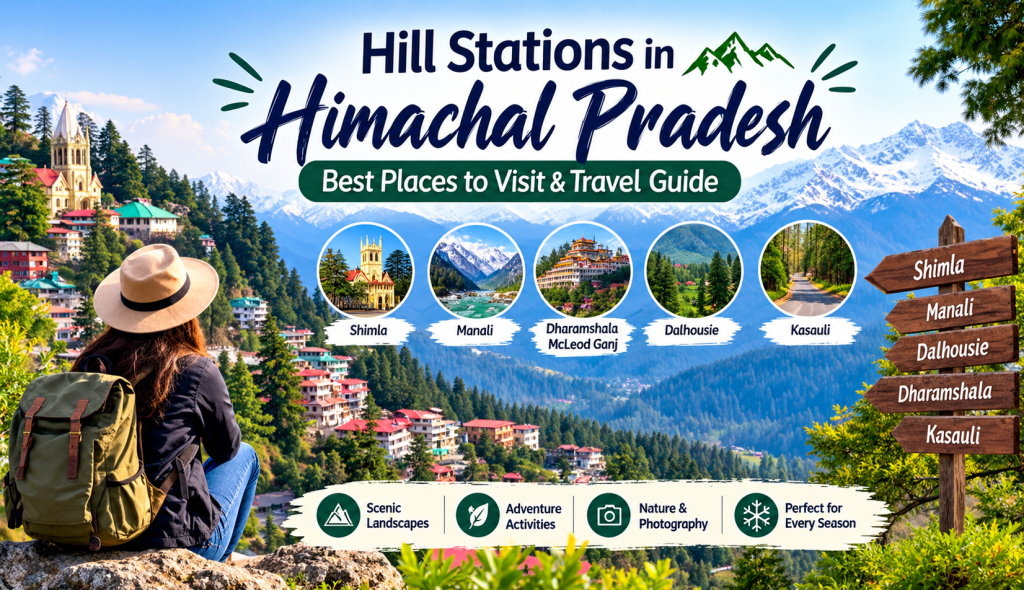
Tucked into the western Himalayas in northern India, Himachal Pradesh packs pine forests, apple orchards, snow-capped ridges, and centuries-old temples into a compact region. The hill stations in Himachal Pradesh began as retreats from the plains’ summer heat. This Himachal Pradesh travel guide explains which places suit which travelers, when to go, and how to plan sensibly.
Best Hill Stations in Himachal Pradesh
Not every destination below is a formal hill station. Shimla, Dalhousie, Kasauli, and Chail were developed as hill stations. Manali and Dharamshala are larger mountain towns, Kalpa is a Himalayan village, and Jibhi and Tirthan Valley are rural valleys.
1. Shimla
Shimla, the state capital, served as the British Raj’s summer capital. Its Victorian buildings, Christ Church, and the open promenade called The Ridge reflect that history, while Mall Road is the busy pedestrian street for shopping and cafés. Nearby, Jakhu Temple offers wide mountain views. The narrow-gauge Kalka–Shimla railway, a UNESCO World Heritage Site, is a scenic way to arrive. Two or three days suit first-time visitors and history lovers. Summer is comfortable; winter can be cold, with occasional snow. Expect steep, uphill walking.
2. Manali
Manali, in the Kullu district, sits in the Beas River valley beneath high Himalayan peaks. Hadimba Temple stands in a cedar forest, and Solang Valley is known for adventure activities such as paragliding in season and skiing when snow allows. The Atal Tunnel has made Lahaul more accessible, but high passes like Rohtang have seasonal closures and permit rules, so check current requirements. Summer brings crowds and clear days; winter brings cold and possible road disruption. Manali suits adventure travelers, couples, and families. Allow three or four days.
3. Dalhousie
Dalhousie, in the Chamba district, spreads across several wooded hills. Its quiet atmosphere, old churches, and colonial-style buildings make it feel unhurried. The nearby meadow of Khajjiar and the surrounding forests offer short walks and scenic drives. Dalhousie suits travelers wanting peace over nightlife. Spring and autumn are pleasant; winters are cold.
4. Dharamshala and McLeod Ganj
Dharamshala, in the Kangra district, is really two places. Lower Dharamshala is the administrative town with markets and government offices. McLeod Ganj, higher up, is where the Dalai Lama resides, and Tibetan culture shapes its monasteries, prayer flags, food, and bookshops. The Tsuglagkhang complex is the main spiritual center. Hikers can walk to Bhagsu and onward to trails with views of the Dhauladhar range. Visit in spring or autumn for clearer skies; monsoon rain is heavy. Cultural travelers and hikers will enjoy it most.
5. Kasauli
Kasauli is a small cantonment town in the Solan district, reachable from Chandigarh without a long drive. It is known for forested walking trails, quiet lanes, and well-preserved colonial architecture, including Christ Church. Couples, families with young children, and weekend visitors will like its relaxed pace. Spring and autumn are ideal.
6. Chail
Chail, also in Solan district, is surrounded by deodar and pine forests and is far calmer than Shimla. It is associated with the former Patiala royal family, and Chail Palace is a heritage attraction. Chail offers forest walks and peaceful views rather than organized sightseeing, making it a good alternative for travelers who find busier hill stations overwhelming. Visit between spring and autumn.
7. Kufri
Kufri lies a short distance from Shimla and is best known for seasonal outdoor activities. When snow is present, visitors come for gentle winter fun; in other months, they enjoy pony rides, viewpoints, and the Himalayan Nature Park. Snowfall varies each year, so never plan around a specific date. Conditions can be icy, and roads may close briefly after heavy snow. Kufri works as a half-day trip from Shimla for families and first-time visitors.
8. Kalpa
Kalpa, in the Kinnaur district, offers a different Himachal. Surrounded by apple orchards, it faces the Kinner Kailash massif, and traditional wood-and-stone architecture, Buddhist monasteries, and Hindu temples reflect Kinnauri culture. Kalpa sits at high altitude, so the air is thin and nights are cold even in summer. Journeys here are long and winding, with landslide risk in monsoon. Cultural travelers, photographers, and nature lovers should allow at least two nights.
9. Jibhi
Jibhi is a small village in the Banjar valley of Kullu district, surrounded by forests and streams. It is not a hill station in the traditional sense but a place for slow travel: guesthouses in wooden homes, short nature walks, and trails toward Jalori Pass and Serolsar Lake in warmer months. It suits couples, writers, and anyone wanting a break from towns. Winter can bring snow and difficult roads, so book ahead.
10. Tirthan Valley
Tirthan Valley, also near Banjar, is a river valley rather than a town. Its clear river, forest paths, and small villages make it a base for hiking and gentle nature experiences. It also provides access to the Great Himalayan National Park, a UNESCO World Heritage Site and protected area where entry rules and trekking permits are managed by park authorities. Verify current requirements with them. Nature lovers, birdwatchers, and trekkers will enjoy it most. Allow three nights.
Which Hill Station in Himachal Pradesh Is Best for You?
No single destination suits everyone, so match the place to your priorities.
- First-time visitors: Shimla and Manali offer easy access, many hotels, and well-known sights.
- Families: Kasauli, Shimla, and Kufri involve shorter drives and varied activities.
- Couples: Chail, Jibhi, and Manali provide privacy and scenery.
- Adventure travelers: Manali and Tirthan Valley lead for hiking and mountain sports.
- Nature lovers: Tirthan Valley, Dalhousie, and Jibhi emphasize forests and rivers.
- Quieter destinations: Chail, Kalpa, and Jibhi are among the offbeat places in Himachal Pradesh.
- Culture seekers: McLeod Ganj for Tibetan Buddhism, Kalpa for Kinnauri traditions.
Best Time to Visit Hill Stations in Himachal Pradesh
Spring (March–May) brings mild weather, blooming rhododendrons, and comfortable sightseeing. Summer (June) is the peak season for escaping the plains’ heat at many famous hill stations in Himachal Pradesh; expect crowds and lively markets. Monsoon (July–September) brings heavy rain, landslides, and road closures, so consider postponing or staying flexible. Autumn (October–November) offers clear skies and crisp mountain views. Winter (December–February) suits those seeking cold weather and snow, but roads can become slippery or blocked.
Snowfall varies by location, altitude, and year, and no one can guarantee it on a given date. Pack layers year-round: light clothing in summer, a rain jacket for monsoon, and thermal wear, a warm coat, gloves, and sturdy shoes for winter.
How to Plan a Himachal Pradesh Trip
Mountain journeys often take far longer than distances suggest. Winding roads, traffic, weather, and road work can slow travel, so build in buffer time and avoid packing too many stops.
A 3–4-day trip: Choose one region. For example, spend two nights in Shimla and one in Kufri or Chail, or base yourself in Manali for the Kullu valley.
A 5–7-day Himachal Pradesh itinerary: Combine two regions without backtracking. One option is Chandigarh, Kasauli, Shimla, and then Manali. Another is Dharamshala and McLeod Ganj, Dalhousie, and Chamba. Slower travelers might pair Jibhi and Tirthan Valley with Manali.
Essential Travel Tips for International Visitors
- Getting there: Delhi and Chandigarh are common gateways. Options include trains, buses, taxis, and private transfers; confirm current schedules, as services change.
- Accommodation: Book early for peak seasons and holidays.
- Road safety: Avoid night driving, hire experienced local drivers, and respect weather warnings.
- Altitude: Ascend gradually in places like Kalpa and rest if you feel unwell.
- Hiking: Stay on marked trails, carry water, and use local guides where advised.
- Customs: Dress modestly at temples and monasteries, remove shoes where requested, and ask before photographing people or religious ceremonies.
- Environment: Carry out your trash, avoid single-use plastic, and support locally owned guesthouses.
- Updates: Check weather and road advisories through official Himachal Pradesh tourism and government sources before departure.
Frequently Asked Questions
What are the best hill stations in Himachal Pradesh?
Shimla, Manali, Dalhousie, Dharamshala and McLeod Ganj, Kasauli, Chail, and Kufri are popular. Kalpa, Jibhi, and Tirthan Valley suit quieter trips.
Which hill station in Himachal Pradesh is best for first-time visitors?
Shimla and Manali are the easiest starting points because of their infrastructure and variety.
What is the best time to visit Himachal Pradesh?
Spring and autumn are generally the most comfortable. Summer suits escaping heat, and winter suits snow seekers.
Where can travelers experience snowfall in Himachal Pradesh?
Higher areas such as Manali, Kufri, Shimla, and Kalpa may receive snow in winter, but timing varies yearly.
How many days are enough to explore Himachal Pradesh?
Three to four days cover one region, while five to seven days allow a broader itinerary.
Conclusion
From heritage towns like Shimla to cultural centers like McLeod Ganj, and from village escapes like Jibhi to nature-focused valleys like Tirthan, the hill stations in Himachal Pradesh reward travelers who plan carefully. Choose one or two regions, leave time for slow mountain roads, and confirm weather and permit information with official sources shortly before you travel.