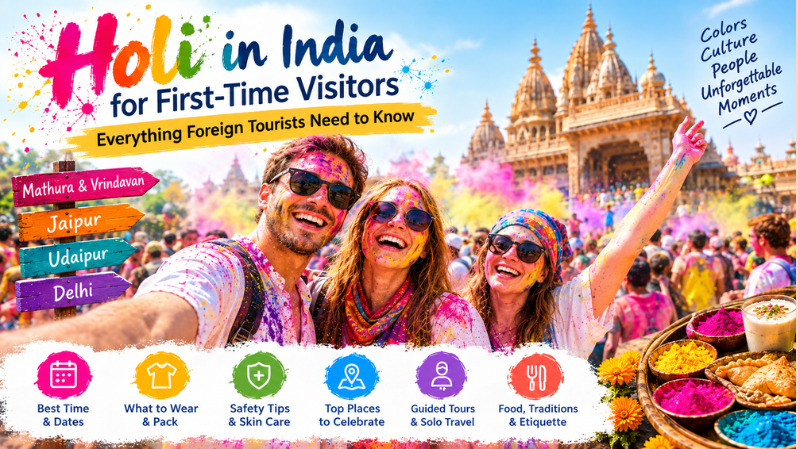
Holi in India is a colorful spring festival celebrated mainly in March, where people throw colored powder and water at each other in the streets. First-time foreign visitors should wear old clothes, protect their eyes and skin, and consider joining a guided or hotel-organized event for safety. This Holi travel guide for foreigners covers the cities, safety steps, and etiquette you need before joining the celebration.
What Is Holi in India and Why It Matters to Foreign Visitors
This spring celebration is a Hindu festival that marks the arrival of warmer weather and the symbolic victory of good over evil. It usually falls in early-to-mid March, based on the lunar calendar, and dates shift slightly every year. For many foreign travelers, it’s their first experience of a full-contact, joy-filled Indian celebration, and nothing back home quite compares to it.
Understanding the religious roots helps you appreciate what’s happening around you. The festival honors the devotion of Prahlad and the playful legends of Lord Krishna, who is said to have started the color-throwing tradition himself.
The Holi festival in India spans two days. The first night is Holika Dahan, a bonfire ritual symbolizing the burning away of negativity. The second day is Rangwali Holi, when people throw colored powder called gulal at friends, family, and strangers alike.
- Holika Dahan: evening bonfire and prayers
- Rangwali Holi: daytime color-throwing and water play
In practice, most tourists experience Rangwali Holi, since it’s the more public and visual part of the celebration. Streets, hotel courtyards, and open fields fill with music, dancing, and clouds of colored powder.
Music trucks, called DJ floats, often follow the crowds through main streets. Vendors sell thandai, a spiced milk drink, alongside sweets like gujiya and traditional snacks, giving the whole day a festive, market-like energy.
How to Celebrate Holi Safely: A Guide for International Tourists
Learning how to celebrate Holi safely starts with what you wear and how you protect your skin. Old, light-colored cotton clothes work best since colors show up clearly and you won’t mind discarding them afterward.
Skin and eye protection matter just as much as clothing. Apply coconut oil or a thick moisturizer before you step outside, since it creates a barrier that makes colors easier to wash off later.
- Wear sunglasses or swim goggles to protect your eyes
- Oil your hair and skin generously beforehand
- Carry a waterproof pouch for your phone and cash
- Avoid contact lenses on the day of Holi
According to the Federation of Indian Chambers of Commerce and Industry (FICCI), Holi-related tourism activity contributes meaningfully to local economies in states like Rajasthan and Uttar Pradesh each March. That economic footprint means many hotels and tour operators now run dedicated, tourist-oriented events with safer, skin-friendly colors.
A common mistake first-timers make is assuming every neighborhood celebration is tourist-friendly. Some local street events can get rowdy, involve alcohol, and lack the crowd control found at organized venues, so it’s worth checking reviews before joining an unfamiliar group.
Packing Checklist for Holi in India
Pack specifically for the mess and unpredictability of this festival. A separate “Holi bag” keeps your regular luggage clean and organized.
Leave your passport and expensive jewelry at the hotel. A cheap prepaid SIM card in a waterproof pouch is more useful on the day than any valuables you’d rather not lose.
- Old clothes you don’t mind ruining
- A plastic phone pouch or dry bag
- Flip-flops instead of expensive shoes
- A change of clothes for after the celebration
Holi in India for Solo Female Travelers: Safety and Guided Experiences
This festival can be enjoyed safely by solo female travelers, but planning matters more than it does for group travelers. Crowded street celebrations can get physically intense, so choosing your setting carefully makes a real difference.
Some solo travelers pair up with other guests at their hostel or hotel for the day. Traveling in a small, mixed-gender group tends to reduce unwanted attention compared to walking through crowds alone.
Real users report that hotel-organized or resort-based Holi events feel noticeably calmer than open public streets. These setups usually include organic colors, security staff, and a more controlled crowd size, which is central to solo female traveler Holi safety planning.
- Book a hotel or resort with an organized Holi event
- Travel in a small group rather than alone on the streets
- Avoid isolated alleys during the celebration
- Keep emergency contacts and your hotel address saved offline
Choosing a Guided Holi Experience
A guided Holi experience in India typically includes transport, organic colors, security, and local guides who explain the customs as you go. Companies like Intrepid Travel and G Adventures run seasonal Holi-specific tours aimed at foreign visitors, and choosing this route removes most of the guesswork for newcomers.
For example, some Jaipur-based tour operators combine a morning color celebration with an afternoon cultural performance, giving travelers structure and context around the festivities. Booking through a registered operator listed on platforms like Incredible India also gives you a point of contact if plans change.
Best Regions to Experience Holi in India
The experience looks and feels different depending on where you celebrate it. Mathura and Vrindavan, in Uttar Pradesh, host the most traditional celebrations because of their connection to Lord Krishna, and events there can stretch across several days.
Jaipur and Udaipur in Rajasthan are popular with foreign tourists because of their strong tourism infrastructure and hotel-run events. Pushkar, a smaller town, offers a laid-back, community-style celebration that many backpackers prefer.
Delhi gives you the widest range of choices, from five-star hotel events to open public parks. That variety makes it a practical base if you’re unsure which style of celebration suits you.
Any solid Holi travel guide for foreigners will point you toward hotel-organized venues first, then let you branch out to public streets once you know what to expect. Starting cautious and adjusting from there works better than diving straight into the busiest crowd you can find.
- Mathura and Vrindavan: traditional, religious, intensely crowded
- Jaipur and Udaipur: tourist-friendly, hotel-organized options
- Pushkar: relaxed, backpacker-oriented atmosphere
- Delhi: convenient access with mixed public and private events
Each region offers a different pace and intensity, so match your choice to your comfort level with crowds. A quieter hotel-based celebration in Udaipur suits a different traveler than the packed lanes of Mathura.
Key Takeaways
- Holi in India typically falls in early-to-mid March and runs across two days.
- Wear old clothes, apply oil to your skin, and protect your eyes before joining the celebration.
- Solo female travelers should prioritize hotel-organized or guided Holi experiences over open street events.
- Mathura, Jaipur, Udaipur, and Pushkar each offer a distinct style of celebration.
- Organic, skin-safe colors are increasingly available and worth requesting in advance.
- Always keep valuables in a waterproof pouch and carry minimal cash.
Frequently Asked Questions
Is Holi in India safe for foreign tourists?
Yes, the festival is generally safe for foreign tourists, especially at hotel-organized or guided events. Public street celebrations can get crowded and physically intense, so travelers who prefer a calmer setting should book a structured event in advance.
What should I wear during the celebration?
Wear old, light-colored cotton clothing that you’re comfortable discarding afterward. Closed flip-flops and sunglasses or goggles help protect your feet and eyes from colored powder and water.
Are the colors used during Holi safe for skin?
Many colors sold in tourist areas are now organic and skin-safe, though some vendors still sell chemical-based powders. Applying oil to your skin beforehand and choosing hotel-provided colors reduces the risk of irritation.
Which Indian city is best for a first-time Holi experience?
Jaipur and Udaipur are popular first choices because of their reliable tourism infrastructure and hotel-run Holi events. Mathura and Vrindavan suit travelers who want a more traditional, religiously rooted celebration instead.
Can solo female travelers celebrate the festival comfortably in India?
Solo female travelers can celebrate comfortably by choosing guided tours or hotel-based events rather than open public streets. With a bit of planning, Holi in India can be one of the most memorable parts of a trip rather than a source of worry.