
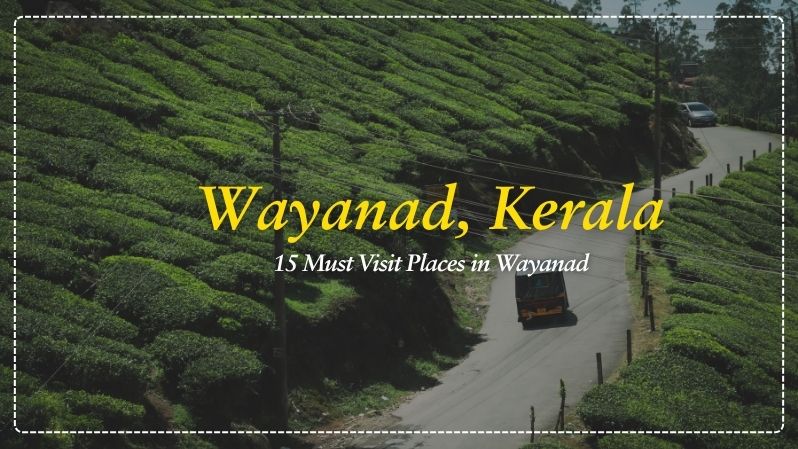
There’s a moment, somewhere on the Thamarassery Churam road, when the plains of Kozhikode disappear behind you and the mist starts rolling in. The air cools. Coffee estates appear on both sides. And suddenly you’re in Wayanad.
That moment alone is worth the trip.
Wayanad doesn’t try hard to impress you. It doesn’t need to. This quiet, green corner of northern Kerala just does its thing ancient caves, forest-wrapped waterfalls, wild elephants wandering at dusk, tribal villages that have barely changed in centuries and lets you figure out for yourself why people keep coming back.
If you’re planning a trip and looking for the best places to visit in Wayanad, you’re in the right place. This guide covers 15 destinations that genuinely deserve your time not a copy paste list, but places we’d actually recommend to a friend.
A Little Context Before You Pack Your Bags
Wayanad sits at an elevation between 700 and 2,100 metres in the Western Ghats which means the weather here is almost always pleasant, the air always smells faintly of cardamom and rain, and the landscape is relentlessly, almost aggressively green.
It borders Karnataka and Tamil Nadu, which gives it an ecological diversity that most Kerala hill stations don’t have. It’s part of the Nilgiri Biosphere Reserve one of the most important wildlife corridors in Asia. And it’s home to tribal communities whose connection to this land goes back thousands of years.
All of which is to say: Wayanad is not just pretty. It’s genuinely layered. And the more time you spend here, the more you realise that.
15 Places to Visit in Wayanad That Are Worth Every Kilometre
1. Chembra Peak
Let’s start with the one everyone talks about and for good reason.
Chembra Peak is the highest point in Wayanad at 2,100 metres, and the trek to the top is one of those experiences that stays with you long after you’ve come back home. You walk through tea estates, grasslands, and shola forest, and about halfway up, you hit the main attraction: a small, perfectly heart shaped lake that locals say has never dried up. Ever. In recorded history.
The views from the summit, when it’s clear, are extraordinary. On a really good morning you can see for miles across the Western Ghats.
A few things to know before you go: You need to register with the Forest Department at Meppadi and a guide is mandatory no exceptions. Start before 7 AM because the clouds come in quickly, and if you arrive late, you might trek the whole thing in fog and see nothing. Wear proper shoes. The trail gets steep and can be slippery in patches.
Entry: Approx. ₹500 (shared guide fee) | Best time: October to March
2. Edakkal Caves
Here’s one that surprises almost every first time visitor.
The Edakkal Caves aren’t really caves in the traditional sense they’re two natural rock shelters on the Ambukuthi Hills, and inside them are rock carvings that are estimated to be around 6,000 to 8,000 years old. Actual Neolithic petroglyphs. Images of humans, animals, and symbols that someone carved into stone before recorded history began.
The hike up is about 45 minutes and not too difficult, but it’s the moment you duck inside the shelter and realise what you’re looking at that hits you. These are among the oldest examples of human art in South India. Standing in front of them is one of those rare travel moments that genuinely gives you perspective.
The views of the valley from the hilltop are also excellent. Plan at least 2 hours for the full experience.
Entry: ₹30 – ₹50 | Timings: 9 AM – 5 PM, closed Mondays | Best time: November to March
3. Soochipara Falls
If you ask any Wayanad local to name the most beautiful waterfall in the district, nine out of ten will say Soochipara.
Also called Sentinel Rock Waterfalls, Soochipara is a three-tiered cascade that drops dramatically into a natural pool at the base. The walk to reach it about 2 km through rubber plantations and forest is lovely in its own right. And when you come around the final bend and the falls appear in front of you, it’s genuinely breathtaking.
The pool at the bottom is swimmable, which makes it especially popular with families and younger travellers. Go in the morning, before the crowds arrive. Post monsoon October through January is when the falls are at their most powerful and the forest around them is most lush.
Entry: ₹30 (approx.) | Timings: 9 AM – 5:30 PM | Best time: October to February
4. Meenmutty Waterfalls
Meenmutty is what happens when a waterfall decides it’s not going to make things easy for you and the effort makes it completely worth it.
At roughly 300 metres tall, it’s the second highest waterfall in Kerala. Getting there requires a 2 km jungle trek on a trail that’s steep, can be slippery, and genuinely requires a local guide if you’re not experienced. But the falls themselves are extraordinary three tiers of white water crashing through ancient rock formations in the middle of a forest that looks completely undisturbed.
One practical tip: wear closed shoes with a grip, not sandals. And hire a guide from the entry point the trail is not obvious in sections and the rocks near the base can be treacherous.
Entry: ₹30 (adults), ₹15 (children) | Timings: 9 AM – 5:30 PM | Best time: October to March
5. Banasura Sagar Dam
Not every great place to visit in Wayanad requires trekking boots and an early alarm.
Banasura Sagar Dam is the largest earthen dam in India and honestly, it’s just a really beautiful place to spend a few hours. The reservoir stretches out between forested hills, small green islands emerge from the water, and the overall scene is the kind of thing you’d expect to find on a postcard.
Boating is available speed boats and pedal boats and the area around the dam is easy, flat, and good for walking and just sitting quietly. Sunsets here can be genuinely spectacular when the sky turns orange over the water and reflects in the reservoir.
It’s a good one to keep in your back pocket for a relaxed afternoon between more active days.
Entry: ₹20–₹40 | Best time: October to May

6. Kuruva Island
Kuruva Island is the kind of place that reminds you why you travel.
It’s a group of protected river islands spread across about 950 acres on the Kabani River, and the only way to get there is by bamboo raft a slow, quiet crossing that immediately puts you in the right frame of mind. No vehicles. No plastic. No permanent structures. Just forest, birdsong, the sound of the river, and trails through shaded woodland that feel genuinely removed from everything.
The island is home to rare plant species and migratory birds, and it’s one of the better birdwatching spots in Wayanad if you bring binoculars and patience. Even if you’re not a birdwatcher, it’s a wonderful place to simply walk slowly and be quiet for a while.
Note that Kuruva closes completely during monsoon so plan accordingly.
Entry: ₹80–₹150 | Timings: 9 AM – 4 PM | Closed: June to September | Best time: October to April
7. Pookode Lake
Pookode Lake is Wayanad’s most accessible natural attraction, and it earns its place on the list.
A freshwater lake at 770 metres above sea level, surrounded by dense forest and wildflowers, Pookode is calm, pretty, and very easy to explore. There’s a walking path around the perimeter, rowboats and pedal boats available for hire, and a small aquarium nearby that kids tend to enjoy.
It’s not the most dramatic destination on this list, but it’s genuinely lovely especially in the early morning when the mist is still on the water and the forest is quiet. A good one for families or for easing yourself into Wayanad on arrival day.
Entry: Nominal | Timings: 9 AM – 5:30 PM | Best time: October to February
8. Muthanga Wildlife Sanctuary
If you want to see wild elephants in Kerala, Muthanga is where you go.
Covering 344 square kilometres as part of the Nilgiri Biosphere Reserve, Muthanga is home to elephants, leopards, gaur (Indian bison), spotted deer, wild boar, and well over 200 species of birds. The morning jeep safaris are the best bet for sightings specifically between February and April when animals tend to gather near water sources.
A word of honest advice: wildlife sightings are never guaranteed. That’s what makes them special. But Muthanga gives you a genuinely good chance, the forest itself is beautiful, and even a safari where you see no big animals is a worthwhile experience through some extraordinary landscape.
Book your safari slot in advance, especially during peak season.
Safari: ₹2,100 jeep (4 persons) | ₹350 bus safari | Timings: 6–10 AM and 3–6 PM | Best time: October to May
9. Tholpetty Wildlife Sanctuary
If Muthanga feels too busy for your taste, try Tholpetty.
Located in the northern part of Wayanad near Mananthavady, Tholpetty is quieter, less crowded, and known particularly for its large elephant herds. The forest here feels wilder and the overall experience is more immersive. Serious wildlife enthusiasts and photographers tend to prefer it for exactly these reasons.
The sanctuary connects to Nagarhole and Bandipur across the Karnataka border, which means the wildlife corridor here is vast animals range freely across hundreds of kilometres of protected forest.
Safari: ₹2,100 jeep (4 persons) | Timings: 6–10 AM and 3–5 PM | Best time: February to May
10. Thirunelli Temple
About 65 km from Kalpetta, deep in the Brahmagiri Hills, there is a temple that has been standing for over 3,000 years.
Thirunelli is one of the most ancient Vishnu temples in India. It’s called the “Kashi of the South” because Hindus believe that performing last rites here, in the sacred Papanashini stream beside the temple, releases the departed soul from the cycle of rebirth just as Varanasi does in the north.
Even if you’re not visiting for religious reasons, Thirunelli is worth the drive. The road through the forest to reach it is strikingly beautiful, the setting among the hills is deeply serene, and the temple itself its age, its architecture, its unbroken continuity is moving in a way that’s hard to articulate.
Entry: Free | Best time: Year-round
11. Wayanad Heritage Museum
This one doesn’t get the attention it deserves — and that’s a shame.
The Wayanad Heritage Museum at Ambalavayal, about 20 km from Kalpetta, documents the history and culture of Wayanad’s indigenous tribal communities in real depth. Ancient weapons, traditional tools, tribal artefacts, pottery, agricultural implements all presented with genuine care and context.
Wayanad has been inhabited for thousands of years and is home to communities like the Kurichiya, Paniya, and Adivasi. If you visit the Edakkal Caves and feel curious about the people who made those carvings and who lived in this landscape long before anyone else this museum is the place to go next.
Entry: ₹50 (museum), ₹100 (factory visit) | Timings: 9 AM – 5 PM
12. Lakkidi Viewpoint
The very first thing you see when you arrive in Wayanad from Kozhikode and it sets the tone immediately.
Lakkidi sits at the top of the Thamarassery Churam pass, at about 700 metres, and on a clear morning the views back down toward the plains are spectacular. There’s also a curious local legend here about a chain tree an old story involving a tribal man, a colonial era road, and a spirit believed to still inhabit the spot. Whether you believe it or not, the locals will tell you the story with complete seriousness.
It’s a natural first or last stop on any Wayanad trip.
Entry: Free | Best time: October to February for clearest views
13. 900 Kandi Skywalk
This one is relatively new, but it’s already one of the most talked-about places to visit in Wayanad especially among younger travellers and anyone who likes a good photograph.
South India’s first glass bridge, the 900 Kandi Skywalk stretches 100 feet in the air above a valley of rivers, hills, and forest. Walking across it with nothing but tempered glass beneath your feet and the Wayanad valley spread out below is properly thrilling. The 360 degree views are spectacular.
It’s located within 900 acres of forest near Meppadi and the surrounding area has trails, viewpoints, and small waterfalls to explore as well. Budget half a day here.
Entry: ₹200–₹250 | Timings: 9 AM – 5 PM
14. Pakshipathalam
Only attempt this one if you’re a serious trekker. But if you are don’t miss it.
Pakshipathalam means “Bird Rock” in Malayalam, and it’s Wayanad’s most demanding and most rewarding trek. A 17 km round trip through dense evergreen forest leads to an ancient cave system that is home to rare birds, reptiles, and bat colonies. The forest along the way is extraordinary genuinely dense, genuinely wild, with almost no other trekkers on the trail.
You need prior permission from the Wayanad Wildlife Sanctuary before going. The trek takes 4–5 hours each way. Do not attempt during monsoon. And if you love birds bring binoculars. The sightings here can be exceptional.
Best time: November to February
15. The Spice and Coffee Plantations
Saving the most everyday one for last and it genuinely belongs here.
Wayanad produces some of India’s finest cardamom, black pepper, vanilla, ginger, and Robusta coffee. Walking through a working plantation where the air smells of pepper and wet earth and the shade of the coffee trees is cool is one of those simple, sensory experiences that stays in your memory long after the dramatic waterfalls have blurred together.
Plenty of estates around Kalpetta, Mananthavady, and Vythiri offer guided tours. And staying in a plantation homestay, waking up to the smell of fresh coffee and birdsong, is one of the best ways to experience Wayanad that most tourists miss entirely.
Best time: Year-round
Best Time to visit wayand
October to February is the sweet spot for most people weather is cool and clear (15–25°C), the landscape is lush after monsoon, and conditions are good for trekking, safaris, and sightseeing.
March to May is warmer but perfectly manageable, and there are noticeably fewer tourists. Waterfalls are quieter but the cultural sites, wildlife sanctuaries, and plantations are all still excellent.
Monsoon (June to September) is dramatically beautiful if you don’t mind rain. The waterfalls are at full force, everything is intensely green, and the fog on the hills is genuinely atmospheric. But Kuruva Island closes, some forest paths become difficult, and leech socks are essential for any outdoor walking.
How to Reach Wayand
The most scenic option and the most popular is flying into Kozhikode (Calicut International Airport), which is about 85–100 km from Kalpetta. From there, a taxi takes you up through the Thamarassery Churam with its nine hairpin bends. The drive itself is one of the highlights.
If you’re coming from Bengaluru, it’s about 280 km via Mysore and Gundlupet a 6–7 hour road trip through forest and coffee country that is genuinely enjoyable if you start early.
Conclusion
Carry cash. Forest entries, local eateries, and many small shops don’t accept cards or UPI especially in more remote areas.
Book wildlife safaris early. During peak season, slots at Muthanga and Tholpetty fill up fast. Online booking is available and strongly recommended.
Pack a light jacket even in winter. Evenings get cool, particularly at altitude.
Wear covered shoes for forest walks leeches are common during and after monsoon, and the trails can be slippery.
And if you have the option stay in a plantation homestay or an eco-resort rather than a standard hotel. It makes an enormous difference to the experience.
FAQ – related to places to visit in Wayand
For a first trip, cover Chembra Peak, Edakkal Caves, Soochipara Falls, Banasura Sagar Dam, and Pookode Lake. That covers adventure, history, nature, and scenery in a balanced 3-day itinerary.
Three days is the minimum for a satisfying trip. Four or five days lets you go at a relaxed pace, add a wildlife safari, visit Thirunelli, and genuinely settle into the place rather than rushing through it.
Very much so. Pookode Lake, Kuruva Island, Banasura Sagar Dam, and the spice plantations are all excellent with kids. Avoid strenuous treks like Chembra or Pakshipathalam with young children but there’s plenty else to do.
October to February for the best overall conditions cool, clear, and good for all activities. Post-monsoon (October–November) is particularly beautiful when everything is green and the waterfalls are full
Yes with caveats. The landscape is stunning and the waterfalls are at their peak. But Kuruva Island closes, trekking gets harder, and some roads become difficult. Go with realistic expectations and flexible plans.
Wayanad is less commercialised than either. The tribal heritage here is more visible and accessible, the wildlife is more abundant, and it hasn’t yet been overwhelmed by mass tourism. If you want somewhere that still feels genuine, Wayanad wins.
The heart-shaped lake on Chembra Peak, the Edakkal Cave petroglyphs, wild elephant sightings, spice and coffee plantations, and the sheer, uncrowded green beauty of the Western Ghats.
Plan Your Wayanad Trip with India Travel
Wayanad is the kind of destination that rewards proper planning. The difference between a rushed 2 day trip and a well-crafted 5 day itinerary is enormous and that’s where we come in.
At India Travel, we put together Kerala and Wayanad packages that are built around how you actually want to travel whether that’s a family holiday, a couple’s escape, an adventure-focused trip, or a mix of everything. Plantation homestays, forest permits, pre-booked safaris, guided treks we handle the details so you don’t have to.
Talk to our travel team and let’s figure out the trip that’s right for you.