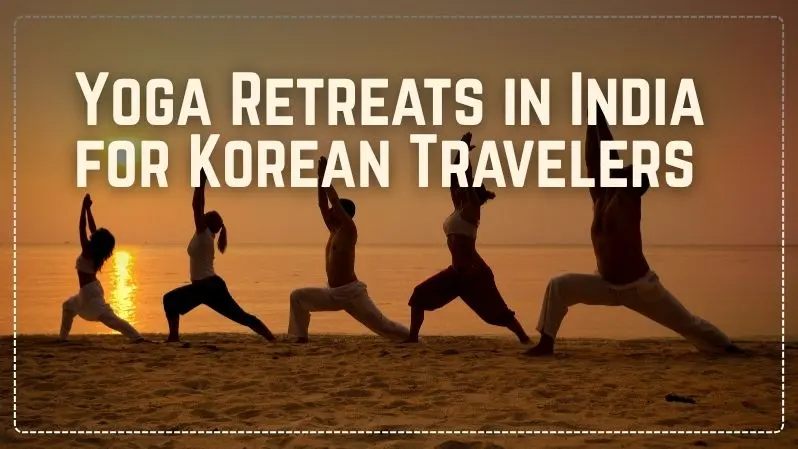
India is where yoga began — and practicing it here feels entirely different from a studio session in Seoul or Busan. From the sacred ghats along the Ganges in Rishikesh to the sun-warmed beaches of Goa, Indian offer somet yoga retreats in India for beginners hing no other destination can replicate: the chance to learn this ancient discipline in the very land where it was born.
For Korean travelers, interest in yoga has grown steadily over the past decade. Yoga studios across Seoul and Busan now offer everything from traditional Hatha to fusion styles like aerial yoga and K-pop choreography yoga. The Korean government has even incorporated yoga into high school curriculums, and bilateral initiatives between India and Korea continue to promote research and education in yoga and Ayurveda.
But a week-long yoga retreat in Rishikesh is an entirely different experience from a drop-in class at a Gangnam studio. This guide is written specifically for Korean travelers — whether you have never held a downward dog or you have been practising for years — covering the three most popular yoga destinations in India, what they cost in Korean won, how to get there, what to eat, and what to expect as a first-timer.
Why India Is the Best Place to Start Your Yoga Journey
You could take a yoga retreat in Bali, Thailand or even Jeju-do. So why India? The answer comes down to depth and authenticity. India is the birthplace of yoga, and the tradition here stretches back over 5,000 years. When you join a retreat in Rishikesh or Mysore, you are not just doing physical postures — you are stepping into a living tradition that includes breathwork (pranayama), meditation, philosophy and chanting.
Indian retreats also offer exceptional value. While a week-long retreat in Bali or Hawaii can cost upwards of ₩2,000,000, comparable programs in India start from as little as ₩300,000 — including accommodation, three vegetarian meals a day and daily instruction. For Korean travelers who are curious about yoga but do not want to commit a large budget to their first experience, India makes the most financial sense.
The teaching depth is also unmatched. Many Indian yoga schools have been operating for decades, led by teachers who have trained thousands of beginners from around the world. They do not expect you to be flexible or experienced. They only expect you to be present.
The Three Best Destination for yoga retreats in India
Rishikesh — The Yoga Capital of the World
Rishikesh sits in the foothills of the Himalayas, right where the Ganges River emerges from the mountains. It has more ashrams and yoga schools than anywhere else on earth, and it has been a centre for spiritual practice for over 150 years. This is the town where the Beatles came to meditate in 1968, and it remains the single most popular yoga destination in the world.
For beginners, Rishikesh is ideal. The town has dozens of retreats specifically designed for people who have never practised yoga before, with small class sizes, alignment-focused instruction and gentle Hatha yoga as the foundation. A typical day begins before sunrise with pranayama and slow stretching, followed by a philosophy session in the afternoon and restorative poses with chanting in the evening.
• Best for: Complete beginners who want a structured, traditional experience
• Yoga styles: Hatha, Vinyasa, Sivananda, Kundalini, Restorative
• Duration: 3 to 21 days (7-day programs are most popular)
• Cost: ₩300,000–₩600,000/week (budget ashram); ₩600,000–₩1,500,000/week (mid-range); ₩1,500,000–₩4,500,000 (luxury Ayurvedic programs up to 21 days)
• Best season: September to November and February to April
Mysore — Home of Ashtanga Yoga
Mysore is a colourful city in Karnataka, South India, famous for its ornate palace, vibrant markets and — most importantly for yoga practitioners — its deep connection to Ashtanga yoga. The late Sri K. Pattabhi Jois established his yoga shala here, and Mysore remains the global headquarters of the Ashtanga tradition. Students from around the world base themselves here for months at a time to study the practice at its source.
While Ashtanga can sound intimidating, many Mysore studios welcome beginners. The Mysore-style teaching method is inherently self-paced: you practise a sequence of postures at your own speed while a teacher moves around the room giving individual corrections. This makes it excellent for newcomers because you receive personalised attention rather than trying to keep up with a fast-paced group class.
• Best for: Beginners who want personalised, one-on-one style instruction
• Yoga styles: Ashtanga (Mysore-style), Hatha
• Duration: Minimum 1 week (many practitioners stay 1–3 months)
• Cost: ₩450,000–₩900,000/week for teaching only — accommodation is arranged separately through local guesthouses (₩150,000–₩450,000/month for a basic room)
• Best season: October to March (pleasant weather, 20–28°C)
Goa — Yoga with a Beach Holiday Vibe
Goa brings a completely different energy to yoga travel. This is India’s beach holiday capital, with palm-fringed coastline, a laid-back atmosphere and a unique fusion of Indian and Portuguese culture. If you want yoga woven into a relaxing vacation rather than an intensive ashram experience, Goa is your destination.
The yoga scene in Goa is concentrated in the quieter southern and northern beach areas — Mandrem, Arambol, Patnem and Palolem. Retreats here tend to be more relaxed and informal, with morning yoga sessions on open-air shalas overlooking the Arabian Sea, followed by free time for swimming, exploring markets or Ayurvedic massage.
• Best for: Beginners who want a relaxed, holiday-style introduction to yoga
• Yoga styles: Hatha, Vinyasa, Yin, Aerial, multi-style
• Duration: 3 to 14 days
• Cost: ₩450,000–₩900,000/week (mid-range); ₩900,000–₩2,100,000/week (luxury beachfront)
• Best season: November to March (dry, warm, 25–33°C)
How Much Does a Yoga Retreat in India Cost? (In Korean Won)
One of the biggest advantages of choosing yoga retreats in India over other yoga destinations is affordability. Here is a realistic cost breakdown for a one-week yoga retreat, converted to Korean won at the approximate rate of 1 USD = ₩1,500 (July 2026).
Budget Ashram Stay (Rishikesh): ₩300,000–₩600,000/week. This includes shared accommodation, three sattvic vegetarian meals daily, two yoga sessions per day, meditation and pranayama. Rooms are simple — expect basic beds, fans and shared bathrooms. This is the most authentic ashram experience.
Mid-Range Retreat (All Destinations): ₩600,000–₩1,500,000/week. Private rooms with attached bathrooms, daily yoga and meditation, Ayurvedic meals, and additional activities like trekking (Rishikesh), temple visits (Mysore) or beach excursions (Goa). Some include spa treatments.
Luxury Wellness Retreat: ₩1,500,000–₩4,500,000 for 1–3 weeks. Premium accommodation, personalised Ayurvedic consultations, daily treatments and massages, organic meals, private yoga sessions and full wellness programming.
Flights (Seoul to Delhi, round trip): ₩550,000–₩1,200,000 depending on season and airline. Korean Air and Air India both operate direct nonstop flights from Incheon to Delhi (approximately 8–9 hours). Budget carriers with one stopover can bring prices closer to ₩400,000.
Domestic Transport within India: Delhi to Rishikesh by bus or taxi (₩15,000–₩75,000). Delhi to Goa by domestic flight (₩30,000–₩75,000). Bangalore to Mysore by bus or taxi (₩8,000–₩30,000).
Overall, a Korean traveler can do a complete one-week yoga retreat in India — including international flights, visa, retreat fees, meals and local transport — for approximately ₩1,200,000–₩2,000,000 total. That is significantly less than comparable experiences in Bali, Thailand or Hawaii.
Food at Indian Yoga Retreats: What Korean Travelers Should Know
Most yoga retreats in India, retreats serve sattvic vegetarian food — a traditional yogic diet that excludes meat, fish, eggs, garlic, onion and heavily spiced dishes. Meals are typically simple, nourishing and prepared with fresh ingredients: rice, dal (lentil soup), seasonal vegetables, chapati (flatbread), fresh fruits, yogurt and herbal teas.
For Korean travelers accustomed to kimchi, doenjang-jjigae and bibimbap, the transition to sattvic food can feel significant during the first two days. Most guests report adjusting quickly and many find the food genuinely delicious. The absence of garlic and onion takes getting used to, but the spices used in Indian cooking — turmeric, cumin, coriander, ginger — create plenty of flavour.
Practical tips for Korean travelers: Bring a small supply of gochugaru (red pepper flakes) or a tube of gochujang if you need the comfort of familiar heat. Most retreats will not mind you adding it to your plate. Instant ramyeon packets are also a useful backup for the first couple of days. If you have dietary restrictions — vegan, gluten-free, allergies — inform your retreat at the time of booking; most centres accommodate with advance notice.
Stomach adjustment is common for first-time visitors to India. Quality retreat centres use filtered water and maintain strict kitchen hygiene, which reduces the risk significantly compared to eating at street stalls. Bringing basic stomach remedies (such as 정로환 or Imodium) from home is a wise precaution.
Explore more Packages –>>
Language: Will I Be Able to Communicate?
English is the primary language of instruction at nearly all yoga retreats in India that accept international guests. Teachers in Rishikesh, Mysore and Goa are accustomed to working with students from dozens of countries, and class instructions, philosophy discussions and daily communication are conducted in English.
Korean-language yoga instruction in India is rare but not nonexistent. A small number of Korean yoga teachers run seasonal retreats in Rishikesh and Goa, usually advertised through Korean yoga communities on Naver Cafe and Instagram. If English-only instruction feels daunting, searching for Korean-led group retreats is worth exploring.
Outside the retreat, basic English will serve you well in tourist areas. Hindi is the dominant local language, but tourism-facing businesses in Rishikesh, Goa and Mysore are comfortable with English. Translation apps like Papago or Google Translate work reliably for everyday interactions. Learning a few Hindi phrases — namaste (hello), dhanyavaad (thank you), kitna hai (how much) — goes a long way with locals.
How Korean Travelers Can Get to India: Visa, Flights and Logistics
India Visa for Korean Citizens
South Korean passport holders need a visa to enter India but have more options than most nationalities. Korean citizens are among only three nationalities worldwide eligible for unconditional Visa on Arrival (VOA) at six designated Indian airports — Delhi, Mumbai, Bangalore, Chennai, Hyderabad and Kolkata — for up to 60 days with double entry.
However, the Indian e-Tourist Visa is the recommended route for most travelers. It is applied for entirely online at evisa.india.gov.in, requires no embassy visit, and is typically processed within 3–5 business days. Options include a 30-day single-entry visa and longer-term 1-year and 5-year multiple-entry visas. Requirements include a valid passport (6+ months validity), a recent passport photo, flight itinerary and proof of accommodation.
Getting There: Flights from Seoul
Korean Air and Air India both operate direct nonstop flights from Incheon International Airport (ICN) to Delhi Indira Gandhi International Airport (DEL). Korean Air operates approximately 4 nonstop flights per week, while Air India operates around 6–7 per week. Flight time is approximately 8 to 9 hours.
From Delhi, onward connections are straightforward. Rishikesh is approximately 6 hours by road or a short domestic flight to Dehradun. Goa is a 2.5-hour domestic flight from Delhi. Mysore is best reached via Bangalore (2-hour domestic flight from Delhi), followed by a 3-hour drive or bus to Mysore.
Budget tip: connecting flights via Bangkok (Thai Airways), Ho Chi Minh City (Vietjet) or Hong Kong (Cathay Pacific) can bring round-trip prices down to ₩400,000–₩550,000, though journey times increase to 12–18 hours.
Follow us on Instagram And Facebook
Best Time of Year for a Yoga Retreat in India
The optimal timing depends on your chosen destination for yoga retreats in India, but as a general rule, October to March is the peak season for yoga retreats across India. Here is a destination-by-destination guide:
Rishikesh: Best from September to November and February to April. Winters (December–January) can be cold, with temperatures dropping to 5–10°C at night. The monsoon (June–September) brings heavy rainfall and some retreats close. Spring (March–April) offers warm days (25–30°C) and clear skies.
Mysore: Pleasant year-round, with October to March being the most comfortable period (temperatures 20–28°C). Summers (April–May) are hot but manageable. The Ashtanga yoga calendar traditionally runs from August to May, with the major Mysore shalas closed in June–July.
Goa: Season runs November to March (dry, warm, 25–33°C). Many beach-based retreats close entirely during the monsoon (June–September). December and January are the busiest months — book at least 2–3 months in advance.
Essential Tips for Korean Travelers Attending a Yoga Retreat in India
Pack light and modest: Retreats and ashrams expect clothing that covers shoulders and knees. Bring comfortable, breathable yoga wear — leave the high-fashion gym outfits at home. A light jacket is essential for Rishikesh evenings.
Bring your own yoga mat: Most retreats provide mats, but quality varies. If you prefer your own, a travel-weight mat (foldable or thin) saves you from shared equipment.
Digital detox is part of the experience: Wi-Fi at ashrams is often slow or limited to common areas. Many retreats encourage phone-free mealtimes and practice sessions. If you need to stay connected for work, choose a mid-range or luxury retreat with reliable internet.
Respect the local pace: India runs on a different rhythm. The Korean 빨리빨리 (hurry-hurry) culture does not apply here. Meals may arrive late, schedules shift. Embracing this slower pace is actually one of the most valuable lessons yoga in India teaches.
Travel insurance is essential: Purchase comprehensive travel insurance that covers medical evacuation. South Korean insurers like Samsung Fire & Marine, DB Insurance and Meritz offer international plans that cover India.
Keep cash handy: While UPI and card payments are increasingly common in India, many ashrams, local shops and transport operators prefer cash. Indian Rupees (INR) can be exchanged at Delhi airport or withdrawn from ATMs. International cards with low foreign transaction fees (like Toss Bank or KakaoBank travel cards) work at most ATMs.
Frequently Asked Questions about yoga retreats in India
Q: How much does a yoga retreat in India cost for Korean travelers?
A budget yoga retreat in Rishikesh starts from approximately ₩300,000 (USD 200) per week, including shared accommodation and vegetarian meals. Mid-range retreats across Rishikesh, Mysore and Goa range from ₩600,000 to ₩1,500,000 per week. Luxury Ayurvedic wellness retreats can cost ₩1,500,000 to ₩4,500,000 for programs of 1 to 3 weeks. Flights from Seoul to Delhi add ₩550,000 to ₩1,200,000 round trip.
Q: Do Korean citizens need a visa for India?
Yes. Korean passport holders can apply for an e-Tourist Visa online at evisa.india.gov.in (processed in 3–5 business days) or receive a Visa on Arrival at six designated Indian airports including Delhi, Mumbai and Bangalore. The e-Visa is recommended for greater flexibility — it is available in 30-day, 1-year and 5-year options.
Q: Is it safe for Korean women to travel solo to a yoga retreat in India?
Yes. Rishikesh, Goa and Mysore are well-established yoga and wellness destinations with strong tourist infrastructure. Solo travelers, including women, attend retreats safely and frequently. The retreat centres themselves provide a protected environment with airport transfers, vetted accommodation and 24/7 support. Standard travel precautions apply — drink bottled water, use registered transport and keep valuables secure.
Q: Will I be able to find Korean food at a yoga retreat in India?
Most yoga retreats serve exclusively vegetarian Indian food (sattvic diet). Korean food is not typically available at retreat centres. However, Rishikesh has a growing number of international restaurants that serve Asian dishes, and tourist areas in Goa offer diverse cuisine. Bringing small supplies of gochugaru, gochujang or instant ramyeon for the first few days is a practical strategy.
Q: Can complete beginners join yoga retreats in India?
Absolutely. Many of India’s top retreat centres are specifically designed for beginners. Traditional yoga in India focuses on breath, meditation and philosophy rather than perfect poses. Teachers adapt practices to each individual’s body and experience level. You do not need any prior yoga experience to attend.
Q: What is the best time of year to do a yoga retreat in India?
October to March is the most popular period across all three major destinations. Rishikesh is best from September to November and February to April. Goa’s season runs November to March. Mysore is pleasant year-round, with October to March being the most comfortable. The monsoon season (June to September) brings rain and some retreats close.
Q: How long should a beginner yoga retreat be?
For first-timers, a 7-day retreat is the sweet spot. It gives you enough time to adjust to the routine, start feeling the benefits and absorb some yoga philosophy without feeling overwhelmed. Shorter 3 to 5-day retreats are available if time is limited. Longer 14 to 21-day programs are better suited for those who want a deeper immersion.
Q: Are there direct flights from Seoul to India?
Yes. Korean Air and Air India operate direct nonstop flights from Incheon International Airport (ICN) to Delhi Indira Gandhi International Airport (DEL), with approximately 10–11 flights per week combined. Flight time is about 8 to 9 hours.
Q: Do I need vaccinations to travel to India from Korea?
No vaccinations are mandatory for Korean travelers entering India unless you are arriving from a yellow fever endemic country. However, the Korea Disease Control and Prevention Agency (질병관리청) recommends Hepatitis A, Typhoid and Tetanus boosters for travel to India. Consult your doctor at least 4 to 6 weeks before departure.
Q: Can I combine a yoga retreat with sightseeing in India?
Yes, and many Korean travelers do exactly that. A popular itinerary is to combine a week-long yoga retreat in Rishikesh with the Golden Triangle tour (Delhi, Agra, Jaipur) before or after. Alternatively, a Goa yoga retreat pairs well with a visit to Hampi or the Kerala backwaters. Mysore itself is a sightseeing destination with its famous palace, Chamundi Hill and nearby Coorg coffee plantations.
Start Your yoga retreats in India
India is not just another yoga retreat destination — it is the original one. Whether you choose the spiritual depth of Rishikesh, the personalised teaching of Mysore or the beachside ease of Goa, you will be practising yoga in the land where it was created, guided by teachers who carry forward a tradition that is thousands of years old.
For Korean travelers, the combination of affordability, authenticity, direct flight connections and the growing cultural bridge between India and Korea makes this an ideal time to plan your first yoga retreat. You do not need to be flexible. You do not need experience. You just need to show up, breathe and be present.