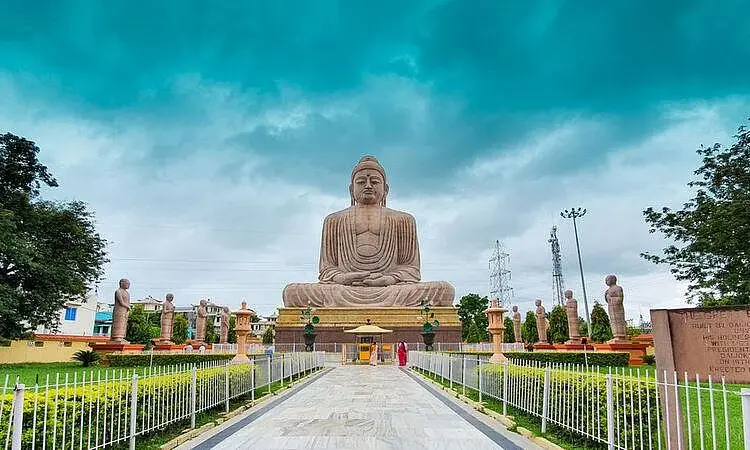
The Buddha himself said there are four sites that every committed dharma practitioner should visit in their lifetime: Lumbini, where he was born; Bodh Gaya, where he attained enlightenment; Sarnath, where he delivered his first sermon; and Kushinagar, where he passed into Mahaparinirvana. These four sacred sites, spread across the plains of northern India and southern Nepal, form the Buddhist Pilgrimage Circuit — one of the most spiritually significant journeys on earth.
For Korean Buddhists, this pilgrimage carries a deeply personal resonance. South Korea is home to one of the world’s largest and most active Buddhist communities, with approximately one-third of the population identifying as Buddhist and over 3,000 active temples across the country. The Jogye Order of Korean Buddhism, the nation’s largest Buddhist denomination, has for decades encouraged its followers to make the journey to India — and in 2022 opened Bunhwangsa, a dedicated Korean Buddhist temple in Bodh Gaya, just 200 metres from the Mahabodhi Temple.
Whether you are a devout practitioner of the Jogye or Taego Order, a Templestay enthusiast who wants to deepen your practice, or simply a Korean traveler drawn to the spiritual and historical roots of Buddhism — this guide covers everything you need to plan your pilgrimage, from sacred site details and travel logistics to costs in Korean won and practical tips for navigating India and Nepal.
The Four Sacred Sites of Buddhist pilgrimage circuit:
The Buddhist Circuit follows a chronological path through the most defining moments of Siddhartha Gautama’s life. Each site represents a turning point — birth, awakening, teaching and final release. Together, they trace the arc of a life that reshaped human spiritual history.
1. Bodh Gaya — The Place of Enlightenment
Bodh Gaya is the spiritual epicentre of Buddhism. It was here, on the banks of the Phalgu River in present-day Bihar, that Siddhartha Gautama sat beneath a peepal tree (Ficus religiosa) and, after years of seeking, attained supreme enlightenment — becoming the Buddha, the Awakened One. The descendant of that original tree still stands behind the Mahabodhi Temple, and pilgrims from every Buddhist tradition in the world gather here to meditate beneath its branches.
Mahabodhi Temple Complex:
A UNESCO World Heritage Site (designated 2002), moreover, the Mahabodhi Temple is the centrepiece of Bodh Gaya. The 55-metre pyramidal tower rises above a complex of shrines, walkways and meditation areas that date to the 5th–6th century Gupta period, though the original structure was built by Emperor Ashoka in the 3rd century BCE. The Vajrasana (Diamond Throne) — the exact spot where Buddha sat — is marked by a red sandstone platform beneath the Bodhi Tree. Pilgrims circumambulate the tree while chanting prayers and mantras.
Korean Monastery — Bunhwangsa (분황사): Opened in 2022 by the Jogye Order, in addition, Bunhwangsa is a Korean-style Buddhist temple located approximately 200 metres from the Mahabodhi Temple. The temple complex spans 3,305 square metres and includes a Buddha hall, meditation hall, guest quarters and a health clinic for local residents. It serves as a spiritual home for Korean pilgrims, offering chanting sessions, meditation guidance and a sense of cultural familiarity in a foreign land. The temple was built with ₩8 billion (approximately $6.2 million) in donations from Korean Buddhists, including a ₩5 billion gift from two devotees and a ₩3 billion land donation from members of Tongdosa, one of Korea’s three largest temples.
International monasteries: Bodh Gaya is unique in hosting monasteries built by Buddhist nations from around the world — each in their own architectural tradition. The Thai, Japanese, Burmese, Tibetan, Bhutanese, Chinese and Sri Lankan monasteries create a living map of global Buddhism. Walking among them offers a powerful visual understanding of how the dharma spread from this single point to the entire world.
- Recommended stay: 2–3 days for meditation, temple visits and excursion to Rajgir and Nalanda
- Nearest airport: Gaya International Airport (GAY), 17 km — direct flights from Delhi, Kolkata and Bangkok
- Best time: October to March (cool, dry weather; major Buddhist gatherings held in winter)
2. Sarnath — Where the Dharma Wheel Turned
After attaining enlightenment in Bodh Gaya, the Buddha walked over 200 kilometres to Sarnath, near the ancient city of Varanasi, where he found his five former ascetic companions in the Deer Park (Mrigadava). It was here that he delivered his first sermon — the Dhammacakkappavattana Sutta — setting the Wheel of Dharma in motion. This moment is one of the most significant events in Buddhist history: the birth of the Sangha (the Buddhist community) and the formal beginning of the Buddha’s teaching mission.
Dhamek Stupa:
The most iconic monument at Sarnath, furthermore, the Dhamek Stupa stands 43.6 metres tall and 28 metres in diameter. Originally erected by Emperor Ashoka in the 3rd century BCE and expanded during the Gupta period, the stupa marks the exact spot where Buddha delivered his first sermon. The lower section features beautifully carved geometric and floral patterns that are among the finest examples of Gupta-era stonework.
Ashoka Pillar and the Lion Capital: Emperor Ashoka erected a polished sandstone pillar at Sarnath topped with four lions sitting back-to-back, each facing a cardinal direction. This Lion Capital of Ashoka was adopted as the national emblem of India after independence in 1947 and appears on every Indian banknote and government document. The original is preserved in the Sarnath Archaeological Museum.
Mulagandha Kuti Vihar: This modern temple, built by the Mahabodhi Society in 1931, houses exquisite frescoes by the Japanese artist Kosetsu Nosu depicting scenes from the Buddha’s life. A Bodhi Tree sapling brought from the parent tree in Bodh Gaya grows in the temple grounds.
Chaukhandi Stupa: This ancient stupa marks the spot where the Buddha met his five companions before delivering his first sermon. An octagonal Mughal tower was later added to the top.
- Recommended stay: 1–2 days (often combined with Varanasi for the Ganga Aarti and sunrise boat ride)
- Location: 10 km from Varanasi; accessible by auto-rickshaw or taxi from Varanasi city
- Nearest airport: Lal Bahadur Shastri Airport, Varanasi (VNS), 25 km
3. Kushinagar — The Site of the Final Passing
Kushinagar is where the Buddha’s earthly journey ended. At the age of 80, weakened by illness, the Buddha lay down between two sal trees in the grove of the Mallas at Kushinagar and passed into Mahaparinirvana — the final release from the cycle of death and rebirth. His last words to his disciples were: let all things that have form be regarded as impermanent; work out your own salvation with diligence.
Mahaparinirvana Temple:
The temple houses a 6-metre reclining Buddha statue carved from a single block of red sandstone, depicting the Buddha in his final moments — lying on his right side, eyes gently closed. The statue dates to the 5th century Gupta period and was discovered during excavations in 1876. The temple is one of the most emotionally moving sites on the entire circuit. Many pilgrims spend hours in silent meditation here.
Ramabhar Stupa (Mukutbandhana Stupa): Located about 1.5 km from the Mahaparinirvana Temple, this large stupa marks the site where the Buddha’s body was cremated. The brick structure rises 15 metres and is surrounded by a peaceful park — a contemplative space that invites quiet reflection on impermanence and the nature of all conditioned existence.
International temples: Like Bodh Gaya, Kushinagar hosts monasteries and temples built by Buddhist communities from Thailand (Wat Thai), Japan, Myanmar, Sri Lanka, China and Tibet. The Meditation Park, adjacent to the Thai temple, offers a serene space for walking meditation.
- Recommended stay: 1–2 days
- Access: Kushinagar is accessible by road from Gorakhpur (55 km, 1.5 hours). Gorakhpur has a railway station and a small airport
- Nearest airport: Kushinagar International Airport (KBK) — opened 2022, with limited domestic connectivity; Gorakhpur Airport (GOP) is the more practical option
4. Lumbini — Where It All Began
Although technically across the border in Nepal, Lumbini is an inseparable part of the Buddhist Pilgrimage Circuit. It was here, in a garden grove near the ancient Shakya capital of Kapilavastu, that Queen Maya Devi gave birth to Prince Siddhartha Gautama in approximately 563 BCE. The site was confirmed by the discovery of an Ashoka Pillar inscribed with the emperor’s declaration that this was indeed the birthplace of the Buddha.
Maya Devi Temple:
The temple complex protects the archaeological remains of the exact spot where the Buddha was born, including a marker stone identified as the nativity site. additionlly, The temple was excavated and reconstructed to preserve the ancient brick foundations, which are visible beneath the modern structure. A sacred pond (Puskarni) where Queen Maya Devi is said to have bathed before giving birth lies adjacent to the temple.
Ashokan Pillar: Emperor Ashoka visited Lumbini in 249 BCE and erected a sandstone pillar with an inscription confirming the site as the Buddha’s birthplace. The pillar still stands in its original position — one of the most important archaeological artifacts in Buddhist history.
Sacred Garden and Monastic Zone: The Lumbini Development Zone spans over 6 square kilometres and includes a Sacred Garden (around the Maya Devi Temple), an East Monastic Zone (Theravada monasteries) and a West Monastic Zone (Mahayana and Vajrayana monasteries, including temples built by Korea, Japan, China, Myanmar, Thailand, Germany and France). The Korean Buddhist temple in the Monastic Zone is a familiar and welcoming stop for Korean pilgrims.
- Recommended stay: 1–2 days
- Border crossing: Sonauli/Belahiya (India-Nepal border), approximately 4 hours by road from Kushinagar. Korean citizens receive Nepal Visa on Arrival at the border
- Nearest airport: Gautama Buddha Airport, Bhairahawa (BWA), 22 km from Lumbini
Beyond the Four: Extended Buddhist pilgrimage circuit Sites
While the four primary sites form the core circuit, serious pilgrims often extend their journey to include additional places of profound significance in the Buddha’s life:
Rajgir (Bihar): The Buddha spent several months here in meditation and delivered many important teachings at Griddhakuta (Vulture Peak). Rajgir also hosted the First Buddhist Council after the Buddha’s passing. Located 77 km from Bodh Gaya — easily combined as a day excursion.
Nalanda (Bihar): One of the world’s oldest and most renowned centres of learning, Nalanda University attracted scholars from across Asia for over 800 years (5th–12th century CE). The excavated ruins of the monastic complex are a UNESCO World Heritage Site. Located 90 km from Bodh Gaya, typically visited together with Rajgir.
Vaishali (Bihar): Where the Buddha delivered his last sermon before travelling to Kushinagar for his final passing. Home to one of the oldest known Buddhist stupas, said to contain relics of the Buddha. An Ashoka Pillar with a single lion capital still stands at the site.
Shravasti (Uttar Pradesh): The Buddha spent 24 rainy seasons (vassas) at Jetavana Monastery in Shravasti — more time than at any other location. The ruins of the monastery, where he performed the famous Twin Miracle, are well preserved and deeply peaceful.
Kapilavastu (Nepal/India): The Shakya kingdom where Siddhartha grew up as a prince before renouncing worldly life. Archaeological remains span both the Indian and Nepalese sides of the border.
The Korea-India Buddhist Connection: Why This Buddhist pilgrimage circuit Matters to Korean Buddhists
The bond between Korean Buddhism and India runs deep — far deeper than most travellers realise. Buddhism arrived in the Korean peninsula in 372 CE during the Goguryeo Kingdom, having travelled from India through China. The Korean Jogye Order, which practises Seon (Zen) Buddhism, traces its lineage directly to Indian masters through the Chinese patriarch Huineng. When Korean Buddhists walk the pilgrimage circuit in India, they are returning to the ultimate source of their spiritual tradition.
This connection has been strengthened by several landmark developments in recent years. In 2022, the Jogye Order opened Bunhwangsa temple in Bodh Gaya — a ₩8 billion project that now serves as a permanent Korean Buddhist presence at the site of the Buddha’s enlightenment. In 2023, a group of 108 Korean Buddhist monastics from the Sangwol Society completed a historic 1,167-kilometre walking pilgrimage across India and Nepal, visiting every major Buddhist site on foot over 43 days — the largest Korean Buddhist pilgrimage delegation in decades.
The Indian government has actively facilitated this connection. India’s Union Budget 2026 announced a dedicated scheme to develop Buddhist circuits, improve connectivity, upgrade pilgrim amenities and preserve Buddhist heritage sites. The IRCTC operates a Buddhist Circuit Special Tourist Train — an 8-day rail journey covering Bodh Gaya, Rajgir, Nalanda, Sarnath, Lumbini, Kushinagar and Shravasti — with a 20% promotional discount for December 2026 to March 2027 travel. Additionally, Korean citizens enjoy privileged visa access: South Korea is one of only three nationalities eligible for unconditional Visa on Arrival at six Indian airports.
Recommended 10-Day Buddhist pilgrimage circuit Itinerary for Korean Travelers
Day 1: Seoul → Delhi
Direct flight from Incheon to Delhi (Korean Air or Air India, 8–9 hours). Arrive evening. Overnight in Delhi.
Day 2: Delhi → Varanasi → Sarnath
Morning domestic flight to Varanasi (1.5 hours). Afternoon visit to Sarnath: Dhamek Stupa, Sarnath Museum (Lion Capital), Mulagandha Kuti Vihar, Chaukhandi Stupa. Evening Ganga Aarti at Dashashwamedh Ghat. Overnight Varanasi.
Day 3: Varanasi → Bodh Gaya
Early morning sunrise boat ride on the Ganges. Drive to Bodh Gaya (5–6 hours) or take the Mahabodhi Express train. Arrive afternoon. Evening meditation at the Mahabodhi Temple. Overnight Bodh Gaya.
Day 4: Bodh Gaya — Full Day
Morning meditation under the Bodhi Tree. Visit Bunhwangsa (Korean temple) for chanting and dharma talk. Afternoon visit to international monasteries — Thai, Japanese, Tibetan, Chinese, Bhutanese. Visit Sujata Village (where Buddha received the offering of milk-rice). Evening meditation at Vajrasana. Overnight Bodh Gaya.
Day 5: Bodh Gaya → Rajgir → Nalanda → Bodh Gaya
Day excursion to Rajgir (Vulture Peak, Venuvan Vihar, hot springs, Japanese Peace Pagoda) and Nalanda (excavated university ruins, Nalanda Archaeological Museum). Return to Bodh Gaya for overnight.
Day 6: Bodh Gaya → Vaishali → Kushinagar
Drive to Kushinagar via Vaishali (visit Ashoka Pillar, Buddha Relic Stupa). Continue to Kushinagar (total drive approximately 10 hours with stops). Overnight Kushinagar.
Day 7: Kushinagar — Full Day
Morning visit to Mahaparinirvana Temple (reclining Buddha statue). Meditation session. Afternoon visit to Ramabhar Stupa (cremation site), Wat Thai Temple and Meditation Park. Reflection and journaling. Overnight Kushinagar.
Day 8: Kushinagar → Lumbini (Nepal)
Drive to Lumbini via Sonauli border crossing (approximately 4 hours). Nepal Visa on Arrival for Korean citizens at the border. Afternoon visit to Maya Devi Temple and Ashokan Pillar. Walk through Sacred Garden. Overnight Lumbini.
Day 9: Lumbini → Shravasti (India)
Morning visit to Lumbini Monastic Zone — Korean temple, World Peace Pagoda, Dharma Swami Maharaja Buddha Vihar. Drive back across the border to Shravasti (approximately 5 hours). Visit Jetavana Monastery and Ananda Bodhi Tree. Overnight Shravasti or drive to Lucknow (4 hours).
Day 10: Lucknow/Shravasti → Delhi → Seoul
Morning flight from Lucknow to Delhi. Connect to the evening international flight to Seoul. Alternatively, add 1–2 days in Delhi for sightseeing or rest before departure.
Variation: For a shorter 7–8 day trip, skip Shravasti and fly from Varanasi to Delhi on Day 8 or 9. For a longer 12–14 day pilgrimage, add Kapilavastu, extended time at each site and the Golden Triangle (Delhi, Agra, Jaipur).
How Much Does the Buddhist Pilgrimage Circuit Cost? (In Korean Won)
India remains one of the most affordable pilgrimage destinations in the world. Here is a realistic budget for a 10-day Buddhist Circuit pilgrimage, converted at approximately 1 USD = ₩1,500 (July 2026):
International Flights (Seoul ↔ Delhi, round trip): ₩550,000–₩1,200,000. Korean Air and Air India both operate direct nonstop flights from Incheon to Delhi. Booking 2–3 months ahead and travelling October–March (peak pilgrimage season) gets the best combination of price and weather.
Guided Group Pilgrimage Tour (8–10 days): ₩1,500,000–₩3,000,000 per person. This typically includes all domestic transport (private vehicle with driver), 3–4 star hotel accommodation, vegetarian meals, English-speaking Buddhist guide, monument entrance fees and Nepal visa assistance. Korean-language guided tours are available through specialist operators.
Independent Travel (budget): ₩600,000–₩1,200,000 for 10 days. Budget hotels (₩15,000–₩45,000/night), local restaurants (₩3,000–₩8,000/meal), public transport and shared vehicles. Requires more planning but offers greater flexibility.
IRCTC Buddhist Circuit Special Train: From approximately ₩1,150,000 per person (₹76,900 with 20% discount for Dec 2026–Mar 2027). All-inclusive 8-day rail journey from Delhi covering Bodh Gaya, Nalanda, Rajgir, Sarnath, Lumbini, Kushinagar, Shravasti and Agra. Includes AC accommodation on the train, meals, guided excursions and hotel nights.
Domestic Flights within India: Delhi to Varanasi (₩30,000–₩60,000 one-way). Delhi to Gaya/Bodh Gaya (₩30,000–₩75,000 one-way). Lucknow to Delhi (₩22,000–₩45,000 one-way).
Nepal Visa on Arrival (at Sonauli border): Approximately ₩45,000 (USD 30) for 15-day visa. Passport photo required.
Total estimated cost for a Korean traveler on a 10-day guided Buddhist pilgrimage — including international flights, guided tour, accommodation, meals, visas and tips — ranges from approximately ₩2,500,000 to ₩4,500,000 depending on comfort level and group size.
Practical Tips for Korean Pilgrims |
Buddhist pilgrimage circuit
Visa:
Korean citizens can apply for an Indian e-Tourist Visa online at evisa.india.gov.in (processed in 3–5 business days) or receive Visa on Arrival at Delhi, Mumbai, Bangalore, Chennai, Hyderabad and Kolkata airports for up to 60 days. For Nepal, Visa on Arrival is available at the Sonauli/Belahiya land border crossing and at Tribhuvan International Airport in Kathmandu.
What to pack for Buddhist pilgrimage circuit
Modest, comfortable clothing (shoulders and knees covered at all temple and monastery sites). A personal meditation cushion or zafu if you plan extended meditation sessions. Comfortable walking shoes — temple complexes require significant walking, often on uneven ground. A light jacket for early mornings (November–February) and a sun hat for midday visits.
Food:
Vegetarian food is widely available at all Buddhist pilgrimage sites — many monasteries serve simple, nourishing meals. The Korean temple in Bodh Gaya (Bunhwangsa) offers Korean-style vegetarian temple food. Outside monastery settings, vegetarian restaurants are common in Bodh Gaya and Varanasi. Bringing familiar Korean snacks (누룽지, dried seaweed, instant ramyeon) can help bridge the dietary transition.
Health:
Drink only bottled or filtered water. Carry basic stomach medication. The Buddhist circuit passes through Bihar and Uttar Pradesh, where temperatures can vary significantly — carry rehydration salts during warmer months. If travelling October–March, mornings and evenings can be chilly (5–15°C in Varanasi and Bodh Gaya).
Language:
English is widely understood at major pilgrimage sites, hotels and tourist services. Hindi is the local language. At the Korean monastery in Bodh Gaya, Korean-language dharma talks and guidance are available. Translation apps (Papago, Google Translate) work well for everyday interactions.
Connectivity and payments:
Indian SIM cards are available at Delhi airport (Airtel and Jio recommended). Many hotels and restaurants accept UPI and card payments, but carry Indian Rupees (INR) for smaller establishments, auto-rickshaws and temple donations. ATMs are available in all major towns on the circuit.
Etiquette at Buddhist pilgrimage circuit sites:
Remove shoes before entering temples. Walk clockwise (pradakshina) around stupas and sacred trees. Photography is generally permitted in outdoor areas but restricted inside some temple sanctums. Maintain silence or speak softly in meditation areas. Dress modestly — no shorts, sleeveless tops or revealing clothing.
Best time for the Buddhist pilgrimage circuit:
finally, October to March is ideal — cool, dry weather with clear skies. Major Buddhist events during this period include: Buddha Jayanti (May, full moon — celebrated at all sites), Kathina (October–November), and various Jogye Order-organised Korean group pilgrimages that typically run November through February.
Follow us on Instagram | Facebook
FAQ about Buddhist pilgrimage circuit
Q: What are the four main sites of the Buddhist Pilgrimage Circuit in India?
The four primary sites are Bodh Gaya (where Buddha attained enlightenment), Sarnath (where he delivered his first sermon), Kushinagar (where he passed into Mahaparinirvana) and Lumbini in Nepal (his birthplace). Together, these form the core Buddhist Pilgrimage Circuit as prescribed by the Buddha himself.
Q: Is there a Korean Buddhist temple in Bodh Gaya?
Yes. Bunhwangsa (분황사), a Korean-style Buddhist temple operated by the Jogye Order, opened in Bodh Gaya in 2022. It is located approximately 200 metres from the Mahabodhi Temple and offers chanting sessions, meditation guidance and guest accommodation for Korean pilgrims.
Q: How many days do I need for the Buddhist Circuit?
A comprehensive pilgrimage covering all four primary sites plus Rajgir, Nalanda and Vaishali takes 8–10 days. A shorter 5–7 day itinerary is possible by focusing on Bodh Gaya, Sarnath and Kushinagar. Adding Shravasti, Kapilavastu and Delhi sightseeing extends the trip to 12–14 days.
Q: How much does a Buddhist pilgrimage circuit tour in India cost for Korean travelers?
A guided 8–10 day group tour costs ₩1,500,000–₩3,000,000 per person including domestic transport, hotels, meals and guides (excluding international flights). International flights from Seoul to Delhi add ₩550,000–₩1,200,000 round trip. Budget independent travel can bring costs to ₩600,000–₩1,200,000 for ground arrangements.
Q: Do Korean citizens need a visa for India?
Yes. Korean passport holders can apply for an e-Tourist Visa online at evisa.india.gov.in (processed in 3–5 business days) or receive Visa on Arrival at six designated Indian airports including Delhi. For Nepal (Lumbini), Visa on Arrival is available at the land border crossing.
Q: Is the Buddhist Circuit safe for solo travelers?
Yes. The major Buddhist pilgrimage sites are well-established tourist destinations with hotels, guides and transport services catering to international visitors. Solo travelers, including women, visit these sites regularly. Joining a guided group tour is recommended for first-time visitors to India for the most comfortable experience.
Q: Can I meditate at the Buddhist pilgrimage circuit?
Absolutely. Meditation is actively practised at all four primary sites. The area beneath the Bodhi Tree at Bodh Gaya is one of the most popular meditation spots in the world. The Mahaparinirvana Temple in Kushinagar, the Dhamek Stupa at Sarnath and the Sacred Garden in Lumbini all offer peaceful spaces for meditation. The Korean monastery in Bodh Gaya offers structured meditation sessions.
Q: Are there direct flights from Seoul to the Buddhist Circuit sites?
Korean Air and Air India operate direct nonstop flights from Incheon to Delhi (8–9 hours). From Delhi, domestic flights connect to Varanasi (1.5 hours), Gaya/Bodh Gaya (1.5 hours) and Lucknow (1 hour). There are no direct international flights from Seoul to the pilgrimage cities themselves.
Q: What is the IRCTC Buddhist pilgrimage circuit Special Train?
It is an all-inclusive 8-day tourist train operated by the Indian Railway Catering and Tourism Corporation. The train departs from Delhi and covers Bodh Gaya, Rajgir, Nalanda, Sarnath, Lumbini, Kushinagar, Shravasti and Agra. Prices start from approximately ₹76,900 (₩1,150,000) per person with a 20% discount available for December 2026 to March 2027 departures.
Q: What food is available on the Buddhist pilgrimage circuit?
Vegetarian food is widely available at all sites — many monasteries serve simple vegetarian meals. The Korean temple in Bodh Gaya offers Korean-style temple food. Hotels on guided tours typically serve both Indian and continental vegetarian cuisine. Street food should be approached with caution; eating at hotels and monastery canteens is recommended.
Q: When is the best time for Korean Buddhists to visit the Buddhist pilgrimage circuit?
October to March offers the best weather — cool and dry across all sites. This period also coincides with major Buddhist gatherings and Korean group pilgrimages organised by the Jogye Order and other Korean Buddhist organisations. Avoid April to June (extreme heat, 40°C+) and July to September (monsoon rains).
The Buddhist Pilgrimage Circuit is not a tourist itinerary — it is a journey to the very foundations of the dharma. For Korean Buddhists who have practised at temples in Haeinsa, Bulguksa, Tongdosa and Jogyesa, visiting the Indian sites where the Buddha was born, awakened, taught and passed away closes a circle that spans 2,600 years and 5,000 kilometres.
Every major tradition of Buddhism in the world leads back to these four places. however, When you sit beneath the Bodhi Tree in Bodh Gaya, you are sitting where Siddhartha became the Buddha. When you stand at the Dhamek Stupa in Sarnath, you are standing where the Wheel of Dharma first turned. These are not museums or monuments — they are living sites where the practice continues, the chanting continues and the path remains open.
For Korean travelers, the combination of direct flights, privileged visa access, a dedicated Korean temple in Bodh Gaya and a deep civilisational bond between India and Korea makes this an ideal time to walk the path of the Buddha in the land where it all began.