admin

Golden Temple, Wagah Border, Jallianwala Bagh and Punjabi food in Amritsar

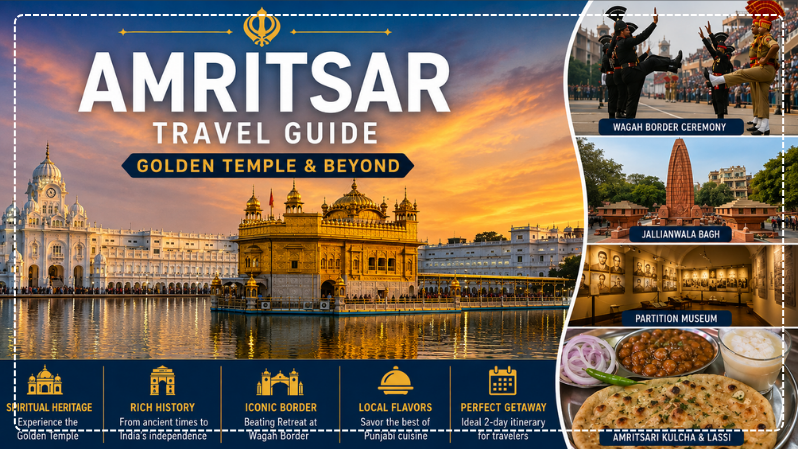
Amritsar Travel Guide: Golden Temple & Beyond

 Amritsar is one of North India’s most rewarding cultural destinations. Two full days are enough to experience the Golden Temple, Jallianwala Bagh, the Partition Museum, Punjabi street food and the Beating Retreat ceremony at the Attari-Wagah Border. Amritsar Travel Guide for First-Time Visitors Amritsar is far more than a single-attraction city. While the Golden Temple draws millions each year, the city combines Sikh heritage, Partition-era history, border theatre and celebrated Punjabi street food within a compact area. This Amritsar travel guide covers what to see, eat and plan for a practical, respectful visit. Why Is Amritsar Worth Visiting? Amritsar deserves more than a quick Golden Temple stop. The Golden Temple offers one of Asia’s most moving spiritual experiences  open to all, 24 hours a day, free. Nearby, Jallianwala Bagh memorialises colonial violence. The Partition Museum documents the 1947 division of India. And 30 kilometres west, the Attari-Wagah Border stages a daily flag-lowering ceremony that draws thousands. A first-time visitor can experience all of this across two well-planned days. Golden Temple Amritsar: What First-Time Visitors Should Know The Golden Temple  formally Sri Harmandir Sahib is the most sacred site in Sikhism. Founded in the 16th century by Guru Arjan Dev Ji, its upper structure is covered in approximately 750 kilograms of gold, added by Maharaja Ranjit Singh in 1830. It sits at the centre of the Amrit Sarovar (Pool of Nectar), from which the city takes its name. The temple welcomes all faiths, 24 hours a day, with no entry fee. Remove your shoes (free lockers available) and wash your feet before entering. Head covering is mandatory  free cloths are provided. Dress modestly, covering shoulders and knees. Photography is permitted along the parikrama (marble walkway) but avoid photographing during prayers. Visit during early morning prayers (around 3–4 AM) or at night when the temple glows under floodlights. The Palki Sahib ceremony  the Guru Granth Sahib carried in a golden palanquin  takes place around 9:45 PM. Golden Temple Langar Experience Langar is the Sikh community kitchen tradition, rooted in equality. At the Golden Temple, it operates around the clock, serving vegetarian meals to everyone regardless of faith or nationality  an estimated 100,000 people daily. International visitors are welcome. Sit on the floor alongside everyone and eat respectfully. This is not “free food”  it is Sikh values of service and equality in practice. Best Things to Do in Amritsar Beyond the Golden Temple Jallianwala Bagh On 13 April 1919, British soldiers under Brigadier General Dyer opened fire on thousands of unarmed civilians protesting the Rowlatt Act. The site is now a national memorial  bullet marks remain on walls, and the Martyrs’ Well is preserved. Free entry. A short walk from the Golden Temple; allow 30–45 minutes. Partition Museum The world’s first museum dedicated to the 1947 Partition, in the Town Hall on Heritage Street. Fourteen galleries document displacement through artefacts, oral histories and photographs. INR 250 for foreign nationals. Open 10 AM–6 PM, closed Mondays and public holidays. Allow 1–2 hours. Attari-Wagah Border Ceremony The daily Beating Retreat ceremony by India’s BSF and Pakistan Rangers is approximately 30 km from Amritsar. Free entry but arrive 2–3 hours early for security. Timing varies seasonally  roughly 4:30 PM in winter, 5:30–6 PM in summer. Confirm the schedule before departing. Explore Old Amritsar Heritage Street connects the Golden Temple to the Town Hall. Hall Bazaar and Katra Jaimal Singh sell textiles, juttis (Punjabi footwear) and phulkari embroidery. Best explored on foot. What to Eat in Amritsar Food is a defining reason to visit. Amritsari kulcha (stuffed flatbread with chole) is the signature dish. Punjabi lassi is rich and filling. Try sarson da saag with makki di roti (seasonal), tandoori meats and jalebi. Kesar Da Dhaba (since 1916) and Bharawan Da Dhaba are well-known establishments. For international visitors: choose busy stalls, drink bottled water, and ease into rich Punjabi food gradually. Best Time to Visit Amritsar October to March generally offers the most comfortable weather for sightseeing. October to March Temperatures range from 10°C to 25°C. December–January can be cold with morning fog. Peak tourist season. April to June Temperatures exceed 40°C. Midday outdoor sightseeing is exhausting. July to September Monsoon brings humidity and heavy rain. Most attractions stay open. How Many Days Do You Need in Amritsar? Two days are enough for most first-time visitors. This covers the Golden Temple (morning and night), Jallianwala Bagh, the Partition Museum, local food and the Wagah Border ceremony. One day is possible but rushed; three days allow a more relaxed pace. Perfect 2-Day Amritsar Itinerary Day 1: Golden Temple, Jallianwala Bagh & Old Amritsar Start early at the Golden Temple (quieter before 8 AM). Spend 2–3 hours. Walk to Jallianwala Bagh. Continue along Heritage Street for kulcha and lassi. Explore bazaars through the afternoon. Return to the Golden Temple at night for the Palki Sahib ceremony (~9:45 PM). Day 2: Partition Museum, Local Culture & Attari-Wagah Border Partition Museum at 10 AM (1.5–2 hours). Explore remaining old-city areas or favourite food spots. Depart for the Wagah Border early afternoon — allow 2.5–3 hours before the ceremony. Confirm timing before leaving. How to Reach Amritsar By Air Sri Guru Ram Dass Jee International Airport is ~11 km from the centre, with domestic flights from Delhi (~1 hour), Mumbai and other cities. By Train Amritsar Junction connects to Delhi (6–8 hours) and other North Indian cities via Indian Railways. About 2 km from the Golden Temple. By Road ~450 km from Delhi (7–8 hours via NH44), ~230 km from Chandigarh (~4 hours). How to Get Around Amritsar Auto-rickshaws are widely available. Ola and Uber operate but are inconsistent in the old quarter. For the Wagah Border, hire a taxi. The historic centre is best on foot. Where to Stay in Amritsar Near the Golden Temple: Walking access to the temple, Jallianwala Bagh and Heritage Street. Trade-off: narrow streets, more noise. Central areas (Ranjit Avenue, Lawrence Road): Larger hotels, easier vehicle access, quieter. Short rickshaw ride to attractions. Budget guesthouses from

Amritsar Travel Guide: Golden Temple & Beyond Read More »
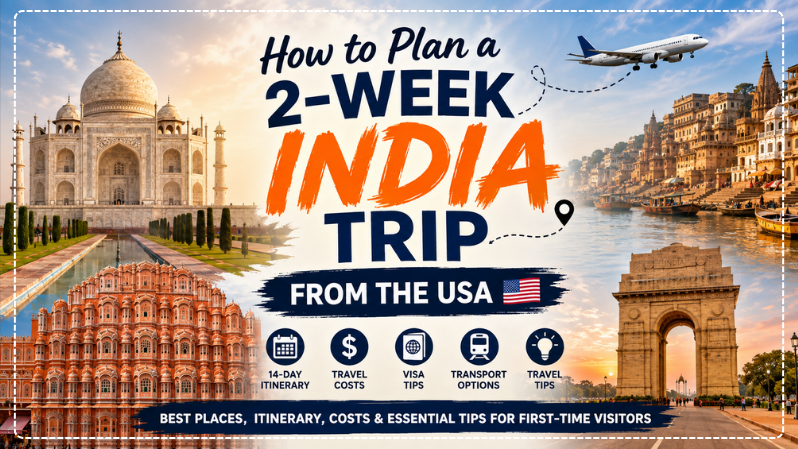
2 week India trip from USA featuring Taj Mahal, Jaipur, Varanasi and India Gate

How to Plan a 2-Week India Trip From the USA

A 2 week India trip from USA works best when you focus on three or four regions instead of trying to see the entire country. For first-time visitors, a route such as Delhi, Agra, Jaipur, and Varanasi combines major landmarks, culture, food, and history while keeping travel manageable. Planning a 2 Week India Trip From USA The best way to plan a 2 week India trip from USA is to choose your route before booking hotels or internal flights. India is vast, so reducing unnecessary travel time will give you more time for actual experiences. Start by choosing your travel style. First-time visitors often prefer the Golden Triangle, while travelers seeking spirituality, beaches, or nature may add Varanasi, Kerala, or Goa. Start with these decisions: Choose your arrival and departure cities. Pick three or four major destinations. Decide your travel season. Set a realistic daily budget. Book international flights, hotels, and important transport early. India recorded 9.15 million foreign tourist arrivals in 2025, according to the Ministry of Tourism’s official tourism dashboard. The same source reports an average foreign tourist stay of about 18 days. For a 14-day trip, this means you can experience several highlights without trying to cover every region. A focused India travel itinerary usually feels more relaxed than a long list of destinations. How Much Does a 2 Week India Trip From USA Cost? A realistic 2 week India trip from USA can range from about $1,500 to $4,000 per person in India, excluding international airfare, depending on your travel style. Your actual India travel cost depends on hotels, domestic flights, private transportation, restaurants, activities, and the season. Travel Style Approx. Daily Budget Suitable For Budget ₹2,500–₹4,500 Backpackers Mid-range ₹5,000–₹10,000 Couples and families Premium ₹12,000–₹25,000+ Luxury-focused travelers International airfare should be calculated separately. Flight prices from the USA vary significantly by departure city, airline, season, and booking date. Typical expenses to budget for: International flights Hotels and accommodation Domestic flights or trains Food and drinks Sightseeing and guides Travel insurance Visa fees Shopping and personal expenses For example, a traveler using comfortable hotels and trains can spend much less than someone using private cars and five-star properties throughout Rajasthan. Prices are planning estimates. Exchange rates, peak seasons, hotel category, and advance booking can change your final cost. Best 2 Week India Itinerary for First-Time Visitors The best 2 week India itinerary for first-time visitors usually combines Delhi, Agra, Jaipur, and one additional destination. This route gives you history, architecture, food, markets, and culture without excessive backtracking. Classic North India: Delhi, Agra, Jaipur and Varanasi Days 1–3: Delhi Spend your first days exploring Old Delhi, India Gate, Humayun’s Tomb, Qutub Minar, and local markets. Keep the first day flexible because jet lag can affect your energy. Days 4–5: Agra Travel from Delhi to Agra and visit the Taj Mahal and Agra Fort. A private transfer or train makes this short journey relatively easy. Days 6–8: Jaipur Continue to Jaipur for Amber Fort, City Palace, Jantar Mantar, and the historic markets. Jaipur also gives you an introduction to Rajasthan’s architecture and cuisine. Days 9–11: Varanasi Fly from Jaipur to Varanasi rather than spending a large part of the day traveling by road. Explore the ghats, attend the evening Ganga Aarti, and experience one of India’s oldest cultural centers. Days 12–14: Delhi Return to Delhi for your international flight. Keep the final day flexible in case of delays or schedule changes. This route is ideal if history and culture are your priorities. North India + Relaxation If you prefer a slower holiday, replace Varanasi with Goa or Kerala. This option gives you more time to relax after several busy sightseeing days. For example, Delhi → Agra → Jaipur → Goa works well for travelers who want heritage sites followed by beaches. Jaipur to Goa requires a flight, so check schedules before finalizing the itinerary. Golden Triangle vs extended itinerary: Golden Triangle: Best for first-time cultural travel. Golden Triangle + Varanasi: Best for history and spirituality. Golden Triangle + Goa: Best for sightseeing and relaxation. Golden Triangle + Kerala: Best for culture, nature, and wellness. Best Time for a 2 Week India Trip From USA The best time for a 2 week India trip from USA depends on which regions you visit. For most North India itineraries, October through March generally offers more comfortable sightseeing conditions. October to March is popular for Delhi, Agra, Rajasthan, and Varanasi. Winter temperatures can still vary considerably between northern and southern India. April to June can bring very hot conditions across parts of North India. However, hill stations and some higher-altitude destinations can be more appealing during this period. July to September is India’s monsoon season in many regions. Kerala and parts of South India can be rewarding during the rains, but heavy weather may affect transport and outdoor plans. Choose your season based on your route: North India sightseeing: October–March Rajasthan: October–March Kerala: Depends on your preferred experiences Himalayan regions: Usually require separate seasonal planning Goa: Winter is popular for beach holidays Always check regional weather forecasts before booking activities. India Visa for US Citizens US citizens need a valid Indian visa or eligible e-Visa before entering India. The official Indian Visa Online portal confirms that foreign nationals generally need a valid passport and visa, subject to applicable exemptions. The visa process can change, so use the official Government of India portal rather than third-party websites. The U.S. Department of State also advises travelers to review current Indian entry requirements before departure. The official Indian visa portal also states that foreign travelers can submit the e-Arrival Card online within 72 hours before arrival. This is an arrival form, not a visa. Before leaving the USA, check: Passport validity Appropriate Indian visa Visa conditions Arrival requirements Current travel advisories Travel insurance Visa rules can change. Always verify requirements on official government websites immediately before your trip. How to Travel Around India in Two Weeks The best transportation choice depends on the distance, schedule,

How to Plan a 2-Week India Trip From the USA Read More »

How much does it cost to travel India in 2026

India Travel Cost 2026: How Much Should You Budget?

India travel cost 2026 can range from about $35–$50 per person per day for budget travel, $70–$120 for comfortable travel, and $150+ for premium travel. For a 10-day trip, a foreign traveler should consider roughly $350–$1,500 per person, excluding international flights and depending on hotels, transport, and activities. India Travel Cost 2026: What Should You Expect? India travel cost 2026 depends mainly on your travel style, route, season, accommodation, and transport choices. A backpacker can travel much cheaper than someone using private drivers and luxury hotels. For international visitors, India offers a wide range of prices. You can stay in simple guesthouses or choose five-star hotels in cities such as Delhi, Jaipur, and Mumbai. Budget: $35–$50 per day Mid-range: $70–$120 per day Luxury: $150–$300+ per day According to Budget Your Trip, travelers currently report around $40 per person per day on average. Its reported daily averages include about $15 for meals, $5.69 for local transport, and $30 for hotels. In practice, a 10-day Delhi, Agra, and Jaipur trip can fit a mid-range budget of roughly $700–$1,200 per person, excluding international airfare. Typical 10-day budget: Travel style Estimated land cost Budget $350–$500 Mid-range $700–$1,200 Premium $1,500–$3,000+ The Ministry of Tourism recorded 9.15 million foreign tourist arrivals in 2025, showing strong international demand for India travel. How Much Does It Cost to Travel India for Americans, Canadians and UK Travelers? For Americans, Canadians, UK travelers, Australians, and Europeans, the biggest extra costs usually include international airfare, visas, insurance, and currency exchange. India travel cost 2026 for Americans often works best with a $1,000–$2,000 land budget for a 10–14 day comfortable trip. Your final cost changes significantly with domestic flights, private guides, and hotel category. For example, a traveler from New York visiting Delhi, Agra, Jaipur, and Varanasi could spend $800–$1,300 inside India. International flights can add considerably more, especially during peak travel periods. A practical mid-range budget for 10 days: Hotels: $300–$600 Food: $150–$250 Local transport: $75–$150 Sightseeing: $75–$150 Domestic travel: $100–$300 Visa and other essentials: variable India travel cost 2026 for Canadians follows a similar structure, although airfare and currency conversion can change the total. UK and European travelers may find some flight routes more competitive. India travel cost 2026 varies by departure market because airfare is separate from your India expenses. For visa planning, use the official Government of India portal. Visa fees depend on nationality, visa type, and duration. The official e-Visa fee schedule lists country-specific charges, and a 3% bank transaction charge applies to applicable e-Visa fees. Real users should check the official visa portal before booking. Visa charges can change, and third-party websites may add unnecessary service fees. India Vacation Budget: Accommodation, Food and Daily Expenses Your India vacation budget depends heavily on where you stay and how you move between destinations. Delhi and Mumbai can cost more than smaller cities, while luxury properties can raise daily spending quickly. India travel cost 2026 becomes easier to control when you separate fixed expenses from daily expenses. Hotels and domestic flights usually deserve the largest part of your planning budget. Accommodation Cost in India Accommodation cost in India can start around $15–$30 per night for simple stays, while good mid-range hotels often cost $40–$100+. Premium hotels can exceed $150 per night in major tourist cities. Prices also rise during festivals, holidays, and high-demand travel periods. For example, two travelers staying in Jaipur for three nights might spend $150–$300 on a comfortable hotel. A luxury heritage property could cost several times more. India travel cost 2026 can fall sharply when you book hotels early and compare locations. Food and Local Transport Food is one of the easier areas to manage. Local restaurants can offer meals for a few dollars, while international restaurants and hotel dining cost more. Delhi Metro, Indian Railways, app-based taxis, and domestic buses can keep transport affordable. Private cars offer more comfort but increase your India travel cost 2026. In practice, a traveler using trains and public transport may spend $5–$15 daily on local movement. Private drivers can cost considerably more depending on route and vehicle. India Trip Cost for Foreigners: What Does a 10-Day Trip Cost? India trip cost for foreigners usually falls between $500 and $1,500 per person for 10 days inside India, depending on comfort level and itinerary. India travel cost 2026 for a foreign visitor also depends on the number of destinations. A simple Delhi–Agra–Jaipur route costs less than adding Varanasi, Kerala, Mumbai, and several domestic flights. Example 10-day itinerary: Delhi → Agra → Jaipur → Varanasi Budget traveler: $500–$700 Comfortable traveler: $800–$1,200 Premium traveler: $1,500–$2,500+ India trip cost for foreigners can increase when you add guided tours, luxury trains, wildlife safaris, adventure activities, or private transfers. For example, a Kerala itinerary with boutique hotels and private transfers will have a different budget from a backpacking route through Rajasthan. The best approach is to build India travel cost 2026 around your actual route rather than relying on one national average. A 14-day trip with four cities may cost less than a 10-day luxury itinerary. Budget planning formula: Total trip cost = Flights + Visa + Hotels + Food + Transport + Activities + Insurance + Shopping India travel cost 2026 should also include a small emergency reserve. A buffer of 10–15% can protect your budget against price changes or unexpected transport costs. India Travel Cost 2026: Budget vs Mid-Range vs Luxury India travel cost 2026 changes dramatically between travel styles. Budget travel prioritizes public transport and simple hotels, while premium travel prioritizes private services and upgraded experiences. Expense Budget Mid-range Luxury Hotel/night $15–$30 $40–$100 $150+ Food/day $8–$15 $15–$30 $40+ Transport/day $5–$15 $15–$40 $50+ Activities/day $5–$15 $15–$40 $50+ Daily total $35–$50 $70–$120 $150–$300+ Budget Your Trip’s traveler data provides a useful benchmark, but individual spending varies by destination and travel style. For example, a couple traveling comfortably through Rajasthan may prefer a private vehicle. That choice costs more than trains but can save time and simplify hotel-to-hotel transfers. India travel cost 2026 is

India Travel Cost 2026: How Much Should You Budget? Read More »

Best places to visit in India for Canadian travelers

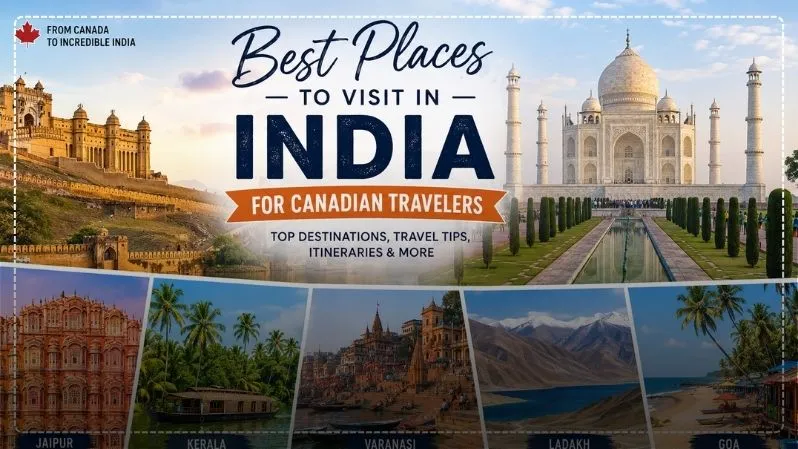
Best Places to Visit in India: Guide for Canadian Travelers

The best places to visit in India offer something for every traveler, from historic cities and UNESCO World Heritage Sites to beaches, mountains, wildlife, and cultural experiences. For Canadian travelers visiting India for the first time, destinations such as Delhi, Agra, Jaipur, Kerala, and Goa are excellent choices. Why the best places to visit in India fit Canadian travelers India suits Canadian travelers who want history, food, nature, and varied landscapes in one trip. The best places to visit in India range from Mughal landmarks in Agra to beaches in Goa and backwaters in Kerala. For a first trip, the best places to visit in India become easier to compare when you group them by region. Delhi, Agra, and Jaipur are practical for a short route, while Kerala or Goa add a slower coastal stay. Short trip: Delhi, Agra, Jaipur Longer trip: Add Kerala, Goa, Rajasthan, or Varanasi India has 44 properties on the UNESCO World Heritage List. That depth of cultural heritage helps explain why the best places to visit in India can suit history-focused travelers. UNESCO lists sites including the Taj Mahal, Jaipur City, and Agra Fort. Which are the best places to visit in India? The best places to visit in India depend on your interests, but Delhi, Agra, Jaipur, Kerala, and Goa cover many first-trip needs. For example, a Canadian couple with ten days could spend five days around the Golden Triangle. They could then fly to Kerala for a quieter final stretch. Best places to visit in India from Canada: top destinations The best places to visit in India from Canada depend on whether you prefer heritage, beaches, wildlife, or mountains. The top destinations in India below give you a useful starting point. Delhi is the best entry point for many first-time visitors. Explore the Red Fort, Humayun’s Tomb, India Gate, and Old Delhi. Allow at least two full days before moving onward. Agra is ideal for travelers who want iconic architecture. The Taj Mahal and Agra Fort are the main highlights, and Agra connects naturally with Delhi and Jaipur. Delhi: History, food, museums, and urban culture Agra: Taj Mahal and Mughal heritage Jaipur: Forts, palaces, crafts, and markets Kerala: Backwaters, nature, and slower travel Goa: Beaches, food, and relaxed stays In practice, a traveler from Toronto or Vancouver may prefer three or four bases. Fewer hotel changes can make a long-haul trip easier. Incredible India identifies Delhi, Agra, and Jaipur as the Golden Triangle. Its official itinerary presents the circuit as a five-day route. Golden Triangle India itinerary for first-time visitors A Golden Triangle India itinerary is one of the simplest ways to experience northern India on a first visit. The route links Delhi, Agra, and Jaipur and can work well in about five days. Incredible India publishes a five-day Golden Triangle itinerary. It starts in Delhi, continues to Agra, and finishes in Jaipur. The official route includes major heritage attractions and practical sightseeing stops. A useful Golden Triangle India itinerary can look like this: Days 1–2: Delhi Day 3: Agra Days 4–5: Jaipur Optional: Add two nights in Rajasthan The best places to visit in India are not limited to the Golden Triangle. Add Kerala if you want backwaters and wellness, or Goa if beaches matter more than monuments. For example, a Canadian traveler with 12 days could spend five days on the Golden Triangle. They could then spend four days in Kerala and three days in Goa. Best places to visit in India: best time to visit India and plan your trip The best time to visit India varies by region, because India has several climate zones. For many northern destinations, October to March offers more comfortable sightseeing conditions than the hottest months. Rajasthan can become very hot before the monsoon. Kerala has a tropical climate, so your ideal dates may differ from Delhi or Jaipur. Check regional forecasts before booking flights. The best places to visit in India can change with the season. Choose Rajasthan and the Golden Triangle for cooler months, while hill destinations can offer a different climate experience. October–March: Strong choice for many northern routes April–June: Hotter conditions in much of northern India June–September: Monsoon affects many regions Kerala and coastal areas: Check local rainfall patterns For example, if you dislike heat, avoid building a long Rajasthan itinerary around peak summer. A guided tour can also reduce planning work when weather affects transport. India travel itinerary: costs, logistics, and practical tips An India travel itinerary should balance sightseeing days with travel time. Do not treat every city as a separate checklist, because long transfers can reduce your time at attractions. For Canadian travelers, visa and entry requirements deserve attention. The Government of Canada says a tourism visa is required for India. Its current advisory also tells Canadians to exercise a high degree of caution in India. The Canadian government also says travelers must complete India’s e-Arrival Card online up to 72 hours before arrival. Rules can change, so verify current requirements before departure. The best places to visit in India become easier to enjoy when your logistics are simple. Book reputable hotels, use reliable transport, and keep buffer time around major transfers. For example, you might use a private driver for Rajasthan while using trains or domestic flights for longer distances. A guided tour can help if you want fixed transfers, local guides, and one booking process. India trip planning checklist: Confirm visa and entry rules Check regional weather Plan airport and rail transfers Carry travel insurance Keep digital copies of documents Use reputable transport and tour operators The best places to visit in India can feel very different from Canada. The best places to visit in India also require flexible expectations about pace and transport. Expect crowded streets, different meal times, intense traffic, and stronger sensory experiences in major cities. A realistic India travel itinerary should allow time for these differences. Things to know before visiting India Things to know before visiting India include local customs,

Best Places to Visit in India: Guide for Canadian Travelers Read More »

India festivals

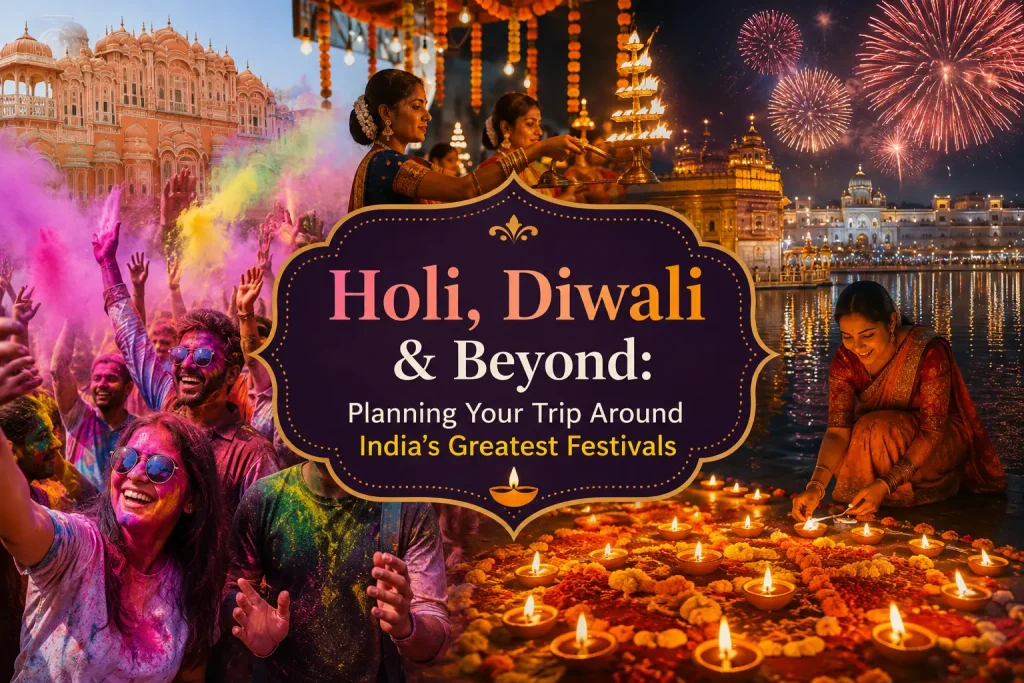
Holi, Diwali & Beyond: Planning Your Trip Around India’s Greatest Festivals

There are places you visit for the scenery. There are places you visit for the food. And then there’s India Festivals, where you can time your trip to land inside a celebration so immersive, so sensory, so unlike anything in the Western world, that it fundamentally rewires your understanding of what a festival can be. This isn’t about watching from the sidelines. At Holi, strangers will cover you in color and then invite you home for sweets. At Diwali, entire cities glow with millions of oil lamps arranged on rooftops, balconies, and riverbanks — and you’ll be handed your own diya to place on the water. At Durga Puja in Kolkata, you’ll wander past hundreds of temporary art installations that rival anything at the Venice Biennale, while the smell of incense and deep-fried luchis fills the streets. At Pushkar, you’ll watch thousands of camels gather in the Thar Desert while folk musicians play under a full moon. India celebrates over 30 major festivals a year. This guide covers the 12 that are most spectacular, most accessible to international visitors, and most worth planning a trip around — with exact 2026 dates, the best places to experience each one, practical travel advice, and a sample itinerary that lets you hit three festivals in one trip. India Festival Calendar 2026: The Complete Date Guide All dates below follow the Hindu lunisolar calendar and are verified against Drik Panchang, the most authoritative Hindu calendar reference. Dates for 2027 India festival shift by approximately 11 days earlier each year due to the lunar cycle. Always confirm final dates 2-3 months before travel. Festival 2026 Dates What It Is Where Duration Holi 3 March 2026 Festival of Colors Mathura, Vrindavan, Jaipur, Delhi 2-3 days Ganesh Chaturthi 27 August 2026 Elephant God Festival Mumbai, Pune, Hyderabad 10 days (Aug 27 – Sep 5) Onam 16-25 August 2026 Kerala Harvest Festival Kerala (statewide) 10 days Navratri / Garba 11-20 October 2026 Nine Nights of Dance Gujarat (Ahmedabad, Vadodara) 9 nights Durga Puja 17-21 October 2026 Kolkata’s Greatest Festival Kolkata, West Bengal 5 days (main) Dussehra 21 October 2026 Victory of Good over Evil Delhi, Mysore, Kullu 1 day (10th day of Navratri) Diwali 8 November 2026 Festival of Lights Varanasi, Jaipur, Amritsar, nationwide 3-5 days (Nov 6-11) Pushkar Camel Fair 17-24 November 2026 World’s Largest Camel Fair Pushkar, Rajasthan 8 days Dev Deepawali 22 November 2026 Varanasi’s Second Diwali Varanasi 1 day Hornbill Festival 1-10 December 2026 Festival of Festivals Kohima, Nagaland 10 days Rann Utsav Nov 2026 – Feb 2027 White Desert Festival Kutch, Gujarat 3-4 months Jaipur Literature Festival Jan 2027 (TBC) World’s Largest Free Lit Fest Jaipur, Rajasthan 5 days     The 8 India festival Worth Planning Your Entire Trip Around 1. Holi — The Festival of Colors (3 March 2026)   Best experienced in: Jaipur, Udaipur (safe, organized) | Mathura, Vrindavan (intense, authentic) Holi is the festival that broke through to global consciousness — the one with the colors. But experiencing it in India is a different universe from anything you’ve seen on Instagram. The celebration begins the night before with Holika Dahan, a bonfire symbolizing the victory of good over evil. The next morning, the streets become open-air color battles. Powdered pigments — red, yellow, green, pink, blue — fly through the air. Water guns (pichkaris) drench everyone within range. Strangers become friends. Friends become unrecognizable. The atmosphere is euphoric, chaotic, and deeply communal. Families invite you in. Street vendors hand out gujiya (sweet dumplings) and thandai (a spiced milk drink that, in some regions, includes bhang — an edible cannabis preparation — so always ask before drinking). By afternoon, everyone is a walking rainbow. Where to celebrate safely: Jaipur and Udaipur: Hotels and resorts organize private Holi events with organic colors, music, and food. Safe, controlled, and spectacular. Ideal for first-time visitors and solo women travelers. Mathura and Vrindavan: The spiritual epicenter of Holi — Lord Krishna’s birthplace. The week-long Lathmar Holi (where women playfully hit men with sticks) is extraordinary but intense. Not recommended for solo women or anyone uncomfortable with dense, physical crowds. Delhi: Mid-range intensity. Many expat and backpacker Holi parties in South Delhi. Good middle ground between organized and authentic. Practical tips: Wear white clothes you don’t mind throwing away — the colors are permanent on fabric Apply coconut oil to your face, arms, and hair before going out — it makes the color wash off much easier Carry your phone in a waterproof pouch. Do not carry valuables Use only organic/herbal colors — chemical colors can cause skin irritation Book accommodation months ahead. Holi in Mathura/Vrindavan sells out by December 2. Diwali — The Festival of Lights (8 November 2026) Best experienced these India festival in: Varanasi, Jaipur, Amritsar | Celebration period: 6-11 November 2026 Diwali is India’s biggest, most widely celebrated, and most visually stunning festival. The name means “row of lights,” and for 3-5 days in November, the entire country transforms into a constellation of oil lamps (diyas), candles, fairy lights, and fireworks. Homes are cleaned and decorated. Rangoli (colorful floor patterns made from flowers, chalk, and colored powder) appear outside doorways. Families exchange sweets and gifts. The air fills with the smell of incense, marigolds, and freshly fried snacks. The spiritual significance is profound: Diwali marks the return of Lord Rama to Ayodhya after 14 years of exile, symbolizing the triumph of light over darkness and good over evil. For travelers, it’s a rare opportunity to see India at its most joyful and unified — Hindu, Sikh, Jain, and Buddhist communities all celebrate versions of Diwali across the country. Where to experience Diwali: Varanasi: The holiest city for Diwali. The Dev Deepawali celebration on 22 November (the full moon after Diwali) sees all 84 ghats along the Ganges illuminated with over a million earthen lamps. A boat ride during Dev Deepawali is one of India’s most unforgettable experiences. Jaipur: The Pink City lights up spectacularly. Watch from Nahargarh Fort for a

Holi, Diwali & Beyond: Planning Your Trip Around India’s Greatest Festivals Read More »