Blogs

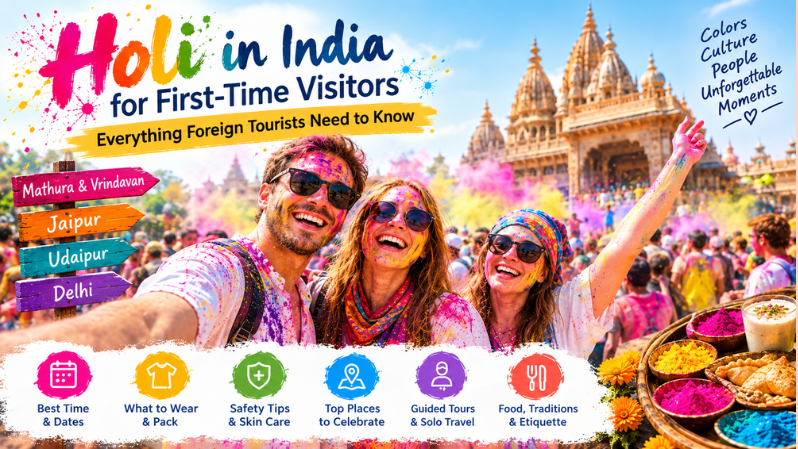
Foreign tourists celebrating Holi in India with colorful powder at a traditional festival

Holi in India: A First-Time Visitor’s Complete Guide

Holi in India is a colorful spring festival celebrated mainly in March, where people throw colored powder and water at each other in the streets. First-time foreign visitors should wear old clothes, protect their eyes and skin, and consider joining a guided or hotel-organized event for safety. This Holi travel guide for foreigners covers the cities, safety steps, and etiquette you need before joining the celebration. What Is Holi in India and Why It Matters to Foreign Visitors This spring celebration is a Hindu festival that marks the arrival of warmer weather and the symbolic victory of good over evil. It usually falls in early-to-mid March, based on the lunar calendar, and dates shift slightly every year. For many foreign travelers, it’s their first experience of a full-contact, joy-filled Indian celebration, and nothing back home quite compares to it. Understanding the religious roots helps you appreciate what’s happening around you. The festival honors the devotion of Prahlad and the playful legends of Lord Krishna, who is said to have started the color-throwing tradition himself. The Holi festival in India spans two days. The first night is Holika Dahan, a bonfire ritual symbolizing the burning away of negativity. The second day is Rangwali Holi, when people throw colored powder called gulal at friends, family, and strangers alike. Holika Dahan: evening bonfire and prayers Rangwali Holi: daytime color-throwing and water play In practice, most tourists experience Rangwali Holi, since it’s the more public and visual part of the celebration. Streets, hotel courtyards, and open fields fill with music, dancing, and clouds of colored powder. Music trucks, called DJ floats, often follow the crowds through main streets. Vendors sell thandai, a spiced milk drink, alongside sweets like gujiya and traditional snacks, giving the whole day a festive, market-like energy. How to Celebrate Holi Safely: A Guide for International Tourists Learning how to celebrate Holi safely starts with what you wear and how you protect your skin. Old, light-colored cotton clothes work best since colors show up clearly and you won’t mind discarding them afterward. Skin and eye protection matter just as much as clothing. Apply coconut oil or a thick moisturizer before you step outside, since it creates a barrier that makes colors easier to wash off later. Wear sunglasses or swim goggles to protect your eyes Oil your hair and skin generously beforehand Carry a waterproof pouch for your phone and cash Avoid contact lenses on the day of Holi According to the Federation of Indian Chambers of Commerce and Industry (FICCI), Holi-related tourism activity contributes meaningfully to local economies in states like Rajasthan and Uttar Pradesh each March. That economic footprint means many hotels and tour operators now run dedicated, tourist-oriented events with safer, skin-friendly colors. A common mistake first-timers make is assuming every neighborhood celebration is tourist-friendly. Some local street events can get rowdy, involve alcohol, and lack the crowd control found at organized venues, so it’s worth checking reviews before joining an unfamiliar group. Packing Checklist for Holi in India Pack specifically for the mess and unpredictability of this festival. A separate “Holi bag” keeps your regular luggage clean and organized. Leave your passport and expensive jewelry at the hotel. A cheap prepaid SIM card in a waterproof pouch is more useful on the day than any valuables you’d rather not lose. Old clothes you don’t mind ruining A plastic phone pouch or dry bag Flip-flops instead of expensive shoes A change of clothes for after the celebration Holi in India for Solo Female Travelers: Safety and Guided Experiences This festival can be enjoyed safely by solo female travelers, but planning matters more than it does for group travelers. Crowded street celebrations can get physically intense, so choosing your setting carefully makes a real difference. Some solo travelers pair up with other guests at their hostel or hotel for the day. Traveling in a small, mixed-gender group tends to reduce unwanted attention compared to walking through crowds alone. Real users report that hotel-organized or resort-based Holi events feel noticeably calmer than open public streets. These setups usually include organic colors, security staff, and a more controlled crowd size, which is central to solo female traveler Holi safety planning. Book a hotel or resort with an organized Holi event Travel in a small group rather than alone on the streets Avoid isolated alleys during the celebration Keep emergency contacts and your hotel address saved offline Choosing a Guided Holi Experience A guided Holi experience in India typically includes transport, organic colors, security, and local guides who explain the customs as you go. Companies like Intrepid Travel and G Adventures run seasonal Holi-specific tours aimed at foreign visitors, and choosing this route removes most of the guesswork for newcomers. For example, some Jaipur-based tour operators combine a morning color celebration with an afternoon cultural performance, giving travelers structure and context around the festivities. Booking through a registered operator listed on platforms like Incredible India also gives you a point of contact if plans change. Best Regions to Experience Holi in India The experience looks and feels different depending on where you celebrate it. Mathura and Vrindavan, in Uttar Pradesh, host the most traditional celebrations because of their connection to Lord Krishna, and events there can stretch across several days. Jaipur and Udaipur in Rajasthan are popular with foreign tourists because of their strong tourism infrastructure and hotel-run events. Pushkar, a smaller town, offers a laid-back, community-style celebration that many backpackers prefer. Delhi gives you the widest range of choices, from five-star hotel events to open public parks. That variety makes it a practical base if you’re unsure which style of celebration suits you. Any solid Holi travel guide for foreigners will point you toward hotel-organized venues first, then let you branch out to public streets once you know what to expect. Starting cautious and adjusting from there works better than diving straight into the busiest crowd you can find. Mathura and Vrindavan: traditional, religious, intensely crowded Jaipur and Udaipur: tourist-friendly,

Holi in India: A First-Time Visitor’s Complete Guide Read More »
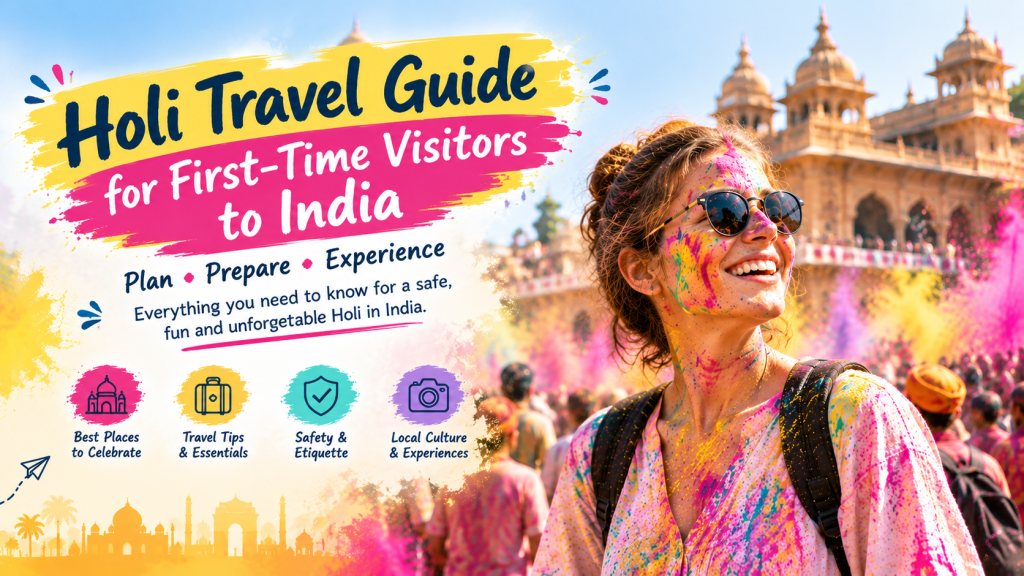
Holi Travel Guide for First-Time Visitors to India

Is Holi Safe for Foreigners? A Complete Guide to Celebrating Safely in India

 Yes, Holi is generally safe for foreigners when you take basic precautions. Stick to organized celebrations, travel with a group or guide, use organic colors, and stay aware of your surroundings. Thousands of international tourists celebrate Holi across India every year without incident. Is Holi Safe for foreigners — and Why So Many Tourists Love It Holi ranks among the most visually stunning festivals on the planet. Lonely Planet lists it as one of the world’s top cultural experiences. Every March, millions gather across India to throw colored powders, dance, and share sweets. So, is Holi safe for foreigners? The short answer is yes  with preparation. Most travelers report overwhelmingly positive experiences. The key lies in choosing the right location, traveling with trusted companions, and knowing local customs before you step out. According to the India Ministry of Tourism, over 10 million foreign tourists visited India in 2023. A significant portion time their trips around Holi. The festival draws visitors from Europe, the Americas, East Asia, and Australia  many returning year after year. Holi falls in March on the full moon of the Hindu month Phalguna Major celebration hubs include Delhi, Jaipur, Mathura-Vrindavan, and Udaipur Most tourist-friendly celebrations are organized by hotels, cultural organizations, or licensed tour operators Holi Travel Tips for Tourists: What to Know Before You Go Preparation makes all the difference between a stressful and a joyful Holi. These Holi travel tips for tourists cover the essentials every first-timer needs. Wear old, white clothes. White shows off the colors beautifully in photos, and you won’t mind discarding stained clothes afterward. Avoid expensive or sentimental outfits  gulal (colored powder) stains many fabrics permanently. Protect your skin and hair. Apply a thick layer of coconut oil or moisturizer on all exposed skin before heading out. This creates a barrier that makes color removal far easier. Oil your hair generously for the same reason. Carry a waterproof phone pouch — water balloons and colored water are part of the fun Leave jewelry, watches, and valuables at your hotel Wear closed shoes — streets get slippery with water and color Carry a small towel and a sealed water bottle Choose organic or herbal gulal. Synthetic colors can contain chemicals that irritate skin and eyes. Many guided Holi experiences in India now use plant-based, organic powders especially events marketed to international tourists. Ask your organizer about the type of color used before joining. Solo Female Traveler Holi Safety: Practical Precautions Holi safety concerns peak for solo female travelers, and these concerns are valid. Crowded festivals in any country create risks. The good news: you can manage these risks effectively. Travel in groups whenever possible. Join a guided Holi experience through a reputable tour operator or your hotel’s organized event. Operators registered with the India Ministry of Tourism follow safety protocols and provide trained guides who stay with your group throughout. Boundaries matter. Indian law protects your right to refuse unwanted physical contact during Holi. You can firmly say no to anyone who makes you uncomfortable. Most locals respect boundaries  especially in organized events  and fellow celebrants often step in to help if someone crosses a line. Avoid isolated lanes or unfamiliar neighborhoods during peak celebration hours Share your live location with a trusted contact via WhatsApp or Google Maps Pre-book your return transport — ride-hailing apps like Uber and Ola operate during Holi, but surge pricing and wait times spike Stick to well-lit, populated areas if celebrating in public spaces According to a 2023 survey by Hostelworld, 68% of solo female travelers who attended Holi in India rated their experience as “positive” or “very positive.” Most safety issues reported were minor  unwanted color throwing or overcrowding  not serious incidents. How to Celebrate Holi Safely: Best Places and Formats for International tourist Choosing where and how you celebrate shapes your entire experience. Here is a Holi travel guide for foreigners covering the best options. Mathura-Vrindavan, Uttar Pradesh hosts India’s most legendary Holi. The celebrations here start a week early with Lathmar Holi in Barsana and Nandgaon. This is raw, intense, and deeply traditional. Go with a local guide  crowds are massive, and the energy can overwhelm first-timers. Jaipur and Udaipur, Rajasthan offer more structured, tourist-friendly Holi events. Many heritage hotels and palaces host ticketed celebrations with DJ sets, organic colors, traditional food, and security staff. These events attract a mixed crowd of Indian and international visitors. Delhi gives you variety. You can attend curated rooftop Holi parties in neighborhoods like Hauz Khas, or join a guided Holi experience organized by a licensed DMC (Destination Management Company). A guided experience keeps logistics smooth  transport, colors, food, and safety all handled. Hotel-organized events are the safest option for first-timers Temple celebrations (like at Banke Bihari Temple in Vrindavan) are authentic but extremely crowded Community Holi in residential neighborhoods offers a genuine local experience  go only if invited by someone you trust Avoid bhang unless you know what you’re doing. Bhang is a cannabis-infused drink traditionally served during Holi. It is legal in many Indian states but potent enough to incapacitate an unprepared drinker. Accept food and drinks only from people you trust. Key Takeaways Holi is safe for foreigners who prepare properly choose the right location, go with a group, and use organic colors Apply coconut oil on skin and hair before celebrations to make cleanup easier Solo female travelers should prefer organized, ticketed events or guided Holi experiences with licensed operators Protect your phone, leave valuables behind, and wear old white clothes Mathura-Vrindavan offers the most authentic Holi; Jaipur and Udaipur offer the most structured tourist experiences Avoid bhang and unverified food or drinks from strangers Frequently Asked Questions Is Holi safe for International tourist traveling alone? Yes, but solo travelers should join organized events rather than wandering into street celebrations unaccompanied. Hotels, hostels, and licensed tour operators run group Holi events specifically designed for international tourists. These offer a fun experience with built-in safety. What should I wear to Holi as a

Is Holi Safe for Foreigners? A Complete Guide to Celebrating Safely in India Read More »

Rajasthan for American Travelers

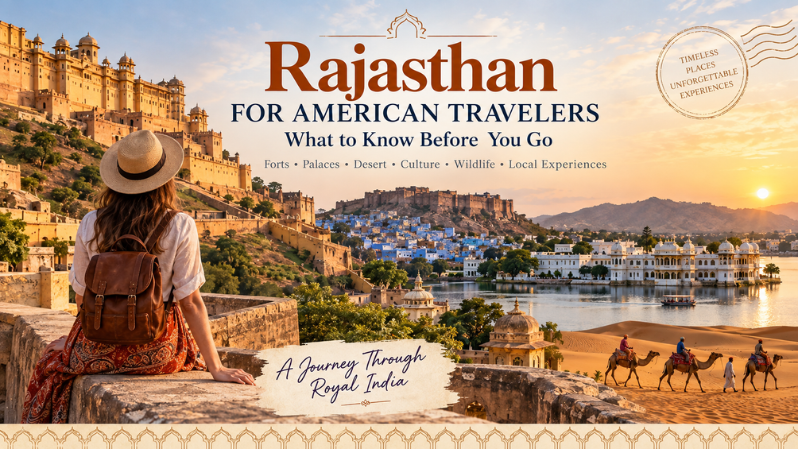
Rajasthan for American Travelers: What to Know Before You Go

Rajasthan is one of the best places in India for American travelers who want to experience historic forts, royal palaces, colorful markets, desert landscapes, traditional cuisine, wildlife, and local culture in a single trip. For first-time visitors, however, planning a Rajasthan trip can raise plenty of questions. How many days do you need? When should you visit? Which cities are worth including? Is Rajasthan safe? Should you travel by train or hire a private car and driver? And can you combine Rajasthan with Delhi and the Taj Mahal? This Rajasthan travel guide for American travelers answers those questions and helps you plan a comfortable, realistic itinerary without trying to see too much too quickly. Quick Answer: What Should Americans Know Before Visiting Rajasthan? For most American travelers, 7 to 14 days is a good amount of time for Rajasthan. Jaipur, Jodhpur, and Udaipur form an excellent first-time route, while travelers with more time can add Jaisalmer, Pushkar, Ranthambore, or rural Rajasthan. The cooler months, particularly October through March, are generally the most comfortable for sightseeing. Many first-time visitors enter Rajasthan via Delhi, making it easy to combine the state with Agra and the Taj Mahal as part of a longer North India journey. Rajasthan at a Glance Travel Question Quick Answer Best time to visit Generally October to March Recommended trip length 7–14 days Best cities for first-time visitors Jaipur, Jodhpur and Udaipur Desert destination Jaisalmer Popular wildlife extension Ranthambore Currency Indian Rupee (INR) Main international gateway Delhi is a common starting point Popular transport Private car and driver, trains and domestic flights Good for first India trip? Yes, particularly as part of a well-paced itinerary Is Rajasthan Worth Visiting for American Travelers? Yes. Rajasthan is particularly rewarding for travelers interested in Indian history, architecture, food, photography, traditional arts, and cultural experiences. What makes Rajasthan unusual is the variety of experiences within one region. In Jaipur, travelers encounter grand forts, palaces, bazaars, and the distinctive architecture of the Pink City. Jodhpur is dominated by the imposing Mehrangarh Fort and the blue-painted neighborhoods of its old city. Udaipur offers lakes, palaces, and a slower atmosphere, while Jaisalmer introduces travelers to the landscapes of the Thar Desert. Rajasthan also works well for travelers who want to go beyond famous monuments. Depending on the itinerary, a trip can incorporate village visits, local markets, craft traditions, cooking experiences, wildlife safaris, and stays in heritage properties. For Americans making their first trip to India, Rajasthan can therefore provide both the famous landmarks they expect and the smaller cultural experiences they may remember most. Where Is Rajasthan and How Do You Get There From the USA? Rajasthan is located in northwestern India and shares borders with several Indian states as well as an international border with Pakistan. Major tourism destinations include Jaipur, Udaipur, Jodhpur, Jaisalmer, Pushkar, Bikaner, and the Ranthambore region. Flying From the United States to India American travelers generally reach Rajasthan after arriving in India through a major international gateway. Delhi is particularly useful for Rajasthan itineraries because of its location and transport connections with Jaipur and other parts of North India. Actual airline routes and schedules change, so travelers should compare current connections when booking rather than relying on a fixed routing recommendation. Traveling From Delhi to Rajasthan Delhi is one of the most practical starting points for a first Rajasthan journey. It also creates an opportunity to combine three of India’s most popular destinations: Delhi → Agra → Jaipur This route is commonly known as India’s Golden Triangle. Instead of finishing in Jaipur, travelers with additional time can continue deeper into Rajasthan: Delhi → Agra → Jaipur → Jodhpur → Udaipur This is one of the most logical routes for an American traveler who wants to see the Taj Mahal while also experiencing Rajasthan. Can You Start Your Rajasthan Trip in Jaipur? Yes. Jaipur has air, rail, and road connections with other Indian cities and can work as the starting point for a Rajasthan-focused itinerary. However, travelers who are visiting India for the first time often benefit from incorporating Delhi and Agra before continuing into Rajasthan, particularly if the Taj Mahal is already on their wish list. What Is the Best Time to Visit Rajasthan? For most international travelers, October through March is generally the most comfortable period for visiting Rajasthan because temperatures are usually more suitable for outdoor sightseeing than during the hottest months. However, Rajasthan is geographically large, and weather conditions vary by destination, season, and time of day. October and November October and November are popular months for sightseeing as Rajasthan transitions away from the monsoon period and into cooler conditions. These months can work well for city sightseeing, forts, markets, and road journeys. December to February Winter is one of Rajasthan’s most popular travel periods. Days can be pleasant, but mornings and evenings may become surprisingly cool in some destinations. Travelers should not assume Rajasthan is warm at all times simply because it contains desert regions. A light jacket or additional layers can be useful. March March can still be a good month for Rajasthan, although temperatures generally begin increasing as the season progresses. Travelers visiting around major festivals should also plan accommodation and transportation carefully because demand can rise around popular dates. April to June These are typically the hottest months across much of Rajasthan. Sightseeing can become challenging during the middle of the day, particularly for travelers who are not accustomed to high temperatures. If traveling during this period, itinerary pacing, air-conditioned transportation, hydration, and early sightseeing become particularly important. July to September The monsoon affects Rajasthan differently from many other regions of India. Travel during this period is possible, and some landscapes can become greener, but conditions vary. Travelers should evaluate their specific destinations rather than treating Rajasthan as having one uniform climate. How Many Days Do You Need in Rajasthan? Most first-time American travelers should allow 7 to 14 days for Rajasthan. Seven days can cover the major highlights of Jaipur, Jodhpur, and

Rajasthan for American Travelers: What to Know Before You Go Read More »

UNESCO World Heritage Sites in India featuring the Taj Mahal, historic monuments, temples and natural heritage

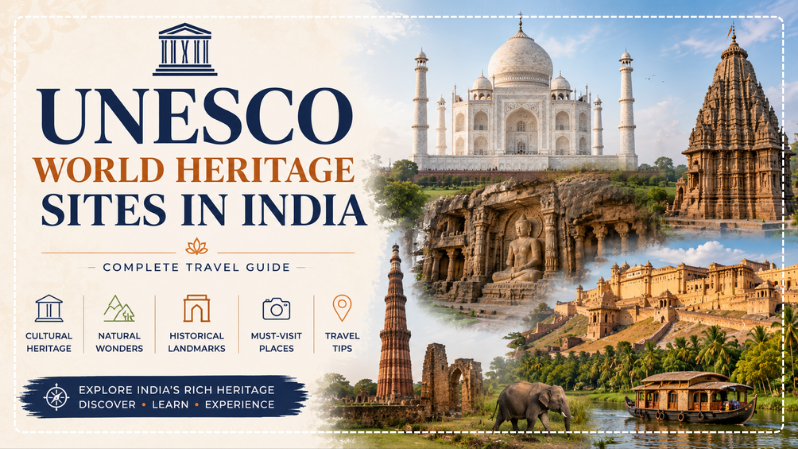
UNESCO World Heritage Sites in India: Your Complete Travel Guide

India has 45 UNESCO World Heritage Sites as of 2026 37 cultural, 7 natural, and 1 mixed. These sites span over 4,000 years of history, from the ancient Harappan city of Dholavira in Gujarat to the Maratha Military Landscapes inscribed in 2025. Visiting them gives you access to some of the world’s finest ancient monuments, temples, forts, and wildlife reserves.   Why UNESCO World Heritage Sites in India Deserve Your Attention   India ranks 6th globally for UNESCO-designated heritage properties, according to the UNESCO World Heritage Centre. Each site meets strict criteria for “Outstanding Universal Value” in culture, history, architecture, or ecology.   These aren’t just museum-piece ruins. Many remain living spaces, functioning temples, inhabited cities, and active railway lines. The Mountain Railways of India (Darjeeling, Nilgiri, and Shimla lines) still carry passengers daily. Jaipur’s walled city, inscribed in 2019, is home to over 3 million residents.   37 cultural sites cover temples, forts, caves, stepwells, and planned cities 7 natural sites protect critical ecosystems and endangered species 1 mixed site  Khangchendzonga National Park in Sikkim  qualifies on both cultural and natural grounds  For travelers, UNESCO India tourism offers a ready-made framework for trip planning. Each inscription comes with detailed documentation of what makes the site exceptional, helping you prioritize based on your interests.   Cultural Heritage Sites in India: Ancient Monuments You Should Visit   India’s 37 cultural World Heritage Sites form the largest category and cover nearly every major dynasty, religion, and architectural tradition on the subcontinent. The Taj Mahal in Agra remains the most visited heritage place of India, drawing over 6 million visitors annually. Built between 1632 and 1653 under Mughal emperor Shah Jahan, it represents the peak of Mughal architecture. The Archaeological Survey of India (ASI) manages the site and caps daily visitor numbers during peak season. Top cultural sites by region: North India: Taj Mahal, Agra Fort, Qutub Minar (Delhi), Red Fort (Delhi), Fatehpur Sikri, Humayun’s Tomb West India: Ajanta Caves, Ellora Caves, Rani ki Vav stepwell (Gujarat), Dholavira, Maratha Military Landscapes South India: Group of Monuments at Hampi, Great Living Chola Temples, Mahabalipuram, Sacred Ensembles of the Hoysala East India: Sun Temple at Konark, Moidams of the Ahom Dynasty (Assam), Ancient Buddhist Site of Sarnath Planning Visits to Major Ancient Monuments in India Most ASI-managed sites charge a two-tier entry fee; Indian nationals pay ₹40–50, while international visitors pay ₹600–1,000 depending on the site. The Taj Mahal charges ₹1,100 for international visitors (₹50 for Indians), with a separate Mausoleum access fee of ₹200. Visit cultural sites early in the morning. Gates typically open at sunrise and close at sunset. The first two hours offer the best light for photography and the smallest crowds. For Hampi or Khajuraho, budget at least two full days  a single afternoon is not enough to cover the spread of monuments. Natural World Heritage Sites in India: Biodiversity Hotspots Worth Exploring India’s seven natural World Heritage Sites protect some of the most ecologically significant landscapes in Asia. These sites conserve endangered species, unique geological formations, and critical habitats. Kaziranga National Park in Assam shelters the world’s largest population of the Greater One-Horned Rhinoceros. According to the 2022 census, Kaziranga’s rhino population stood at 2,613 — roughly two-thirds of the global total. The park also supports healthy populations of tigers, elephants, and wild water buffalo. Kaziranga National Park (Assam)  one-horned rhino, Bengal tiger, Asian elephant.   Manas Wildlife Sanctuary (Assam)  golden langur, pygmy hog, wild water buffalo   Sundarbans National Park (West Bengal)  largest mangrove forest, Royal Bengal Tiger   Nanda Devi and Valley of Flowers (Uttarakhand)  alpine meadows, snow leopard habitat   Western Ghats (across six states)  one of the world’s eight biodiversity hotspots   Great Himalayan National Park (Himachal Pradesh) western Tragopan, musk deer   Keladeo National Park (Rajasthan)  migratory bird haven, Siberian crane wintering ground   Best Time to Visit Natural Heritage Sites   Timing matters for natural World Heritage Sites in India. Kaziranga opens from November to April  the park closes during monsoon flooding. The Western Ghats are greenest from June to September, but trekking trails become slippery and leeches are common. Valley of Flowers blooms from July to September, making monsoon the only window for that site.   Book safari permits well in advance. Kaziranga and Sundarbans both limit daily visitor numbers. The Wildlife Institute of India and respective state forest departments manage these quotas.   How to Plan a Heritage Trip Across India’s UNESCO Sites   A practical approach to UNESCO India tourism is grouping sites into regional circuits rather than trying to cover the entire country in one trip.   Golden Triangle + Rajasthan Circuit (7–10 days): Start in Delhi (Qutub Minar, Red Fort, Humayun’s Tomb), drive to Agra (Taj Mahal, Agra Fort, Fatehpur Sikri), continue to Jaipur (Jantar Mantar, walled city), and extend to Jodhpur or Udaipur. Indian Railways connects Delhi–Agra–Jaipur on the Shatabdi and Gatimaan Express routes.   South India Temple Circuit (8–12 days): Fly into Chennai, visit Mahabalipuram, drive south to Thanjavur and Madurai for the Great Living Chola Temples, and end with Hampi in Karnataka. The Sacred Ensembles of the Hoysala  inscribed in 2023  are a short detour from Hampi via Belur and Halebidu.   Maharashtra Cave Circuit: Combine Ajanta and Ellora Caves in a 3–4 day trip from Aurangabad (now Chhatrapati Sambhajinagar). Both sites are within 100 km of the city.   Northeast India: The Moidams of the Ahom Dynasty in Assam and Kaziranga can share a single itinerary from Guwahati.   Common mistake: Trying to visit more than two or three major historical attractions in India per day. Heritage fatigue is real. A slower pace gives you better photographs, deeper understanding, and fewer missed details.   Key Takeaways India has 45 UNESCO World Heritage Sites as of 2026  37 cultural, 7 natural, and 1 mixed  ranking 6th globally.   The Archaeological Survey of India (ASI) manages most cultural sites; entry fees differ for Indian and international visitors.   Group sites into regional circuits (Golden Triangle, South

UNESCO World Heritage Sites in India: Your Complete Travel Guide Read More »

First trip to India travel guide for American and Canadian travelers visiting the Taj Mahal

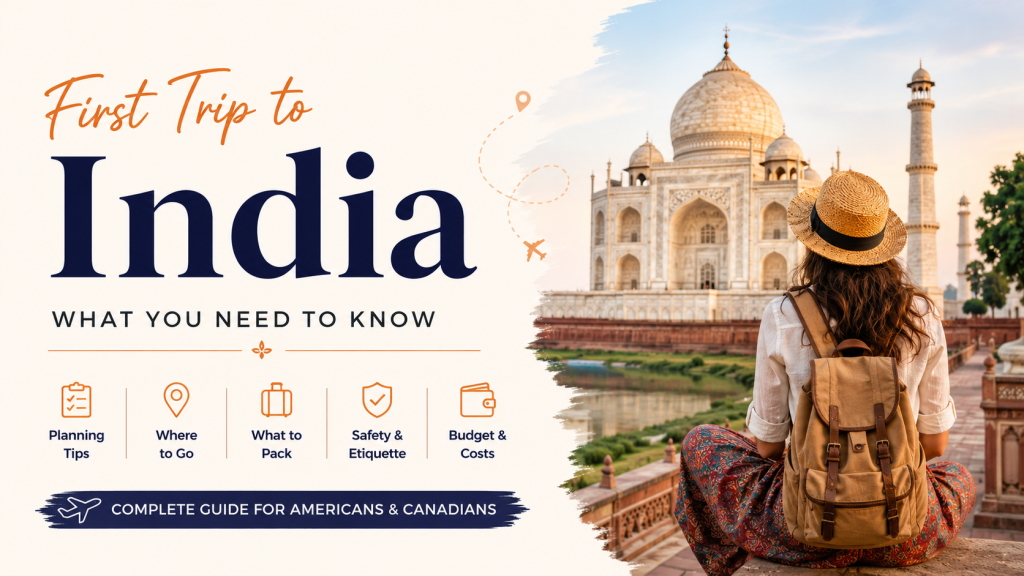
What Should You Know Before Your First Trip to India?

Your first trip to India requires an e-Visa (applied online before departure), up-to-date vaccinations recommended by the CDC, and a solid understanding of regional climate, cultural norms, and local transport. Planning a trip to India also means budgeting in Indian Rupees, packing for variable weather, and keeping digital copies of all documents. Why Planning Your First Trip to India Matters More Than You Think India is not a single experience  it is dozens of experiences packed into one country. From the Himalayan foothills in Ladakh to the backwaters of Kerala, every region has its own language, cuisine, and pace. A first trip to India without preparation often leads to avoidable stress. According to the Ministry of Tourism, Government of India, over 1.5 million American and Canadian tourists visited India in 2023. That number keeps rising as direct flights from cities like New York, Toronto, San Francisco, and Vancouver expand. Yet roughly 30% of first-time visitors report feeling overwhelmed during their first 48 hours. The gap between expectation and reality narrows fast with the right India travel tips for first-time visitors. Climate varies wildly  Delhi hits 45 °C in June; Shimla stays at 20 °C the same week. English works in cities  but Hindi, Tamil, Bengali, and dozens of other languages dominate local life. Cash still matters  UPI payments are everywhere, but street vendors and rural areas prefer Rupees in hand. India Travel Tips for First-Time Visitors: Visa and Documents Every US and Canadian citizen needs a valid visa before boarding a flight to India. Tourist visas are not issued on arrival. The easiest route is the Indian e-Visa, processed through the Indian Bureau of Immigration’s portal at indianvisaonline.gov.in.    You can apply for a 30-day, one-year, or five-year e-Tourist Visa. Processing takes 72 hours on average, but applying at least two weeks early gives you a buffer.   Your passport must have at least six months of validity from your arrival date and two blank pages. Carry printed and digital copies of your visa approval, passport, travel insurance, and hotel bookings.   30-day e-Visa: double entry allowed, best for short trips 1-year e-Visa: multiple entries, ideal if you plan to visit neighboring countries and return 5-year e-Visa: multiple entries, suited for frequent travelers or those with family in India Common mistake: Many travelers apply with a passport photo that does not meet India’s strict specifications (white background, no glasses, specific dimensions). Rejected applications delay your trip by a week or more.   What to Know Before Going to India: Health and Safety Health preparation is a non-negotiable part of planning a trip to India. The CDC recommends that US travelers be current on routine vaccines and adds Hepatitis A, Typhoid, and, in some cases, Japanese Encephalitis and Rabies to the list for India. Visit a travel clinic at least four to six weeks before departure. Your doctor can prescribe antimalarials if your itinerary includes rural or jungle areas like Ranthambore or the Western Ghats. Carry a basic medical kit with oral rehydration salts, anti-diarrheal medication, and any personal prescriptions. Tap water is not safe to drink anywhere in India. Stick to sealed bottled water  check that the seal is intact before drinking. Avoid raw salads and cut fruit from street stalls during your first few days until your stomach adjusts. Travel insurance: Purchase a policy that covers medical evacuation. Hospital care in Indian metro cities is excellent (Apollo Hospitals, Fortis Healthcare), but costs add up fast without coverage. Air quality: Delhi and parts of North India experience severe pollution from November through February. Pack an N95 mask if visiting during this window. Safety tip: India is broadly safe for tourists, but petty theft and tourist scams exist in crowded areas. Use ride-hailing apps like Uber India or Ola Cabs instead of unmarked taxis, especially at night. India Travel Guide for Beginners: Getting Around India’s transport network is massive. Knowing your options saves hours and money on your first trip to India. Domestic flights connect major cities quickly. Airlines like IndiGo, Air India, and SpiceJet offer affordable fares if booked two to three weeks ahead. A Delhi-to-Goa flight takes about 2.5 hours versus 24+ hours by train.   Indian Railways (IRCTC) runs one of the world’s largest rail networks. Trains like the Rajdhani Express and Shatabdi Express cover popular tourist routes (Delhi–Agra, Delhi–Jaipur, Mumbai–Goa). Book through the IRCTC website or app. Choose AC 2-Tier or AC 3-Tier for comfort and safety. Auto-rickshaws and tuk-tuks are ideal for short city trips. Always agree on a fare before riding, or insist on the meter. Google Maps works reliably in most Indian cities for navigation and estimated fares.   Golden Triangle route (Delhi → Agra → Jaipur): India’s most popular first-timer circuit, doable in 5–7 days   South India circuit (Chennai → Pondicherry → Madurai → Kerala): slower pace, fewer crowds, cooler climate   Himalayan route (Delhi → Manali or Leh): best from May to September, requires acclimatization India Travel Tips: Culture, Etiquette, and Money Understanding cultural norms removes friction from every interaction during your first trip to India. India is deeply diverse, but a few principles apply almost everywhere. Remove your shoes before entering temples, mosques, gurudwaras, and most homes. Dress modestly at religious sites  cover shoulders and knees. Many temples do not allow leather items inside. Tipping is appreciated but not obligatory. A 10% tip at restaurants, ₹50–100 for hotel porters, and ₹100–200 per day for tour guides is standard. Most mid-range and upscale restaurants add a service charge to the bill  check before tipping twice. Currency exchange: Convert USD or CAD to Indian Rupees (INR) at airport exchange counters or withdraw from ATMs (SBI, HDFC, ICICI ATMs are widely available). Notify your bank before traveling to avoid card blocks. Bargaining: Expected at street markets and local shops. Start at roughly 50% of the quoted price and negotiate from there. Fixed-price stores and malls do not negotiate. Food etiquette: Eating with your right hand is the norm in traditional settings. If

What Should You Know Before Your First Trip to India? Read More »